

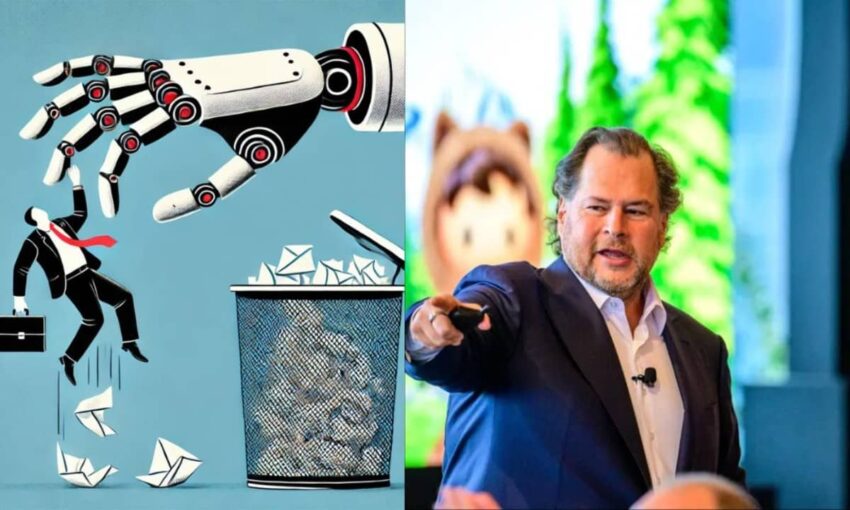
Marc Benioff, the chief executive of Salesforce Inc., has offered an assessment of the AI impact on his workforce after Salesforce layoffs. The tech leader confirmed his company is simultaneously cutting thousands of customer service positions while aggressively recruiting salespeople, a strategy that highlights the uneven effects of workplace automation.
Speaking on the YouTube program TBPN, Benioff defended the continuing need for human sales professionals.
“AI doesn’t have a soul. It’s not that human connectivity,” he stated, stressing that personal interactions remain critical for sales success.
The enterprise software giant plans to hire 3,000 to 5,000 additional sales representatives, aiming to reach a total of 20,000 account executives by year’s end.
This expansion follows substantial Salesforce layoffs. During an appearance on The Logan Bartlett Show podcast months earlier, Benioff disclosed that Salesforce had slashed its customer support division from roughly 9,000 workers to approximately 5,000.
“I’ve reduced it from 9,000 heads to about 5,000 because I need less heads,” the CEO explained, noting that intelligent agents now manage nearly half of all customer service interactions.
Automation for efficiency, humans for relationships
The company’s approach reveals a calculated divide: deploy machine learning for repetitive service tasks while maintaining—even expanding—human talent in relationship-driven sales positions.
“AI can handle routine interactions,” Benioff remarked, “but complex relationships still require the human touch.”
Yet industry observers point to an apparent inconsistency in this messaging. Salesforce promotes its sales roles as secure from automation while simultaneously eliminating thousands of support positions through technology.
This pattern reflects broader trends across the technology sector, where businesses automate back-office and customer-facing functions while continuing investment in areas requiring distinctly human capabilities.
The adoption challenge

Benioff has acknowledged another complication: enterprise customers are struggling to keep pace with AI innovation. At Dreamforce, the company’s flagship annual gathering, he noted that many corporate clients remain uncertain about effectively implementing AI solutions.
Meanwhile, Salesforce isn’t merely reducing headcount. The organization revealed a substantial US$15 billion commitment to San Francisco spanning five years, announced in October 2025. The investment aims to establish an AI development center and accelerate customer adoption of intelligent technologies.
Implications for the modern workforce
This transformation carries significant lessons for employees, employers, and the economy:
The evidence suggests machine learning excels at absorbing high volumes of standardized customer support work. Yet leadership continues to value uniquely human abilities—emotional intelligence, relationship cultivation, and face-to-face engagement—as essential for sales functions.
Customer support professionals face a sobering reality. Positions centered on repetitive, transactional tasks face a heightened risk of displacement from intelligent automation. The nearly 4,000 Salesforce layoffs stand as one of the most prominent examples in recent memory.
Sales professionals, particularly those focused on account stewardship, relationship development, and in-person networking—such as at major events like Dreamforce—receive a more encouraging signal. Human presence remains crucial for closing significant deals and fostering enduring client partnerships.
Organizations pursuing this dual strategy of AI investment alongside human hiring confront fundamental questions: How do companies optimize efficiency through automation while preserving human-centered skills, organizational culture, and client confidence?
The employment landscape appears headed toward a more complex reality than simple wholesale job elimination. The emerging pattern suggests intelligent systems will absorb many routine responsibilities while human roles evolve toward higher-value, relationship-oriented functions.
The reality of workplace transformation
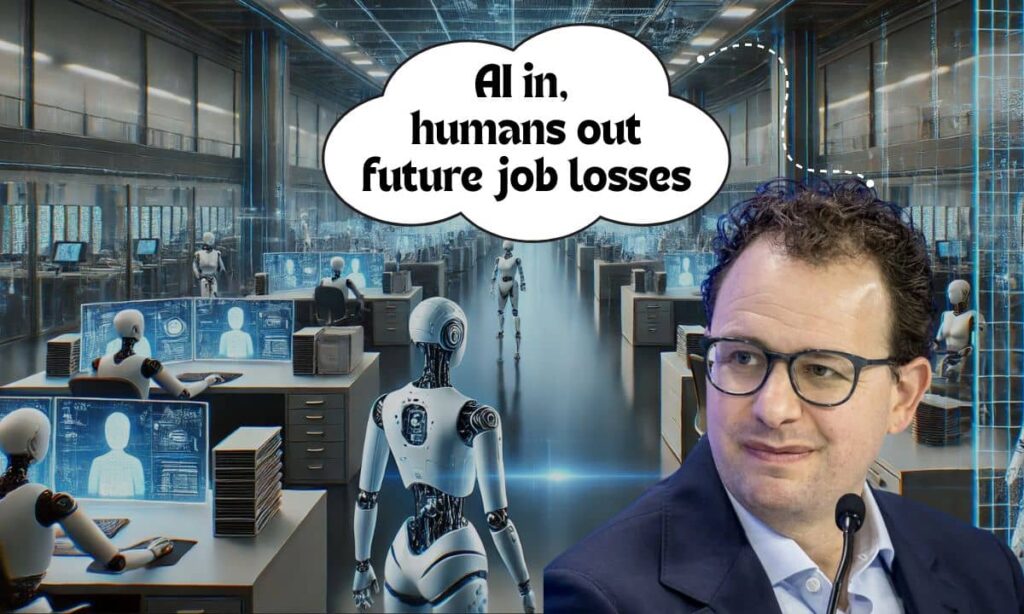
Benioff’s actions and statements now function as a bellwether for how major corporations navigate the transition to AI-enhanced operations. Several critical factors deserve attention moving forward.
Can Salesforce achieve its ambitious recruitment goal of 20,000 account executives within the current year? The composition of entry-level versus experienced hires will prove telling.
Customer response to AI agents managing half or more of support interactions will provide crucial data. Will satisfaction scores decline, improve, or remain steady?
Other enterprises may adopt similar “automate support, expand human sales” frameworks. The resulting impact on employment trends in traditional support functions bears close watching.
Benioff’s own words capture the moment: “This isn’t dystopian — it’s reality.”
His company’s experience demonstrates that when technology leaders discuss artificial intelligence deployment, the consequences are tangible, immediate, and occasionally contradictory.
The Salesforce case study illuminates a fundamental shift: workplace automation is not a distant threat but a present transformation. The challenge for business leaders involves balancing efficiency gains from intelligent systems against the irreplaceable value of human judgment, creativity, and connection.
What are your views on Salesforce layoffs? How is artificial intelligence reshaping your workplace or industry? Share your experience in the comments below.