

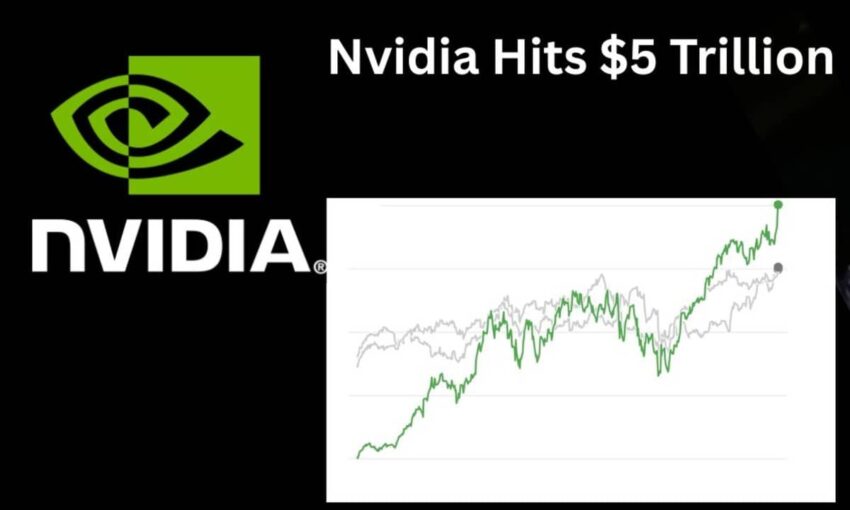
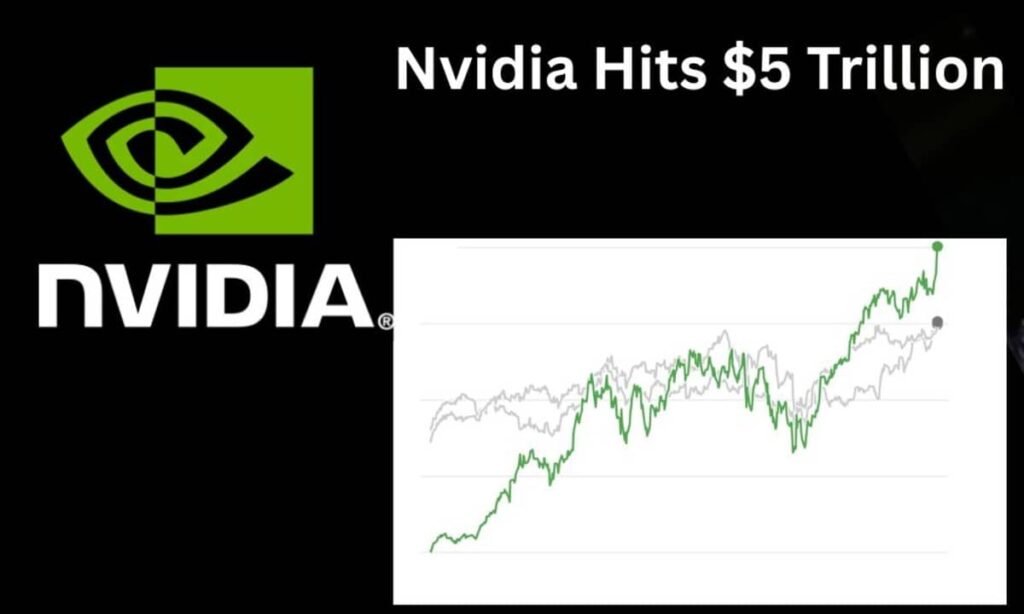
Nvidia has shattered yet another market milestone, becoming the world’s first publicly traded company to reach a $5 trillion market capitalization. The achievement marks a defining moment in the artificial intelligence revolution, cementing the chipmaker’s position as the backbone of modern AI infrastructure.
The company’s stock closed at approximately $207 per share on Wednesday, with roughly 24.3 billion shares outstanding, pushing its total market value past the $5.03 trillion threshold. This stunning ascent comes just three months after Nvidia became the first company to breach the $4 trillion mark, highlighting the breathtaking pace of its growth.
What began as a graphics processing unit manufacturer for gaming has evolved into something far more significant: the essential hardware provider for the global AI economy.
Powering the artificial intelligence revolution
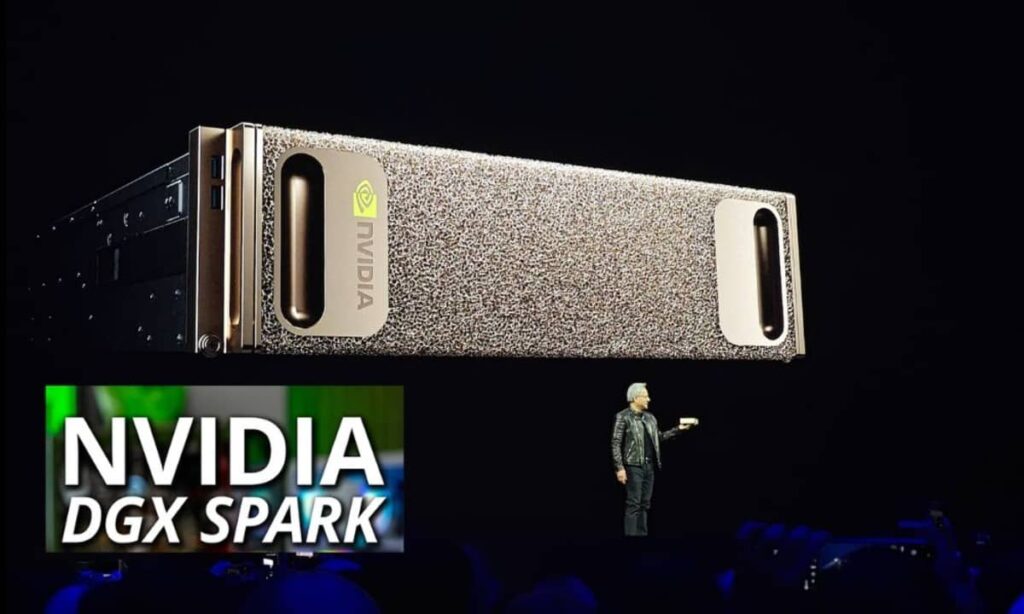
The explosive growth stems directly from unprecedented demand for computing hardware capable of running advanced AI systems. Nvidia’s cutting-edge graphics processing units have become indispensable components in data centers worldwide, powering everything from large language models to machine learning platforms and generative AI applications.
Chief Executive Jensen Huang recently disclosed that the company has visibility into approximately $500 billion worth of chip orders extending through 2026. This massive order book has sent a powerful signal to Wall Street about sustained demand for AI computing power.
Beyond commercial sales, Nvidia has secured strategic partnerships that underscore the expanding role of AI in critical infrastructure. The company is collaborating with the U.S. Department of Energy to construct seven new AI supercomputing facilities. Additionally, Nvidia has committed $1 billion to support Nokia’s development of next-generation 6G network infrastructure.
These deals reflect how deeply artificial intelligence has become embedded in national priorities and industrial strategy.
Putting the valuation in perspective
To grasp the magnitude of Nvidia’s market value, consider this: the company is now worth more than the entire gross domestic product of major economies, including India and the United Kingdom. This single semiconductor company has achieved a valuation that exceeds the annual economic output of nations with populations exceeding one billion people.
Financial analysts point to this milestone as evidence that AI has fundamentally reshaped capital allocation and corporate planning across industries. The technology has moved from experimental research projects to mission-critical business infrastructure in less than three years.
Warning signs amid the euphoria
Despite the celebration on Wall Street, not everyone shares the optimism. Regulators and economists have begun raising concerns about potential overheating in AI-related investments.
Officials at the Bank of England and the International Monetary Fund have issued warnings about the possibility of a speculative bubble forming around artificial intelligence stocks. Their concern centers on whether current valuations can be justified by actual revenue generation and profitability.
One market analyst noted that Nvidia remains an excellent vehicle for investors seeking exposure to the AI theme, suggesting the market still underestimates the opportunity’s scale. However, skeptics counter that many corporate AI initiatives have yet to demonstrate meaningful returns on investment.
The fundamental question persists: can companies translate billions in AI spending into sustainable profit growth, or will the hype eventually collide with disappointing financial results?
Navigating geopolitical tensions
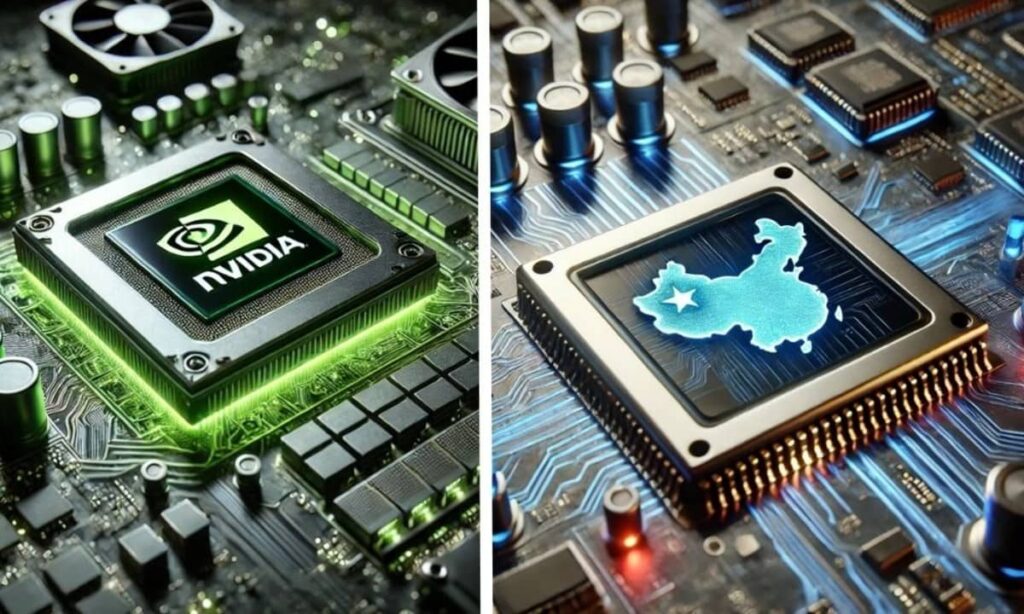
Nvidia’s dominance in AI chip manufacturing has thrust the company into the center of U.S.-China technological competition. American export restrictions on advanced semiconductors have limited Nvidia’s ability to sell its most powerful processors to Chinese customers.
These trade controls have become a regular topic in diplomatic discussions between Washington and Beijing. Nvidia’s latest Blackwell microprocessor architecture has specifically featured in bilateral technology negotiations.
Competitors, including Advanced Micro Devices, are working aggressively to challenge Nvidia’s market leadership, particularly in data center graphics processing. Yet Nvidia maintains a substantial technological and market share advantage that competitors have struggled to overcome.
The geopolitical dimension adds uncertainty to Nvidia’s future growth prospects, as changing trade policies could significantly impact its addressable market.
What does this mean for businesses?
For companies deploying artificial intelligence solutions, Nvidia’s trajectory carries important implications. Access to high-performance computing hardware is becoming a strategic bottleneck. Organizations planning large-scale AI implementations should factor hardware availability and costs into their project timelines.
Investment in generative AI applications, cloud-based machine learning platforms, and model training infrastructure increasingly depends on securing adequate computing resources. As demand continues outpacing supply, businesses may face extended lead times and premium pricing for top-tier hardware.
What this means for investors
The $5 trillion milestone reinforces artificial intelligence as the dominant investment theme in technology markets. However, it also raises performance expectations considerably.
Companies across sectors must now demonstrate that AI investments are generating actual revenue growth and margin expansion, not merely providing compelling narratives. The bar for AI-related stocks has risen substantially.
Investors should scrutinize whether companies can deliver on ambitious AI promises with measurable financial results.
Bottom line
Nvidia’s achievement represents more than an impressive stock market story. It captures how artificial intelligence has transitioned from academic laboratories into the foundation of global digital infrastructure.
The milestone reflects AI’s pervasive influence across technology development, business strategy, and international relations. Yet questions remain about whether current valuations reflect genuine economic value or speculative excess.
The coming quarters will reveal whether artificial intelligence can deliver on its extraordinary promise and justify the tremendous capital flowing into the sector.
What’s your take? Do you believe Nvidia’s $5 trillion valuation is justified by AI potential, or are we witnessing a bubble? Share your perspective in the comments below.