

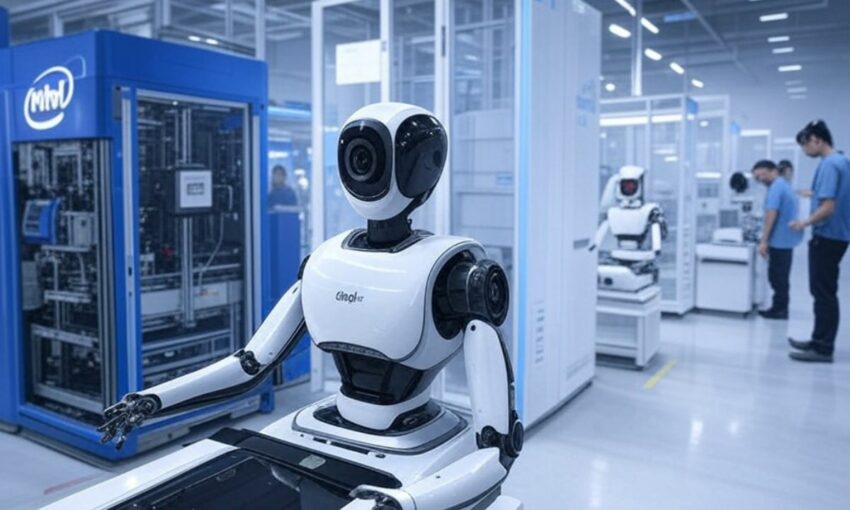
In a bold maneuver designed to restore Intel’s prominence in the increasingly competitive semiconductor landscape, newly appointed CEO Lip-Bu Tan has unveiled a sweeping transformation strategy focused on revolutionizing the company’s manufacturing capabilities and artificial intelligence portfolio. This far-reaching initiative aims to streamline operations, sharpen the competitive edge, and reestablish Intel as a driving force in technological innovation after several challenging years.
Strategic focus on manufacturing excellence
At the heart of Tan’s plan is a complete rethinking of how Intel makes chips. Until now, Intel’s advanced chip factories only made Intel’s designs. Now, under Tan’s leadership, these high-tech plants will make chips for other companies too, including major tech firms, like Nvidia and Google.
This key change serves multiple goals at once. It opens up new ways for Intel to make money beyond its own products, makes better use of its factories, and positions Intel as a major competitor in the profitable chip manufacturing market dominated by Taiwan’s TSMC.
“Our manufacturing facilities are world-class but haven’t been used to their full potential,” Tan said at a recent meeting with investors. “By offering our manufacturing expertise to outside partners, we’re creating new business opportunities and building a more collaborative environment that helps the entire industry.”
Experts say this manufacturing strategy takes advantage of Tan’s connections from his time leading Cadence Design Systems, where he built relationships across the chip industry. These connections could help Intel attract important customers to its manufacturing business.
The plan includes faster investment in Intel’s most advanced manufacturing techniques, especially its 18A technology scheduled to start production in 2025. This cutting-edge process is Intel’s attempt to catch up with – and possibly overtake – TSMC’s most advanced manufacturing capabilities.
Revamping AI strategy
Recognizing AI’s vital role in technology’s future, Tan has created a complete overhaul of Intel’s approach to artificial intelligence. The plan speeds up the production of AI-focused server chips and expands partnerships with leading tech companies.
“We’ve fallen behind in the AI chip market, and that’s simply unacceptable for a company with Intel’s history and abilities,” Tan openly admitted. “Our new AI strategy focuses on creating specialized processors that meet the huge computing demands of today’s advanced AI systems.”
The new AI plan emphasizes developing Intel’s Gaudi AI accelerator chips, which use a different design approach than Nvidia’s dominant GPU-based chips. Under Tan’s leadership, Intel has promised a much faster release schedule, with Gaudi 3 processors now planned for production by the end of this year – about six months earlier than previously announced.
Intel is also building new partnerships with cloud providers and AI software companies to ensure its hardware works well with existing AI systems. By better matching Intel’s technology with what the market needs, Tan hopes to win back market share from competitors like Nvidia, which currently controls about 80% of the AI chip market.
The company has created a dedicated AI Solutions Group staffed with industry experts hired from competitors and leading research institutions. This specialized team will focus only on developing next-generation AI architectures designed for emerging technologies in generative AI, scientific computing, and autonomous systems.
Organizational restructuring and efficiency
To create more speed and innovation, Tan is tackling long-standing internal problems through a major reorganization of Intel’s corporate structure. This includes cutting about 30% of middle management positions to speed up decision-making and remove operational bottlenecks that have slowed Intel’s ability to respond quickly to market changes.
“Complex hierarchies and isolated departments have limited our ability to adapt in a fast-changing market,” Tan said during a company-wide meeting. “By flattening our organization and giving more power to teams closer to the actual work, we’re creating a more dynamic environment where innovation can thrive and decisions can be made with the speed our industry requires.”
The restructuring goes beyond management cuts to include realigning business units around core technologies rather than product categories. This approach aims to better combine technologies across Intel’s diverse portfolio while allowing more efficient use of resources for high-priority projects.
Internal documents reviewed by industry analysts show that Tan has implemented a “zero-based” operational review across all departments, requiring each group to justify its resources based on strategic alignment rather than historical precedent. This detailed review has reportedly found significant efficiency opportunities, with projected annual savings of more than $3 billion when fully implemented.
Former Intel executive James Anderson, who worked at the company for 15 years before joining a technology investment firm, said that “these organizational changes represent the most significant restructuring at Intel in at least two decades. The company had built up layers of bureaucracy that simply couldn’t keep pace with the innovation speed required in today’s chip industry.”
Financial implications and market response
The market has responded positively to Tan’s strategic vision, with Intel’s stock rising 8% following the announcement. This favorable reaction shows growing investor confidence in the company’s new direction and Tan’s proven history of successful turnarounds in the semiconductor industry.
Financial analysts have improved their outlook for Intel, with several major investment firms upgrading their recommendations from “hold” to “buy.” Morgan Stanley’s semiconductor analyst noted that “Tan’s comprehensive approach addresses the fundamental issues that have troubled Intel while creating credible paths to future growth in high-margin areas like AI chips and manufacturing services.”
The strategic shift comes at a critical time for Intel, which reported a $19 billion loss in 2024 – the worst financial performance in the company’s 56-year history. This unprecedented downturn came from a combination of losing market share, manufacturing delays, and massive investments in new facilities that haven’t yet paid off.
Despite these challenges, Tan has secured board approval for continued investments exceeding $25 billion annually through 2026, focusing mainly on advanced manufacturing technologies and AI-specific facilities. This major financial commitment shows the company’s determination to regain technological leadership despite recent setbacks.
Challenges and future outlook
While Tan’s strategic overhaul has created renewed optimism, Intel faces significant challenges in executing this ambitious transformation. Beyond the financial pressures shown by last year’s substantial losses, the company must navigate an increasingly competitive landscape dominated by agile rivals who have capitalized on Intel’s previous strategic mistakes.
AMD has steadily taken Intel’s market share in both consumer and data center processors by consistently delivering better performance, while TSMC has established a commanding lead in manufacturing technology that Intel is struggling to match. Meanwhile, Nvidia has leveraged its early focus on AI chips to build an ecosystem that extends far beyond hardware into software platforms and developer tools.
Industry analyst Maria Rodriguez from Technology Research Partners cautions that “while Tan’s strategy addresses the right priorities, implementation timelines will be critical. Intel doesn’t have the luxury of gradual transformation given how quickly competitors are advancing. The next 18-24 months will determine whether this turnaround succeeds or represents too little, too late.”
Intel also faces geopolitical challenges as governments worldwide increasingly view chip manufacturing as a national security priority. The company’s extensive U.S. manufacturing presence – once considered a disadvantage due to higher operating costs – may now be an advantage as Washington provides billions in subsidies to domestic chip production through the CHIPS Act.
Commitment to technological leadership
Tan’s leadership marks a turning point for Intel as it strives to reclaim its historical position at the forefront of semiconductor innovation. By focusing on manufacturing excellence, accelerating AI development, and improving organizational efficiency, Intel aims to deliver pioneering technologies that drive global advances in computing and artificial intelligence.
“Throughout its history, Intel has repeatedly reinvented itself to address evolving market demands,” Tan reminded employees during his first company address. “This transformation represents the next chapter in that proud tradition – one that honors our heritage while boldly embracing the future of computing.”
The semiconductor veteran concluded by emphasizing that success would ultimately be measured by technological impact rather than short-term financial results: “Our mission extends beyond quarterly results. We’re building the computational foundation that will power artificial intelligence, quantum computing, and technologies we haven’t yet imagined. That’s the standard against which we should evaluate our progress.”
As Intel begins this comprehensive transformation journey, the technology industry will be watching closely to see whether Tan’s strategic vision and execution ability can restore the semiconductor pioneer to its former glory in an increasingly competitive landscape.
What’s your take on Intel’s bold turnaround strategy under Lip-Bu Tan—do you believe the chip giant can reclaim its technological leadership, or is the competition from Nvidia, AMD, and TSMC now too formidable to overcome? Please share your views below.