

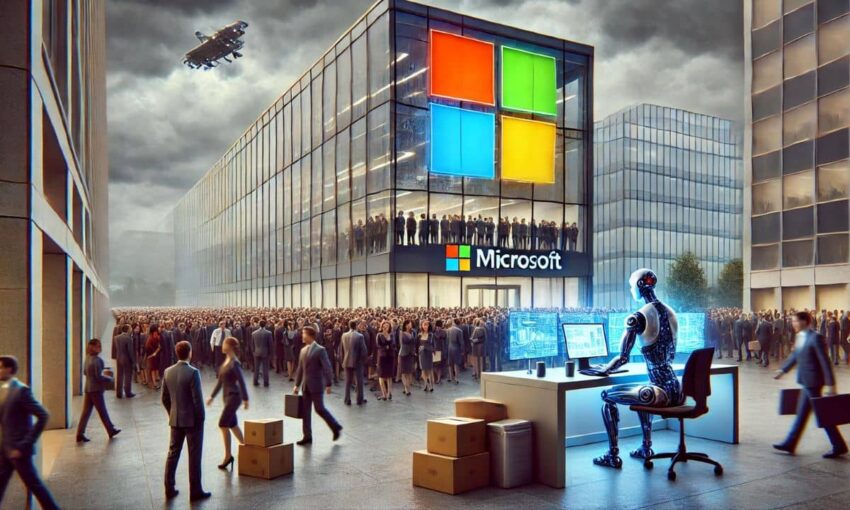
Microsoft Corp. announced Wednesday it will eliminate 9,000 positions globally, representing nearly 4% of its 228,000-person workforce. This marks the second major workforce reduction in 2025, following 6,000 job cuts in May.
“We continue to implement organizational changes necessary to best position the company and teams for success in a dynamic marketplace,” a Microsoft spokesperson said.
Affected divisions
The cuts span multiple business units. Microsoft’s gaming division faces substantial reductions, with sources indicating potential studio closures.
Xbox chief Phil Spencer told staff the cuts would “position Gaming for enduring success and allow us to focus on strategic growth areas.”
The global sales organization bears a significant impact, with Chief Commercial Officer Judson Althoff taking an eight-week sabbatical coinciding with the restructuring. Sales teams worldwide face reductions as Microsoft pivots toward AI-driven operations.
In Washington state, Microsoft notified authorities of 830 job eliminations at its Redmond and Bellevue facilities, representing the largest workforce adjustment in the region since 2022.
AI investment strategy

Despite workforce cuts, Microsoft maintains its commitment to spend approximately $80 billion during fiscal year 2025 on AI-enabled data centers and artificial intelligence infrastructure. More than half of this investment will occur in the United States, company president Brad Smith said.
CEO Satya Nadella has described the upcoming era as “fundamentally defined by artificial intelligence.” The company now mandates AI tool usage across its workforce, making integration part of employee performance evaluations.
Microsoft continues expanding its partnership with OpenAI while building internal AI capabilities. The company has invested more than $13 billion in OpenAI and incorporated its models into Windows, Teams, and other products.
Industry context
Technology companies have announced 76,214 job cuts in 2025, up 27% from the same period last year, according to outplacement firm Challenger, Gray & Christmas. The firm cited AI advancement disruptions as a key factor.
Major competitors face similar pressures. Meta said it would trim about 5% of its “lowest performers” this year. Google has laid off hundreds of employees across various divisions. Amazon continues cutting roles across business segments.
According to an analyst at D.A. Davidson, Microsoft may need to reduce its headcount by at least 10,000 employees each year to maintain margin stability while continuing to invest heavily in AI initiatives.
Financial pressures
The soaring cost of scaling AI infrastructure has weighed on Microsoft’s margins, with its June quarter cloud margin expected to shrink from last year. The company said that it planned to reduce organizational layers with fewer managers and streamline products and procedures.
Previous layoffs hit software engineers hardest. In Microsoft’s home state of Washington, software engineering was by far the largest single job category to receive layoff notices, making up more than 40% of roughly 2,000 positions cut in earlier reductions.
Nadella has emphasized “the layoffs are not a reflection of individual or team performance, but rather a repositioning designed to prepare Microsoft for the future.”
Employee support
Microsoft provides comprehensive assistance for affected workers, including severance compensation and extended healthcare benefits. The company offers job placement support and priority consideration for available positions within growing AI and cloud divisions.
Many displaced technology professionals are expected to transition into high-demand roles at AI startups and cloud service providers experiencing rapid growth.
Strategic transformation
Microsoft’s restructuring signals a fundamental shift toward AI-centric operations. The company plans to train 2.5 million American students and workers in AI technologies during 2025, developing specialized skills for emerging roles.
The transformation reflects broader economic pressures facing technology companies, balancing growth investments with operational efficiency. The latest cuts follow the June 30 close of the company’s fiscal year. Microsoft traditionally makes cuts and restructures operations this time of year, but it’s unusual to see such sizable cutbacks in multiple rounds so close together.
As Smith noted in a recent blog post: “The United States is poised to stand at the forefront of this new technology wave, especially if it doubles down on its strengths and effectively partners internationally.”
Microsoft’s aggressive AI strategy positions the company for next-decade competition while acknowledging that current financial constraints require workforce optimization. The tech giant is betting that streamlined, AI-focused teams will generate superior returns despite short-term employment disruption.
How will Microsoft’s workforce restructuring impact the broader tech industry? What opportunities exist for displaced workers in the evolving AI economy? Please share your views below.