

Meta Platforms closed out 2025 with a blockbuster move that raises as many questions as it answers, announcing a deal worth more than $2 billion to acquire Singapore-based AI startup Manus—a company with significant ties to the Chinese Government.
The acquisition, confirmed Monday, represents one of the largest purchases of an Asian artificial intelligence platform by a U.S. technology giant. It also marks a striking end to a turbulent year for Meta, which has bet billions on AI dominance while navigating geopolitical crosscurrents that continue to complicate the tech industry.
“Manus is already serving the daily needs of millions of users and businesses worldwide,” Meta stated in its Dec. 29 announcement.
“It launched its first general AI agent earlier this year and has already served more than 147 trillion tokens and created more than 80 million virtual computers. We plan to scale this service to many more businesses.”
While Meta Platforms kept the acquisition cost private, The Wall Street Journal reported it exceeded $2 billion. The newspaper noted that Manus had recently sought fresh capital at roughly $2 billion, making this transaction one of the most expensive artificial intelligence acquisitions involving an Asian startup with Chinese government support.
That last detail adds a layer of complexity that Meta will need to navigate carefully.
Chinese backing complicates the narrative
Manus built its reputation partly on support from Chinese officials, who promoted the platform as evidence that domestic innovation could compete globally. The startup relied on AI models from companies, including Anthropic and China’s Alibaba, creating technology that impressed international observers while maintaining close connections to Beijing.
Those ties put Meta Platforms in a delicate position. U.S. lawmakers have grown increasingly wary of Chinese involvement in critical technology sectors, particularly artificial intelligence. While Manus operates out of Singapore, its Chinese government endorsement and use of Chinese AI models could trigger regulatory scrutiny or political backlash in Washington.
Meta Platforms made no mention of these complications in its announcement. The company focused instead on Manus’ technical capabilities and existing user base, avoiding any discussion of geopolitical implications.
Still, the timing raises eyebrows. Meta is buying a Chinese-backed AI startup at a moment when U.S.-China tech tensions remain elevated and American companies face mounting pressure to distance themselves from Chinese technology infrastructure.
From research automation to video tools
Manus burst into global view in March with an AI agent capable of generating detailed research reports and building websites automatically. The system drew praise for handling complex, multi-step workflows that previously required human oversight.
The company wasted no time capitalizing on that momentum. Manus rolled out a subscription service, launched a mobile app, and introduced a text-to-video tool that converts written prompts into polished video content. The video feature proved particularly popular with marketers, educators, and small businesses hunting for faster content production methods.
That rapid expansion caught Meta’s attention. The social media behemoth has poured resources into artificial intelligence development while watching competitors sprint ahead in key areas. Buying Manus delivers a mature product with paying customers instead of another research project requiring years of development.
For Meta, the $2 billion price tag represents a calculated gamble that established technology beats starting from scratch.
Meta’s year-end spending spree
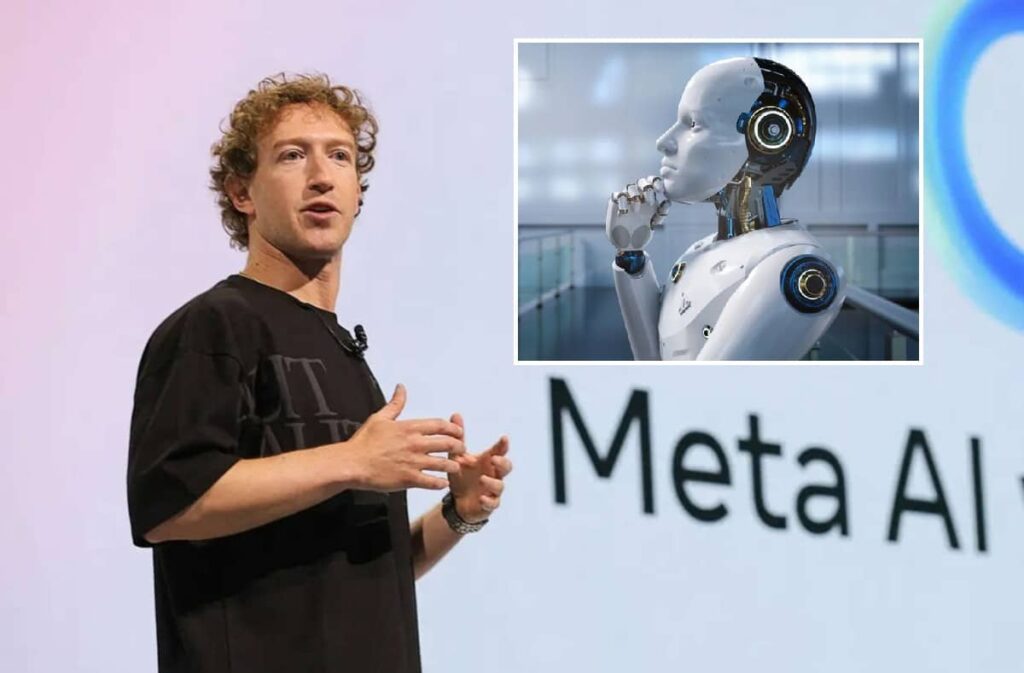
The Manus deal caps an aggressive acquisition streak for Meta Platforms as 2025 winds down. Earlier this month, the company purchased Limitless, a startup developing AI-powered wearable devices. Meta also invested $14.3 billion in Scale AI, a data annotation firm, bringing Scale founder Alexandr Wang on board as chief AI officer.
These transactions underscore the scale of chief executive Mark Zuckerberg’s artificial intelligence ambitions. They also highlight investor anxiety about whether Meta’s massive spending will produce meaningful returns.
Zuckerberg personally led a high-profile recruiting blitz earlier this year, offering executives and researchers compensation packages worth millions. That campaign cooled by October, when Meta eliminated roughly 600 positions in its AI unit, signaling renewed focus on efficiency over expansion.
Acquiring Manus fits Meta’s revised strategy: buy proven products rather than build everything internally. The startup brings 80 million virtual computers already created, and more than 147 trillion tokens served—metrics that suggest real usage, not laboratory experiments.
Integration across Meta’s empire
Meta Platforms plans to operate Manus’ services directly, weaving the technology into Facebook, Instagram, and WhatsApp, according to the Journal.
This integration could provide businesses and creators with sophisticated automation tools, content generation features, and enhanced customer engagement capabilities across Meta’s platforms. It also positions Meta more competitively in the AI agent space, where systems autonomously execute tasks rather than simply answering questions.
The move comes as OpenAI, Microsoft, and Google accelerate their own enterprise-focused artificial intelligence products. Meta faces mounting pressure to prove its billions in AI spending can generate sustainable revenue, not just impressive research papers.
Abandoning open-source ideals
The Manus acquisition coincides with a broader philosophical shift at Meta. For years, the company championed open-source AI development as a way to build community support and attract developers. That approach now appears dead.
Meta Platforms is concentrating resources on proprietary systems, including an internal project called Avocado scheduled to launch next spring. The model aims to compete head-to-head with closed offerings from OpenAI and Google.
“This change reflects Meta’s broader recalibration of how it captures value from its AI investments,” PYMNTS wrote. “Rather than emphasizing open-source research as a community good, Meta appears intent on building closed models that can be monetized directly, increasing revenue potential but also limiting external developer engagement.”
Manus fits perfectly into this commercial framework. Its tools already function as paid services, making them easy to scale across Meta Platforms without restructuring the company’s business model.
Geopolitical risks loom

Beyond business strategy, the Manus deal forces Meta into uncomfortable geopolitical territory. Buying a startup with Chinese government backing invites questions about data security, intellectual property, and potential regulatory complications.
Congress has shown little patience for American tech companies maintaining close ties to Chinese-linked entities, particularly in sensitive areas like artificial intelligence. Meta may face demands to explain how it will manage Manus’ Chinese connections and whether those relationships pose national security concerns.
The company’s silence on these issues in its announcement suggests Meta hopes to avoid drawing attention to the Chinese angle. Whether that strategy works depends largely on how regulators and lawmakers respond in the coming weeks.
For now, Meta is betting that Manus’ technical capabilities and existing user base outweigh the geopolitical complications. Whether that calculation proves correct will become clearer as 2026 unfolds.
The deal encapsulates Meta’s year: aggressive spending, strategic pivots, and calculated risks that could either cement its AI leadership or expose the company to unexpected challenges. At $2 billion, Manus represents one of the biggest bets Zuckerberg has made on artificial intelligence. Only time will reveal whether this year-end gamble pays off.
Does Meta’s purchase of a Chinese-backed AI startup create unnecessary risk, or is it a smart move to acquire proven technology? Should U.S. regulators scrutinize this deal more closely? Join the conversation in the comments below and tell us whether Meta Platform’s year-end spending spree positions the company for success or trouble in 2026.