

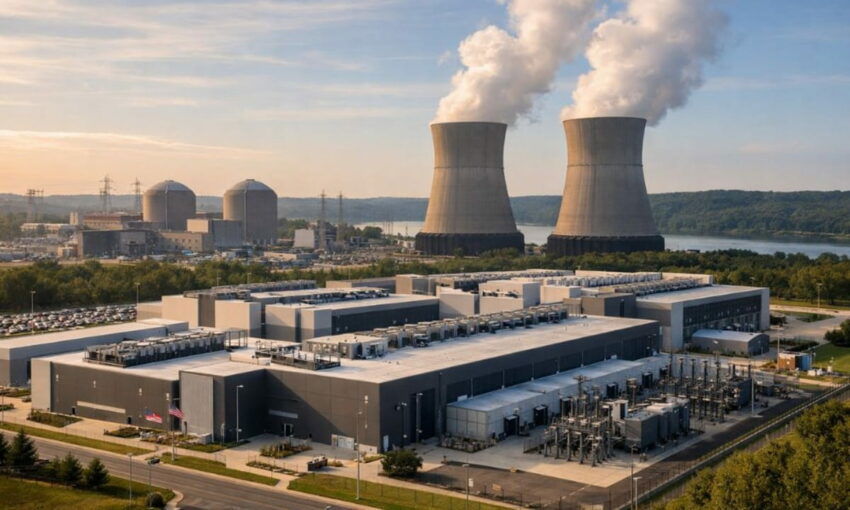
Meta Platforms has announced what industry observers are calling one of the largest corporate energy commitments in American history. The social media giant revealed plans Friday to secure up to 6.6 gigawatts of nuclear-generated electricity by 2035, a massive investment designed to power its growing artificial intelligence operations.
The move comes as technology companies scramble to lock down reliable power sources for energy-hungry AI data centers. Meta’s strategy combines purchases from existing nuclear facilities with support for next-generation reactor technology, signaling a fundamental shift in how tech giants view energy procurement.
Existing plants provide immediate capacity
The cornerstone of Meta’s energy strategy involves 20-year power purchase agreements with Vistra, one of America’s largest energy producers. The deals cover three operating nuclear facilities: Perry and Davis-Besse in Ohio, plus Beaver Valley in western Pennsylvania.
Meta will buy more than 2.1 gigawatts from the Ohio plants alone. The company is also financing upgrades across all three sites that will boost output by 433 megawatts combined. Those improvements should begin delivering additional electricity in the early 2030s.
Joel Kaplan, Meta’s chief global affairs officer, emphasized the national significance of these investments.
“We’re just really excited about this opportunity to partner with great American companies and the Trump administration, to bring these big energy investments in new nuclear power,” Kaplan told FOX Business.
Advanced reactors target future demand
Beyond securing power from today’s nuclear fleet, Meta is backing cutting-edge reactor designs still moving through development and regulatory approval. The company signed agreements with two prominent advanced nuclear firms: TerraPower and Oklo.
The TerraPower deal funds the construction of two Natrium reactors capable of generating up to 690 megawatts. TerraPower, supported financially by billionaire Bill Gates, has designed a sodium-cooled system that integrates energy storage capabilities. Meta expects the first units to begin operation as early as 2032.
The agreement also grants Meta rights to power from six additional Natrium reactors totaling roughly 2.1 gigawatts. Those units target a 2035 delivery timeline, though construction schedules remain subject to permitting and engineering milestones.
Meta’s partnership with Oklo centers on a planned nuclear campus in Pike County, Ohio. The facility would eventually house multiple Aurora Powerhouse reactors generating up to 1.2 gigawatts of baseload power. Company officials say the campus could start producing electricity around 2030, assuming regulators approve the project and construction proceeds on schedule.
Nuclear solves AI’s power challenge
The massive energy commitment reflects the unique demands of artificial intelligence computing. Training and running AI models require constant, reliable electricity at a scale that intermittent renewable sources struggle to match on their own.
Wind and solar energy fluctuate with weather conditions. Natural gas offers flexibility but introduces carbon emissions and price volatility. Nuclear generation provides steady output without greenhouse gas emissions, making it attractive to companies pursuing both sustainability goals and operational reliability.
Kaplan noted that Meta’s nuclear investments, including an earlier agreement to keep an Illinois plant running, position the company among the largest corporate nuclear buyers in U.S. history.
“It’s just a great contribution to the economy, and it’s really going to help this country win the AI race against China,” he said.
Local communities see job creation
Meta argues its data center infrastructure delivers significant economic benefits beyond corporate operations. Kaplan highlighted the employment impact of facility construction and ongoing operations.
“These data centers create thousands of new jobs, and these are good, skilled jobs — pipefitters, steel workers, electricians, HVAC, plumbers — good, high paying, skilled jobs,” Kaplan explained.
“So we’re really excited about the impact that these big infrastructure investments have on the local community.”
Markets respond to nuclear news
Financial markets showed immediate enthusiasm for Meta’s announcement. Vistra shares jumped sharply when the deals became public. Oklo stock also posted gains as investors recognized growing corporate demand for nuclear generation tied to AI expansion.
The positive market reaction underscores shifting sentiment around nuclear energy. After years of stagnation, the sector is attracting renewed interest from technology companies seeking carbon-free baseload power.
Policy environment supports expansion
Meta’s nuclear push benefits from increasingly favorable regulatory and political conditions. The Trump administration has committed to streamlining permitting processes and supporting domestic reactor development as part of broader efforts to maintain U.S. technological leadership.
Government officials have framed dependable electricity supply as a national security priority given AI’s expanding role in economic competitiveness and military applications.
Execution risks remain
Despite the optimistic outlook, significant challenges could complicate Meta’s timeline. Upgrading existing plants requires regulatory approval and precise engineering work. New reactor projects, particularly first-generation designs, have historically faced delays and budget overruns.
Meta has structured its approach to spread risk across multiple projects and technologies rather than depending on any single facility. The diversified strategy provides insurance against setbacks at individual sites.
AI demands force long-term thinking
Meta’s nuclear portfolio illustrates how artificial intelligence is reshaping corporate planning horizons. The company is committing to projects measured in gigawatts and decades, treating power infrastructure as strategic rather than operational.
The scale of these investments shows Meta’s determination to prevent electricity constraints from limiting AI development. As competition intensifies and models grow more complex, access to reliable power becomes as critical as computing hardware and software talent.
What’s your take on tech companies investing billions in nuclear power? Please share your thoughts in the comments below.