

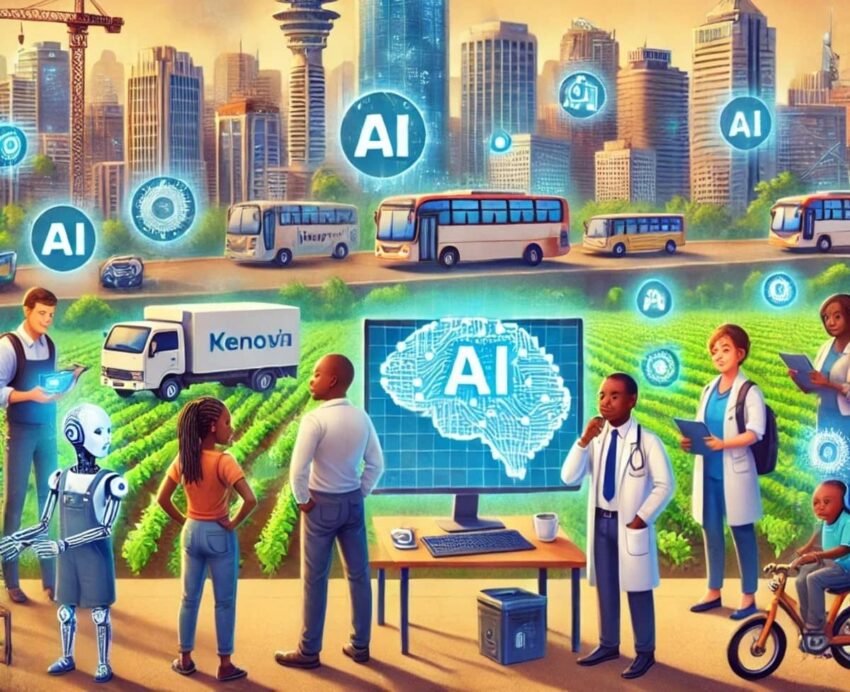
Microsoft brought its global AI Tour to Kenya on March 12, 2025, showing how important the country has become for technology in Africa. The event happened right after Kenya launched its National AI Strategy for 2025-2030, which plans to use artificial intelligence to solve problems in healthcare, farming, education, and banking.
During the conference, Microsoft announced it will train one million Kenyans in AI and cybersecurity skills by 2027. The event showed how AI is already making a difference in Kenya – helping farmers get loans, improving medical care, and giving more people access to banking services. Kenya worked with UNESCO to make sure its AI plan is ethical and inclusive. This visit by Microsoft proves Kenya is becoming a leader in technology across Africa.
A hub for AI innovation
Kenya’s selection for this prestigious gathering reflects its remarkable progress in embracing digital technologies. The nation has positioned itself at the forefront of Africa’s tech revolution, a status recently formalized after its comprehensive National Artificial Intelligence Strategy covering 2025–2030 was launched.
This forward-thinking blueprint aims to deploy AI technologies strategically to tackle pressing societal challenges, stimulate economic development, and ensure sustainable growth while emphasizing inclusive participation and ethical implementation.

Microsoft’s commitment to AI skilling
Central to the conference was Microsoft’s unveiling of an expansive AI and cybersecurity education initiative designed to reach one million Kenyans within two years. This ambitious program perfectly complements Kenya’s Vision 2030 development agenda and Digital Masterplan, focusing on equipping citizens with crucial technical competencies needed to thrive in an increasingly AI-powered economy.
Phyllis Migwi, who leads Microsoft’s operations in Kenya, highlighted the necessity of workforce readiness. He notes that widespread adoption of AI technologies demands “fundamental shifts in terms of mindset and workflow.”
AI transforming key sectors
The conference highlighted numerous innovative applications already reshaping Kenya’s economic landscape:
Agriculture: Kenya’s farming sector is witnessing remarkable transformation through AI-powered solutions. Platforms integrated with M-Pesa now utilize sophisticated algorithms for credit assessment and microfinancing services, extending crucial financial support to previously underserved agricultural communities and small-scale farming operations.
Healthcare: Medical professionals leverage AI systems to enhance diagnostic accuracy and develop more effective treatment protocols. Meanwhile, agriculturalists benefit from AI-driven early warning technologies that help predict and mitigate potential locust invasions, protecting crucial food resources and farmer livelihoods.
Financial Services: The integration of artificial intelligence within Kenya’s pioneering financial platforms has dramatically expanded banking access, allowing previously excluded populations to participate in formal financial systems and utilize credit facilities that were once beyond reach.

Collaborative efforts and ethical considerations
Kenya’s AI development journey exemplifies successful collaboration between government agencies, private enterprises, and international organizations. UNESCO has played a particularly significant role in helping shape the national AI framework, ensuring that Kenya’s technological advancement proceeds with appropriate ethical guardrails and inclusive principles.
The strategy emphasizes addressing fundamental needs in key sectors—agriculture, healthcare, education, and financial services—through innovative partnerships and engagement with civil society organizations.
Looking ahead
As Kenya continues to advance its AI capabilities, attention remains focused on fostering an ecosystem that nurtures innovation while addressing societal needs. The government’s proactive policy approach, combined with initiatives like Microsoft’s AI Tour and comprehensive skills development programs, positions Kenya to harness artificial intelligence’s full potential for driving economic prosperity and social advancement.
Microsoft’s decision to include Nairobi in its global AI Tour represents more than just another tech conference; it signifies a watershed moment in Kenya’s digital evolution. Through strategic planning, collaborative partnerships, and unwavering commitment to ethical AI deployment, Kenya is establishing itself as Africa’s preeminent hub for technological innovation and digital transformation.
Is Kenya set to be the leader in AI innovation across Africa? Please share your views below.