

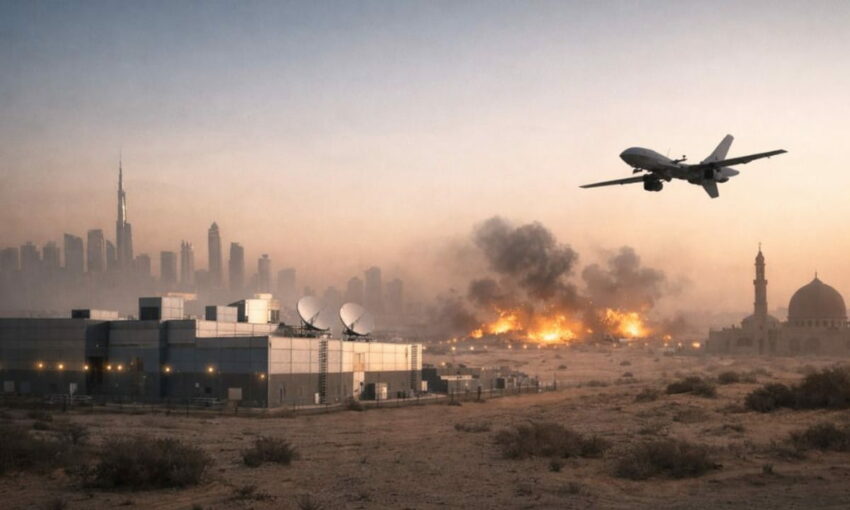
The rapid expansion of artificial intelligence infrastructure in the Middle East is facing a new test as escalating military tensions in the region raise security concerns. The war in Iran threatens hundreds of billions of dollars in technology investments.
Over the past several years, the Gulf region has emerged as one of the world’s fastest-growing hubs for artificial intelligence infrastructure. Governments in different countries, such as Saudi Arabia and the United Arab Emirates, have partnered with major technology companies, including Microsoft, Amazon, Oracle, and Nvidia, to build massive data centers designed to power advanced AI computing.
Those projects now face new geopolitical risks as the war in Iran threatens to disrupt the region that many tech firms selected as the next frontier for artificial intelligence infrastructure.
Drone strikes targeting cloud infrastructure sites connected to Amazon’s regional cloud operations have intensified concerns that large AI data centers could become targets if the conflict spreads further.
While the attacks did not destroy major facilities, they highlighted the vulnerability of hyperscale computing infrastructure in areas exposed to geopolitical tensions.
Gulf becomes a global AI investment magnet
For technology companies racing to build the computing power required for next-generation artificial intelligence models, the Gulf offered an attractive combination of energy resources, land, and government support.
Hyperscale data centers require enormous power supplies to operate thousands of advanced processors and cooling systems needed for AI workloads. Countries in the Gulf are uniquely positioned to meet those demands.
Cheap electricity, strong government backing, and sovereign wealth funding have allowed Gulf nations to attract some of the largest AI infrastructure projects in the world.
Over the past decade, governments across the region have launched national artificial intelligence strategies designed to diversify their economies beyond oil while positioning themselves as major players in the global digital economy.
The United Arab Emirates began investing aggressively in artificial intelligence infrastructure around 2018, building research programs and technology partnerships aimed at transforming the country into a global AI hub.
Saudi Arabia has invested billions into data center construction, cloud computing partnerships, and sovereign AI funds designed to attract international technology companies.
Together, these initiatives have drawn enormous investment commitments from global technology firms seeking locations capable of supporting massive computing clusters. But does the war in Iran threaten that scenario?
Security threats force rethink of data center design
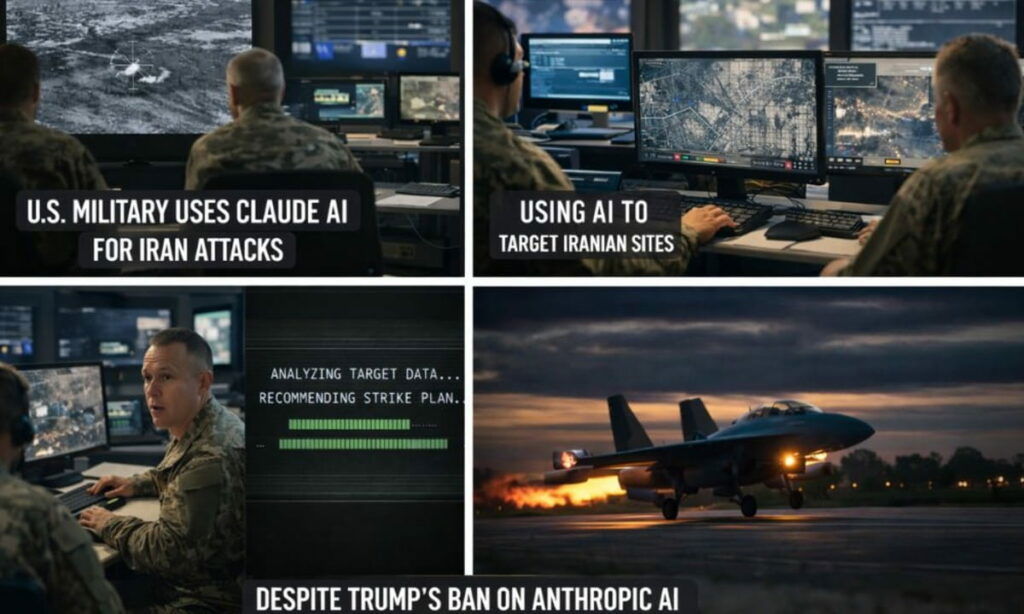
The latest war in Iran is now forcing governments and technology companies to reconsider how these facilities are built and protected.
Jesse Marks, chief executive of RIHLA Research, said the region’s AI infrastructure may soon incorporate far stronger security planning.
“Defense integration is going to have to be one of the first major changes that Gulf states think about,” Marks said.
He pointed to the 2019 attacks on oil infrastructure operated by Saudi Aramco as an example of how geopolitical shocks can reshape national infrastructure planning.
Those attacks temporarily disrupted global energy markets and prompted significant upgrades to regional defense systems protecting oil facilities.
Analysts believe similar thinking may now be applied to artificial intelligence infrastructure.
Many of today’s AI data centers follow what experts call a concentrated infrastructure model. Massive computing campuses combine power plants, cooling systems, fiber-optic connections, and thousands of processors in a single location.
This model improves efficiency and performance, but can create vulnerabilities if a facility becomes a target.
A successful strike on a hyperscale data center could damage critical hardware and disrupt services that rely on artificial intelligence, including cloud computing platforms, government analytics systems, and commercial AI applications.
To reduce those risks, experts say future AI infrastructure may emphasize geographic dispersion — spreading computing capacity across multiple locations rather than concentrating it in a single mega-campus.
Countries with vast land areas, such as Saudi Arabia, may be better positioned to adopt this strategy than smaller states like the United Arab Emirates, where infrastructure tends to be more centralized.
Conflict introduces new investment risks
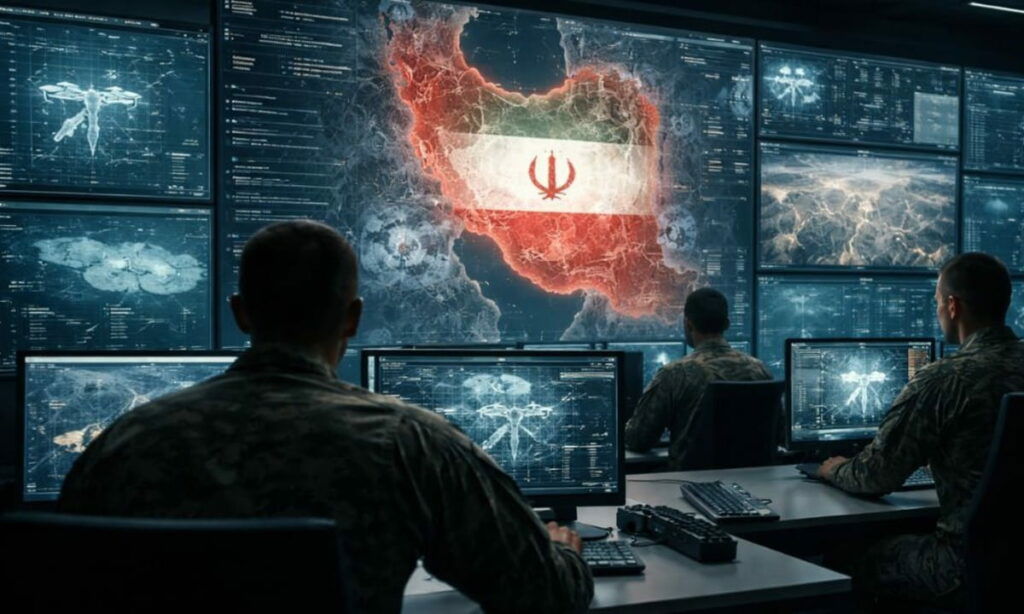
Despite the heightened risks, analysts say the war in Iran is unlikely to cause major technology companies to abandon their Gulf investments.
Instead, the war may introduce what Marks described as a “wartime premium,” raising costs for security, insurance, and risk management.
Reports circulating on Iranian messaging platforms suggested some data centers were viewed as potential targets because they were believed to support U.S. or Israeli military operations through cloud computing infrastructure.
Even if those claims remain disputed, the perception alone could influence future risk calculations for technology investors.
Still, several structural advantages continue to make the Gulf attractive for artificial intelligence development.
The region offers abundant energy resources, access to sovereign capital, and strong political relationships with Western technology firms.
These factors help explain why major cloud providers continue to explore large-scale infrastructure projects across the region.
AI computing becomes a strategic asset
The growing importance of artificial intelligence is also transforming how governments think about computing infrastructure.
Increasingly, AI computing capacity is being treated as a strategic national asset similar to oil, energy, or telecommunications networks.
Countries that control large computing clusters capable of training advanced AI models may gain economic and geopolitical advantages in the coming decades.
For Gulf nations seeking to diversify beyond fossil fuels, artificial intelligence represents a path toward building new technology-driven economies.
That ambition has led governments to invest heavily in long-term AI development plans funded by sovereign wealth funds and energy revenues.
Experts say those strategic goals are unlikely to change even if geopolitical tensions temporarily slow construction timelines.
U.S. infrastructure expansion faces its own challenges
Some policymakers in the United States have argued that more AI infrastructure should be built domestically rather than overseas.
However, constructing large-scale data centers in the United States also presents significant challenges.
AI facilities consume enormous amounts of electricity, and some regions are already facing rising power demand and concerns about grid capacity.
U.S. President Donald Trump previously urged technology companies to develop independent power systems to support future data center growth.
Even with such efforts, expanding domestic computing infrastructure may require major upgrades to electricity networks and power generation capacity.
These constraints partly explain why technology companies have looked toward regions like the Gulf, where energy resources and land are often more readily available.
Long-term AI ambitions remain intact
While the war in Iran may delay certain projects, analysts say it is unlikely to derail the broader push to build artificial intelligence infrastructure across the Gulf.
Saudi Arabia and the United Arab Emirates have already committed massive funding to AI initiatives and are expected to continue developing large-scale computing facilities.
The longer the conflict continues, the greater the potential impact on supply chains, shipping routes, and energy production across the region.
Those disruptions could affect the construction timelines for new data centers and related infrastructure.
Still, experts say the Gulf’s ambition to become a global hub for artificial intelligence remains intact.
The current conflict may change how AI infrastructure is built — adding stronger security planning and risk management — but the long-term investment momentum behind the region’s technology expansion is unlikely to disappear.
Please share your views on the latest developments in the Gulf and how the war in Iran could impact AI’s future.