


Steve Jobs once described personal computers as humanity’s “bicycle for the mind.” Forty years later, we are hearing about AI superintelligence, thanks to Mark Zuckerberg, who aims to transform that revolutionary concept through artificial intelligence, wearable technology, and personalized superintelligence systems. The Meta founder recently unveiled his most ambitious project: Meta Superintelligence Labs.
This groundbreaking research initiative focuses on creating AI systems designed to enhance individual lives rather than automate workplace tasks.
“We’re witnessing superintelligence emergence,” Zuckerberg declared in a Facebook announcement. “This technology promises unprecedented personal empowerment.”
Zuckerberg’s intimate approach to AI excellence
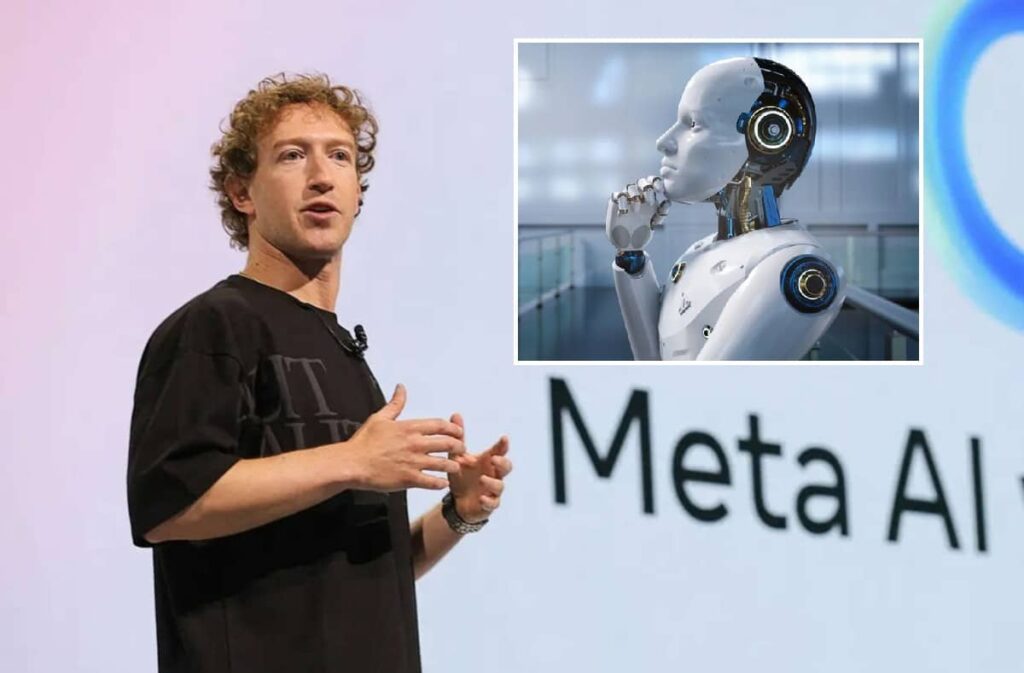
Meta’s superintelligence strategy differs from competitors like OpenAI and Google DeepMind. While those companies pursue cosmic mysteries and economic transformation, Zuckerberg targets personal connection. His vision centers on AI assistants helping users achieve personal objectives, strengthen relationships, and unleash creative potential.
“People increasingly use enhanced productivity for creative pursuits, cultural experiences, meaningful relationships, and life enjoyment,” Zuckerberg explained. “Superintelligence will dramatically accelerate these positive trends.”
This philosophy translates into substantial financial commitment. Meta allocated over $17 billion in Q3 capital investments, primarily targeting AI infrastructure development and data center expansion. The company invested more than $14.3 billion in Scale AI partnerships while recruiting top talent from OpenAI, Google, and Anthropic.
Zuckerberg explicitly rejects workforce automation as AI’s ultimate purpose.
“Our mission isn’t automating all human work for passive consumption,” he stated. “We’re democratizing personal intelligence access.”
Smart glasses: The future computing interface

Meta’s superintelligence roadmap emphasizes AI-powered smart eyewear. The Ray-Ban Meta glasses achieved remarkable success, with over 2 million units sold since their 2023 debut. Early 2025 sales figures show triple-digit growth, proving consumer appetite for wearable AI technology.
Zuckerberg positions these devices—including upcoming Oakley Meta AI models and Prada-designed variants—as humanity’s next primary computing platform.
“These wearables observe our visual environment, process audio input, and maintain continuous interaction capabilities,” he noted.
Smart glasses leverage real-world contextual data to transcend traditional text-based interfaces. They could revolutionize daily navigation by providing live conversational feedback and supporting informed decision-making throughout users’ experiences.
Financial performance validates AI investment strategy
Meta’s futuristic vision already generates measurable financial returns. The company reported $47.5 billion in Q2 revenue, representing 22% year-over-year growth, alongside $18.3 billion in profits that exceeded analyst projections.
Investment community sentiment has shifted positively following initial skepticism about Meta’s metaverse-to-AI transition.
“Artificial intelligence now drives genuine revenue streams beyond marketing hype,” observed Jesse Cohen from Investing.com.
Machine learning applications have enhanced user engagement across Meta’s ecosystem, from Facebook content algorithms to WhatsApp personalization features.
Meta projects Q3 revenue between $47.5 billion and $50.5 billion, providing substantial resources for continued AI research and development.
Personal superintelligence as digital life coach
Zuckerberg’s personal AI philosophy mirrors Jobs’ original computing vision while expanding its scope. Where Jobs emphasized productivity enhancement, Zuckerberg envisions superintelligence as comprehensive lifestyle guidance.
“I fundamentally believe in universal personal superintelligence access,” he emphasized. “Meta possesses the infrastructure resources and technological capabilities to deliver cutting-edge solutions to billions of users worldwide.”
Recent Elon University research indicates 51% of consumers already utilize large language models for personal rather than professional applications. This trend positions Meta advantageously to provide emotionally intelligent, perpetually available AI companions.
High-stakes competition with global implications
Despite optimistic projections, Zuckerberg acknowledges significant challenges ahead. His recent blog post highlighted superintelligence’s “unprecedented safety considerations,” describing the next five years as “critically decisive” for determining whether AI promotes individual growth or disrupts social foundations.
This competition transcends business rivalry. It shapes civilization’s trajectory. While OpenAI’s Sam Altman pursues societal restructuring and DeepMind’s Demis Hassabis targets scientific breakthroughs, Zuckerberg bets on personal connection through Meta’s integrated hardware, software, and social platform ecosystem.
Critics question whether focusing superintelligence on personal development and content creation maximizes AI’s transformative potential. With hundreds of billions invested globally, some argue Zuckerberg should address larger challenges like disease treatment or climate solutions—areas currently outside Meta’s immediate scope.
However, for billions using Meta’s platforms daily, personal AI empowerment might prove sufficiently valuable—particularly if delivered through intuitive, always-accessible, human-centered experiences.
The new mental bicycle takes shape
Zuckerberg’s reinterpretation of Jobs’ “bicycle for the mind” emphasizes seamless life integration over raw computational power. Whether Meta’s AI superintelligence delivers genuine empowerment or merely adds another digital layer to human experience remains uncertain.
Zuckerberg rejects impersonal superintelligence operating invisibly. His strategy centers on accessible, conversational, dependable AI companions. In this vision, the mental bicycle becomes voice-controlled, cloud-powered, and worn as fashionable eyewear.
The future of personal computing may well depend on whether consumers embrace this intimate AI relationship or seek more transformational applications elsewhere.
What’s your perspective on Zuckerberg’s personal AI vision? Do you believe smart glasses will become our primary computing interface, or do you see other technologies leading the superintelligence revolution?
Please share your thoughts below.