

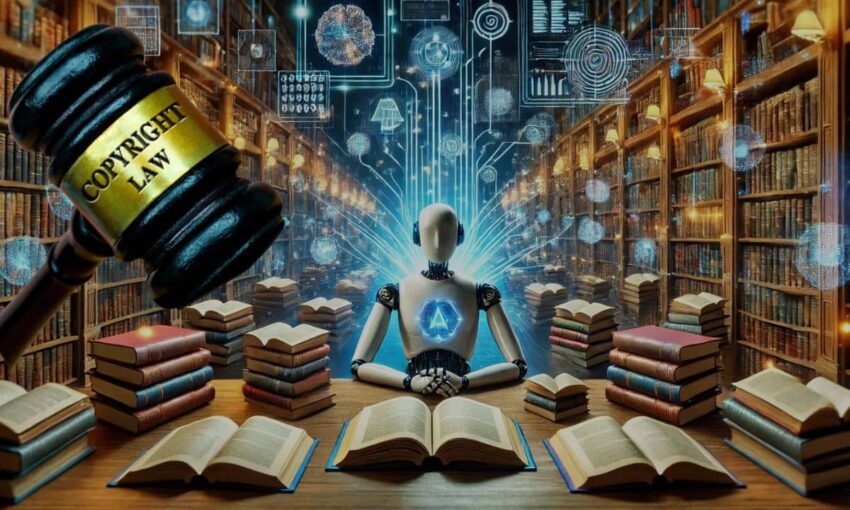
Artificial intelligence companies scored a crucial victory in federal court this week. But the win came with serious strings attached.
Judge William Alsup of the U.S. District Court delivered a groundbreaking decision Monday. He ruled that training AI models on copyrighted literature qualifies as fair use. The judgment doesn’t require author permission for legitimate training purposes. This marks the first clear legal guidance in ongoing copyright battles against AI developers.
However, Alsup issued a stern warning about content acquisition methods. Stealing copyrighted material through piracy remains strictly prohibited.
“The copies used to train specific LLMs were justified as a fair use,” Alsup stated in his ruling. “Every factor but the nature of the copyrighted work favors this result. The technology at issue was among the most transformative many of us will see in our lifetimes.”
Historic decision shapes AI development

The legal battle began last August when three prominent authors, including Andrea Bartz, Charles Graeber, and Kirk Wallace Johnson, filed suit against Anthropic. They alleged the company harvested millions of books through various means. These materials were then used to train Claude, Anthropic’s advanced AI system.
The court recognized the creative and expressive nature of the authors’ works. Such materials typically receive stronger copyright protection under existing law. Despite this acknowledgment, Alsup determined Anthropic’s usage was “exceptionally transformative.” The decision stressed that AI training creates entirely new capabilities rather than reproducing original content.
Fair use analysis in American law relies on four key factors:
1. Commercial versus transformative purpose — whether use adds new meaning or expression
2. Creative versus factual nature — the type of copyrighted material involved
3. Portion used — how much of the original work is incorporated
4. Economic impact — potential harm to the original work’s market value
Anthropic’s case satisfied three of these four criteria convincingly. Only the creative nature of the source material weighed against the company. This single factor proved insufficient to defeat the fair use claim.
“Anthropic’s LLMs trained upon works not to race ahead and replicate or supplant them — but to turn a hard corner and create something different,” the company declared following the verdict. The statement reflected the judge’s emphasis on transformation over replication.
Victory comes with clear boundaries
While the ruling permits AI training on copyrighted books without explicit consent, acquisition methods matter significantly. Alsup drew a sharp distinction between legitimately purchased materials and illegally obtained content.
“That Anthropic later bought a copy of a book it had earlier stolen off the internet will not absolve it of liability for the theft,” the judge wrote. “But it may affect the extent of statutory damages.”
This distinction means Anthropic isn’t completely off the hook. The company still faces a trial regarding AI regulation, especially allegations of using pirated materials during data collection. The court accepted training on copyrighted content as legal but questioned the sourcing methods.
The ruling provides AI companies with a clear framework moving forward. Fair use protection applies when training materials are obtained through lawful channels. Companies must avoid copyright infringement during the acquisition phase.
Creative communities and tech industry react

Generative AI technology has sparked unprecedented creativity and controversy since 2023. Authors, journalists, musicians, and visual artists have challenged unauthorized use of their copyrighted materials. Many argue that AI companies built billion-dollar businesses using intellectual property without permission or compensation.
This California decision represents the first definitive U.S. legal guidance on the issue. While it doesn’t bind other courts, the ruling sends a powerful signal. Judges may favor technological innovation over strict reproduction concerns in future cases.
Author advocacy organizations expressed mixed reactions to the verdict. They acknowledged that the legal focus is shifting from whether content can be used to how it’s obtained. This evolution may reshape future litigation strategies.
Meanwhile, major tech companies have already begun adapting their approaches. OpenAI, Google DeepMind, and Meta have negotiated licensing agreements with publishers and media organizations. These partnerships aim to prevent future legal challenges while ensuring legitimate content access.
Long-term implications for AI innovation
The decision’s impact extends far beyond Anthropic’s immediate legal situation. If other courts follow this precedent, it could fundamentally alter AI development practices. Companies may abandon questionable scraping techniques in favor of legitimate partnerships.
The ruling encourages a more ethical approach to AI training data acquisition. It suggests that technological advancement and copyright protection can coexist through proper legal channels.
For the immediate future, Judge Alsup’s decision establishes important boundaries. AI companies can pursue transformative innovation using copyrighted materials. However, they must obtain training data through legitimate means rather than digital piracy.
This landmark ruling will shape the future of AI development and copyright law. How do you think this decision will impact creators, tech companies, and innovation? Share your thoughts below.