

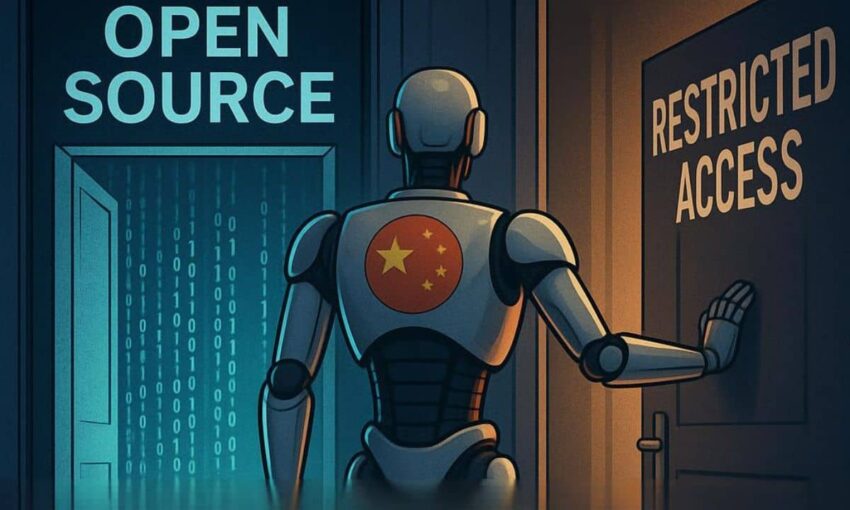
China has rapidly become a global leader in open-source artificial intelligence technology, but experts warn this era of digital generosity may be temporary as national security concerns and strategic advantages come into play.
The country’s tech firms have released powerful AI models to the public with fewer restrictions than their Western rivals, but growing signs suggest Beijing might soon pull back from this approach as geopolitical tensions rise and its technological capabilities mature.
China’s current open-door AI policy
Chinese tech companies have surprised global competitors since early 2025 by embracing open-source AI development with unusual enthusiasm. Major players, including Alibaba, Tencent, Baidu, and startup DeepSeek, have made sophisticated AI models freely available with minimal usage restrictions.
DeepSeek captured international attention when it released a high-performing language model that anyone could download, study, and modify — a move that prompted Meta’s chief AI scientist Yann LeCun to acknowledge, “Open source models are surpassing proprietary ones.”
The Chinese government has publicly supported this approach. In January, Premier Li Qiang met with DeepSeek CEO Liang Wenfeng and recognized him as the representative of China’s AI sector, signaling official backing for the open-source strategy.
“This open approach helps us build credibility in the global tech community,” Liang said in a rare media interview last year. “It shows we’re serious about advancing AI for everyone.”
China’s eagerness to share advanced AI technology stems partly from practical necessities. U.S. export controls have restricted Chinese companies’ access to cutting-edge AI chips from manufacturers like Nvidia. By contributing to open-source projects, Chinese firms can collaborate with global researchers and access innovations they might otherwise struggle to develop independently.
“They’ve turned a disadvantage into an opportunity,” said Maria Chen, technology policy analyst at the Global Digital Institute. “Without top-tier American chips, China has focused on making their AI models more efficient and building goodwill by sharing them freely.”
Building technical capabilities through collaboration

This collaborative approach has accelerated China’s AI development significantly. By participating in global open-source communities, Chinese companies can pool resources with international partners and close the gap with American leaders like OpenAI and Google.
The impact has been measurable. In 2024, China claimed a position among the top 10 most active countries contributing to generative AI projects on GitHub, the world’s largest platform for open-source development.
DeepSeek and similar Chinese models have achieved impressive technical results despite hardware limitations. These systems can write code, translate languages, analyze documents, and generate images with capabilities approaching those of more restricted Western alternatives.
“Chinese researchers have gotten creative with their technical approaches,” said Robert Taylor, AI researcher at Cambridge University. “They’ve developed methods to train powerful models using less computing power, and because they’re shared openly, these techniques benefit developers worldwide.”
This strategy has paid unexpected dividends beyond technical progress. China has gained significant international goodwill, particularly among developing nations seeking affordable AI solutions without dependence on Western tech giants.
“China has gained an advantage over the United States — not only in technology, but also in vibes,” noted economist Tyler Cowen in a recent column, referring to the positive perception China has cultivated through its open approach.
Global influence through digital generosity
China’s open-source AI offerings have found eager adopters globally, particularly in countries looking to build independent technology capabilities without being locked into American or European systems.
These unrestricted AI models have been incorporated into applications ranging from government services and healthcare to education and manufacturing across Asia, Africa, and Latin America.
The European Union has taken notice of this strategy. Earlier this year, the EU announced a €200 billion initiative supporting “cooperative, open innovation” in AI, partly motivated by China’s success and concerns about dependence on U.S. technology giants.
“China is building influence through digital generosity,” said Sarah Johnson, international relations professor at Georgetown University. “It’s a form of soft power that costs relatively little but yields significant diplomatic benefits.”
However, this open approach may have a limited shelf life as China’s strategic priorities evolve.
Signs of a coming policy shift
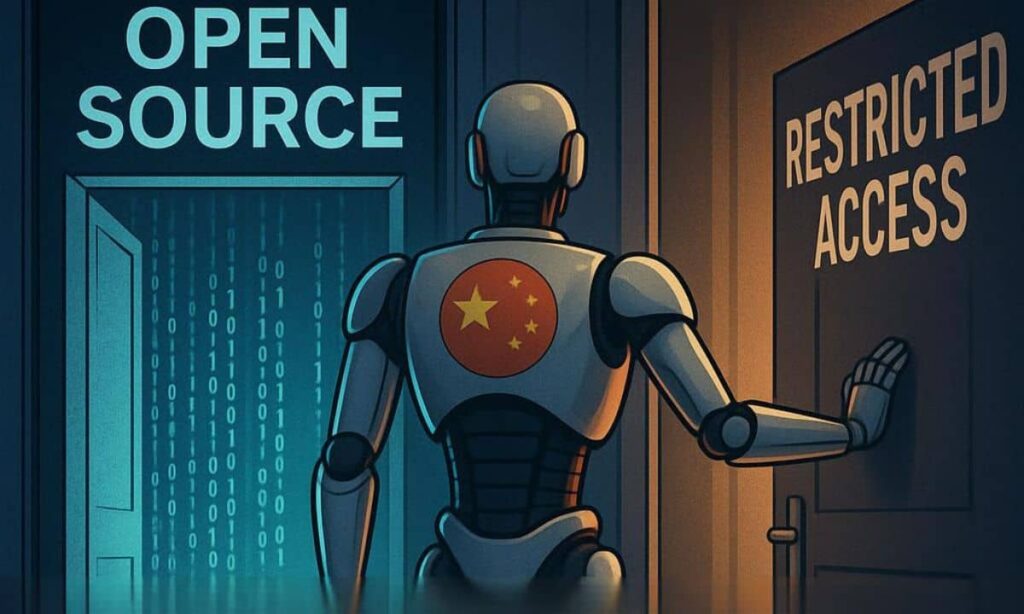
Several indicators suggest Beijing may soon restrict its AI openness as the technology matures and security concerns grow.
China has previously followed a pattern of encouraging openness during developmental phases of technology, then imposing restrictions once national companies achieve leadership positions. This occurred notably in electric vehicle battery technology, where China initially welcomed partnerships but later tightened export rules after establishing market dominance.
“Open source serves China now,” wrote analyst Robyn Mak. “But that may not always be the case — and when it’s not, Beijing’s policy will likely change.”
Early signs of this shift are already visible. In March 2025, Chinese regulators announced new rules requiring all AI-generated content to be clearly labeled, effective September 1. While presented as a consumer protection measure, experts see it as an initial step toward greater government oversight of AI applications.
Simultaneously, Beijing has intensified efforts to develop technological self-sufficiency, particularly in computing infrastructure. The government is promoting adoption of alternative chip designs, including the RISC-V architecture, to reduce reliance on Western intellectual property.
“China’s open-source strategy has always been part of a bigger plan for technological independence,” explained Michael Wong, technology analyst at East Asian Markets Research. “Once they achieve sufficient capabilities, the incentives for openness diminish.”
Some Chinese companies have already begun developing AI models using domestically produced chips from manufacturers like Huawei, preparing for a future where U.S. restrictions might tighten further.
Strategic calculations behind closed doors
China’s current approach offers multiple strategic advantages that may eventually be outweighed by security concerns.
The open-source strategy has allowed Chinese firms to learn rapidly from global AI research, train models more efficiently by sharing resources, and scale their technologies quickly despite hardware limitations. However, as China’s AI ecosystem matures and achieves greater independence, the benefits of sharing may diminish compared to the advantages of protecting advanced capabilities.
This calculation becomes particularly relevant as AI increasingly touches military applications, critical infrastructure, and sensitive data analysis – areas where national security concerns naturally lead to greater restrictions.
“Beijing is making a complex cost-benefit analysis,” said Jennifer Liu, senior fellow at the Center for Strategic Technology. “Right now, the benefits of openness outweigh the costs. But that equation changes once China achieves technological parity or leadership in key AI domains.”
The intensifying technology competition between the United States and China further complicates this picture. As OpenAI prepares to release its first open-weight model in years and Meta expands its Llama series, the stakes in AI development are increasingly tied to national strategic interests rather than purely commercial considerations.
Global implications of a policy reversal
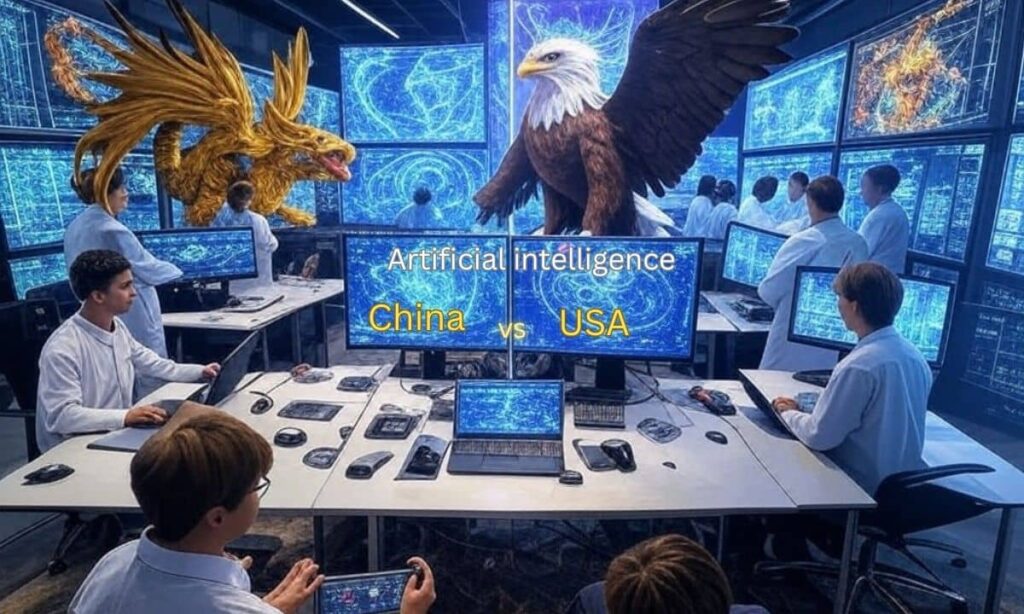
If China begins restricting its AI openness, the effects would ripple through the global technology ecosystem.
Researchers and developers worldwide have benefited from access to powerful Chinese models. A policy shift could fragment the global AI community, potentially forcing countries and companies to choose between different technological ecosystems with limited interoperability.
“The open exchange of AI research has accelerated progress for everyone,” said David Martinez, director of AI policy at the Digital Rights Foundation. “If major contributors like China pull back, we could see innovation slow in crucial areas like climate modeling, drug discovery, and language translation.”
Developing nations that have built systems atop Chinese open-source models might face particular challenges if future updates or support became restricted. This could inadvertently strengthen Western companies’ market positions despite China’s current efforts to provide alternatives.
For global AI governance, China’s potential retreat from openness would complicate efforts to establish common standards and ethical guidelines. Different regions might adopt incompatible approaches to AI safety, privacy, and accountability.
The path forward
China stands at a crossroads in its AI development strategy. The open approach has served its interests well so far – accelerating technological progress, building international goodwill, and establishing Chinese companies as serious AI contenders despite hardware limitations.
But as strategic considerations evolve, Beijing faces difficult choices about how much AI capability to share versus protect. These decisions will shape not just China’s technological trajectory but the future of global AI development.
“The world has benefited from China’s open-source contributions,” said Thomas Wilson, technology policy director at the International Digital Cooperation Institute. “The question is whether that openness can survive the growing view of AI as a strategic national asset rather than just a commercial technology.”
For now, Chinese models remain accessible to developers worldwide. But the countdown to a more restricted era may have already begun – with significant implications for global technology, geopolitics, and the future of artificial intelligence itself.
As China’s open-source AI strategy evolves, we want to hear from you. How do you think changing Chinese AI policies might affect global technology development? Are you a developer using Chinese AI models, or a business leader navigating these shifting technology landscapes?
Share your experiences and thoughts on this important technological and geopolitical shift in the comments below.