


The U.S. office real estate sector experienced a dramatic selloff this week as AI fears swept through Wall Street, but industry leaders and some analysts are pushing back against what they characterize as an overreaction in the market. The sharp declines have sparked debate over whether investor concerns about AI’s workplace impact are justified or exaggerated.
Thursday’s trading session delivered punishing results for major industry players. CBRE Group Inc. shares fell nearly 9% by market close, after touching losses exceeding 12% during intraday trading. This represented one of the sharpest single-day declines the company has experienced outside major economic disruptions like the COVID-19 pandemic and the 2008 financial crisis, according to research from Oppenheimer.
The broader sector faced similar pressure. Jones Lang LaSalle saw its stock decline 7.6%, while Hudson Pacific Properties retreated nearly 4%. Newmark and Boston Properties each dropped more than 4%, and SL Green Realty fell approximately 5%. The coordinated selloff reflects investor migration away from businesses perceived as vulnerable to technological displacement.
“Investors are rotating out of high-fee, labor-intensive business models viewed as potentially vulnerable to AI-driven disruption,” explained Jade Rahmani, an analyst at Keefe, Bruyette & Woods.
The assessment captures growing market sentiment that traditional service-oriented real estate operations may face structural challenges from emerging technologies.
What triggered the sudden market panic?

Recent commentary from prominent technology figures raising AI fears intensified market unease this week. Matt Shumer, co-founder and CEO of OtherSide AI, published an essay arguing that artificial intelligence could eliminate numerous entry-level white-collar positions, potentially creating economic disruption exceeding the pandemic’s impact. Shumer reported his piece generated 30 million views within 24 hours, underscoring widespread public interest in AI’s economic ramifications.
Tech entrepreneur Elon Musk amplified AI fears during an appearance on the Dwarkesh Podcast. Musk envisioned a future where office buildings traditionally filled with workers become obsolete through AI and robotic automation.
“Corporations that are purely AI and robotics will vastly outperform any corporations that have people in the loop,” Musk stated.
He referenced historical shifts where entire skyscrapers once housed human “computers” that used to perform calculations that are now handled by modern technology.
These high-profile statements resonated powerfully with markets already sensitive to disruptive innovation. However, the commercial office sector has confronted multiple obstacles in recent years beyond AI speculation.
Elevated interest rates have increased financing expenses across the industry. Meanwhile, remote work adoption and hybrid employment models have diminished tenant demand for traditional lease agreements. AI now emerges as an additional concern stacked atop these persistent challenges.
Other sectors experienced similar AI fears
The office real estate decline follows similar AI-related setbacks in other industries. Software companies experienced stock drops earlier this year after advanced AI models from developers like Anthropic showcased capabilities, reducing demand for traditional legal and programming services.
Financial services equities also stumbled following Altruist’s launch of an AI-powered tax planning platform promising to complete sophisticated financial analysis within minutes. Transportation and logistics stocks suffered sharp declines after new AI freight optimization tools emerged. C.H. Robinson Worldwide plunged 20%, RXO declined 25%, and J.B. Hunt Transport Services lost over 6%.
Market volatility has increased as investors attempt to identify which sectors face the greatest disruption risk. Yet several of these earlier selloffs have partially recovered as fundamental business strength reasserted itself.
Strong earnings suggest the market may be overreacting
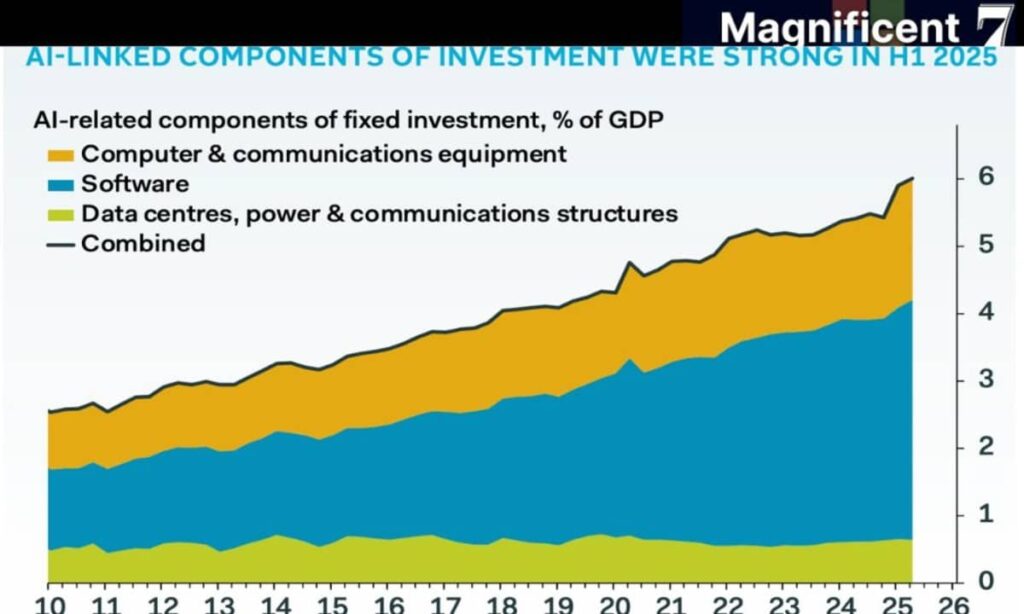
Despite market turbulence, commercial real estate leaders contend that AI fears may be significantly exaggerated—and recent financial results appear to support their case.
CBRE delivered impressive fourth-quarter results this week, posting core earnings of $2.73 per share that surpassed the FactSet consensus estimate of $2.68. The company’s full-year earnings projection, ranging from $7.30 to $7.60 per share, also exceeded analyst expectations, demonstrating robust underlying business performance.
CEO Bob Sulentic directly addressed AI concerns during CBRE’s earnings call, emphasizing the company has developed efficient AI tools designed to augment rather than replace broker capabilities. He stressed that many transactions CBRE manages involve intricate negotiations and specialized industry expertise requiring human creativity and judgment.
“We’ve become quite confident that that business really is driven by this strategic creative thinking that our brokers do,” Sulentic said. “And we think that’s going to continue to be the case, and we haven’t seen any evidence to the contrary.”
Sulentic’s comments highlight a critical distinction often overlooked in AI panic discussions: technology as enhancement versus replacement. Commercial real estate transactions frequently involve complex deal structures, relationship management, local market knowledge, and strategic problem-solving that current AI systems cannot fully replicate.
Wall Street analysts divided on AI impact
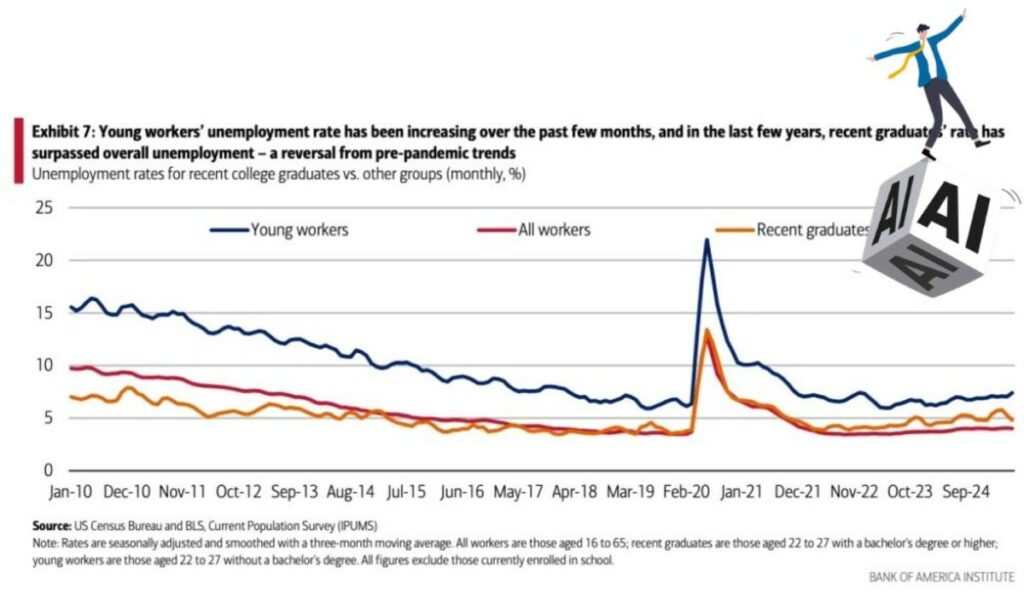
Some market observers believe investors have dramatically overreacted to AI fears. Barclays analyst Brendan Lynch maintained overweight ratings on CBRE and Newmark, advising clients to consider purchasing opportunities created by the selloff. He characterized the broad-based decline as inconsistent with underlying company fundamentals and earnings strength.
“We do not dismiss this risk, but note that thus far AI has been a net job creator,” Lynch stated.
He highlighted potential opportunities for commercial real estate service providers to capture revenue growth and operational efficiencies through strategic technology adoption rather than facing displacement.
Lynch’s perspective reflects growing recognition that AI may transform work processes without necessarily eliminating entire job categories. Commercial real estate firms could potentially leverage AI for routine tasks like property data analysis, market research, and administrative functions while human professionals focus on relationship-driven, strategic work.
However, not all analysts share this optimism. Thierry Wizman, a strategist at Macquarie, cautioned that companies failing to integrate AI into core business operations could face severe long-term consequences. He suggested outcome-driven AI systems capable of executing complete workflows might supplant traditional human-led processes across financial services and property sectors.
“For companies that are slow to adopt, or have built customer models based on costly human-level discretion and interaction, that transition may be fatal,” Wizman wrote in a Thursday research note.
The path forward remains uncertain
The short-term outlook for office real estate stocks remains unclear, with compelling arguments on both sides. Some investors identify value opportunities in discounted shares given solid earnings performance, strong balance sheets, and durable long-term fundamentals. These observers view the selloff as emotional rather than rational, driven by speculative AI fears rather than concrete business deterioration.
Others believe AI’s influence on workplace patterns and employment trends could permanently reshape commercial real estate dynamics. They argue that even if current AI systems cannot fully replace human workers, incremental improvements in automation could gradually reduce office space demand over time.
Markets will continue to evaluate economic indicators, monetary policy developments, and technological advances as they reassess traditional office asset valuations in an increasingly AI-enabled economy. The disconnect between CBRE’s strong earnings and its stock price decline suggests investors are pricing in future risks rather than responding to current business conditions.
Whether these AI fears prove prescient or overblown will likely depend on how quickly automation advances and whether commercial real estate companies successfully integrate new technologies to enhance rather than threaten their business models.
Do you think Wall Street is overreacting to AI fears in commercial real estate, or are these concerns justified? Please share your perspective in the comments.