

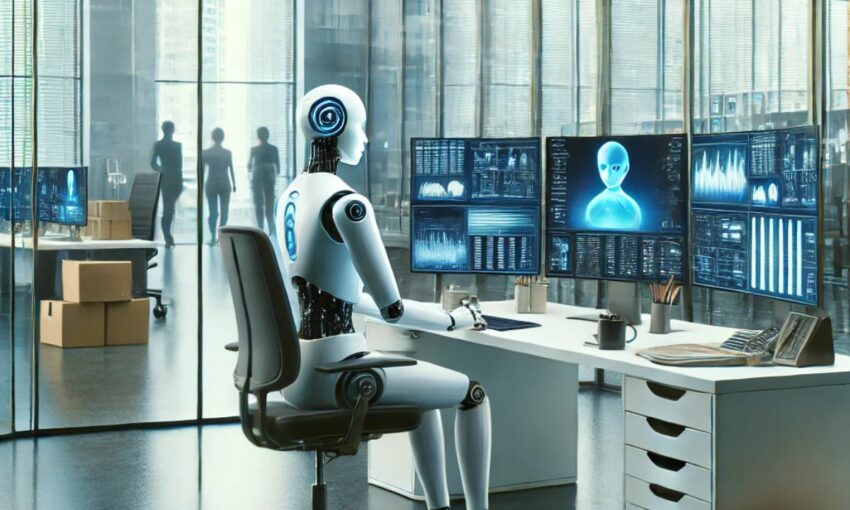
The artificial intelligence revolution is reshaping entry-level employment opportunities, creating unprecedented challenges for young professionals seeking their first career steps. Aneesh Raman, LinkedIn’s Chief Economic Opportunity Officer, has sounded the alarm about AI-led workforce disruption that could parallel the devastating manufacturing job losses of the 1980s. As millions of college graduates prepare to enter the competitive job market this spring, the traditional professional success path faces serious uncertainty.
This employment transformation represents more than a temporary shift. It signals a permanent change in how businesses operate and hire new talent. The implications stretch far beyond individual career prospects, potentially affecting entire generations of workers and the broader economic landscape.
The AI disruption of entry-level jobs
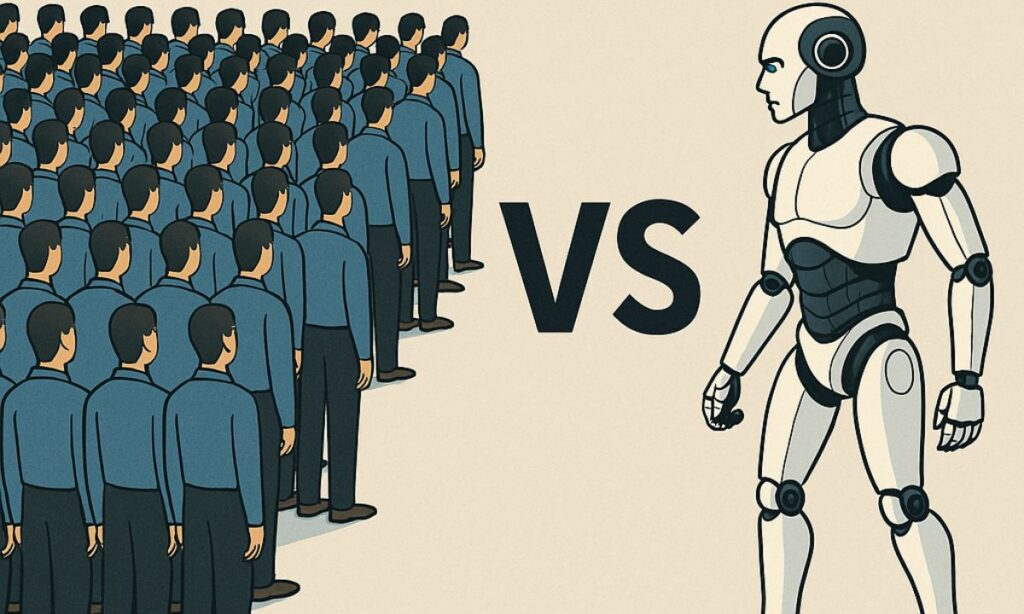
Raman identified the escalating threat that artificial intelligence poses to traditional first-job opportunities. These positions have historically provided essential experience and professional development for young workers entering various industries. The technology now systematically replaces what Raman describes as the fundamental “bottom rungs” of career advancement ladders.
Junior software developers exemplify this dramatic shift perfectly. These professionals previously built expertise through basic coding assignments and debugging exercises. Today, sophisticated AI tools handle these same tasks with increasing efficiency and accuracy. The automation trend extends well beyond technology sectors, infiltrating law firms, retail operations, and financial services institutions.
Wall Street firms face mounting economic pressures from market slowdowns and trade policy uncertainties. Industry sources report these companies are contemplating significant reductions in entry-level hiring programs. This development amplifies existing difficulties confronting recent graduates seeking employment opportunities.
College graduate unemployment rates are climbing faster than those affecting other worker categories. While researchers haven’t definitively established AI’s precise role in this troubling trend, mounting evidence suggests technology adoption contributes significantly to the tightening job market conditions.
A shifting job market
Despite mounting challenges, artificial intelligence hasn’t eliminated entry-level positions across all sectors. Forward-thinking businesses continue to value fresh perspectives and innovative problem-solving approaches that younger employees bring to workplace environments. Some organizations now leverage AI capabilities to accelerate junior staff development, enabling faster skill acquisition and increased responsibility levels.
The technology empowers certain entry-level workers to tackle complex assignments earlier in their professional journeys. This accelerated development model creates new pathways for career advancement, though it requires different skill sets than traditional progression routes demand.
Workforce evolution continues spreading across diverse industry sectors beyond initial technology disruptions. Raman predicts that finance, travel, hospitality, and professional services will soon experience similar artificial intelligence impacts. These ripple effects will likely affect broad categories of office-based employment as generative AI systems become increasingly sophisticated and accessible.
Educational institutions must urgently adapt their programs to address this evolving employment landscape. Raman emphasizes that colleges and universities need comprehensive AI integration within existing curricula. This educational transformation will better prepare students for careers where traditional entry-level responsibilities may no longer exist.
The adaptation of companies to AI
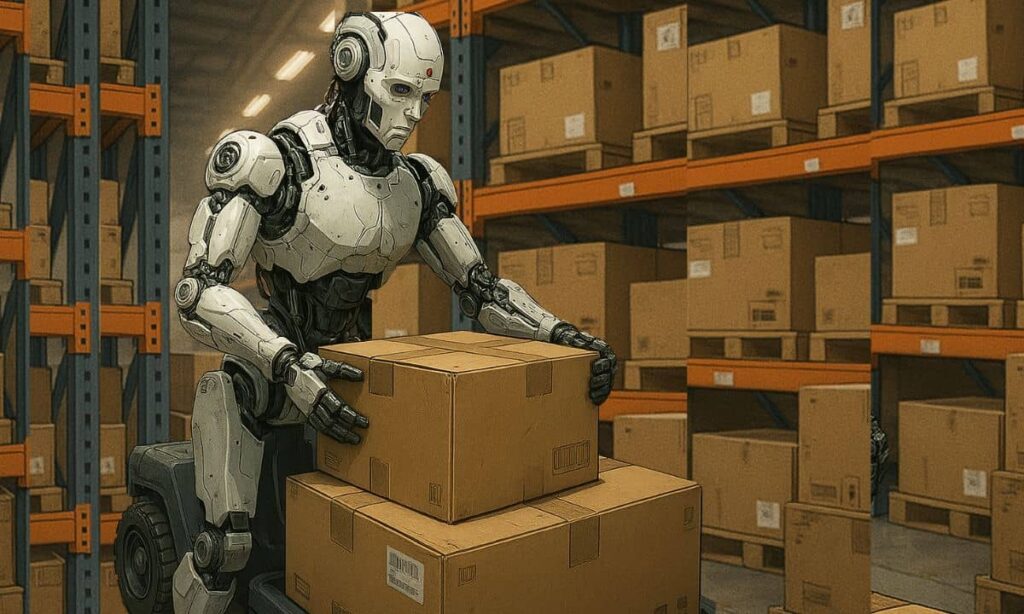
Organizations worldwide are struggling to understand and respond effectively to AI’s transformative impact on talent management strategies. Some companies have already begun adjusting their recruitment approaches to address these technological changes and workforce development challenges.
Jasper.ai CEO Timothy Young recently shared insights with Fortune about the “commoditization of intelligence” phenomenon affecting hiring practices. Young argues that recruiting the smartest candidates may become less critical than developing employees with strong leadership and management capabilities.
“Junior employees still possess tremendous value, but organizations can’t utilize their potential using traditional methods,” Young explained.
He stressed that curiosity and adaptability have become essential qualities when evaluating potential hires. This perspective suggests that while AI reduces dependence on conventional entry-level work, companies still seek dynamic individuals capable of thriving in rapidly changing environments.
Indeed, the major job search platform recently published research indicating that AI cannot completely replace human workers in most positions.
CEO Chris Hyams stated, “AI cannot completely replace entire jobs.”
However, Indeed’s comprehensive research reveals that approximately two-thirds of all occupations require skills that AI tools can perform with significant success rates exceeding 50 percent. This finding raises important questions about the future role of human labor in positions previously dependent on manual or routine tasks.
AI’s mixed impact and adjustments in the market
Not every company has enthusiastically embraced AI’s potential to replace human workforce members. Duolingo, the popular language-learning application, and Klarna, a prominent fintech company, recently scaled back ambitious plans to substitute human employees with automated systems. These decisions acknowledge significant limitations in current automation technologies and implementation challenges.
While initial enthusiasm for AI-driven efficiency improvements has moderated somewhat, comprehensive studies reveal that AI integration hasn’t proceeded as smoothly or delivered as dramatically as originally anticipated by many organizations.
An extensive IBM survey discovered that approximately three-quarters of AI initiatives fail to achieve their projected return on investment targets. This disappointing performance rate highlights the gap between theoretical potential and practical implementation realities facing businesses across various sectors.
Additionally, a National Bureau of Economic Research study examined workers in industries with high AI exposure levels. Researchers found that technology adoption had a minimal measurable impact on employee earnings or working hours.
University of Chicago economics professor Anders Humlum, one of the study’s lead authors, observed that the transition to AI-driven job structures has progressed more slowly and less dramatically than many experts initially predicted.
“The transformation is much smaller and more gradual than you might expect if you only studied the technology’s theoretical potential,” Humlum noted.
This observation suggests that AI’s workforce effects are developing more incrementally than dramatically, providing some reassurance about the pace of change.
Preparing for the future
As artificial intelligence continues to reshape workforce dynamics and employment structures, pressure on young professionals to adapt quickly will intensify across all industries. The central challenge involves balancing technological advancement benefits with maintaining human creativity, innovation, and professional flexibility requirements.
Educational institutions, employers, and individual workers must collectively adjust to this emerging reality. Success requires learning to utilize AI as an enhancement tool rather than viewing it as a wholesale replacement for human capabilities and judgment.
While declining entry-level opportunities present legitimate concerns for young professionals, the situation isn’t entirely pessimistic. Artificial intelligence creates new possibilities for individuals ready to embrace change and acquire relevant skills. These workers can access advanced responsibilities and learning opportunities earlier in their career trajectories.
However, achieving this positive outcome requires coordinated efforts from educational institutions, employers, and policymakers. Society must ensure that career advancement pathways remain accessible and meaningful for future generations entering the workforce.
The transformation demands proactive approaches to education, training, and professional development. Organizations that successfully navigate this transition will likely emerge as leaders in attracting and developing top talent in an AI-enhanced business environment.
How do you think AI will reshape your career plans or those of young people you know? Are you optimistic or concerned about these workplace changes? Share your thoughts below.