

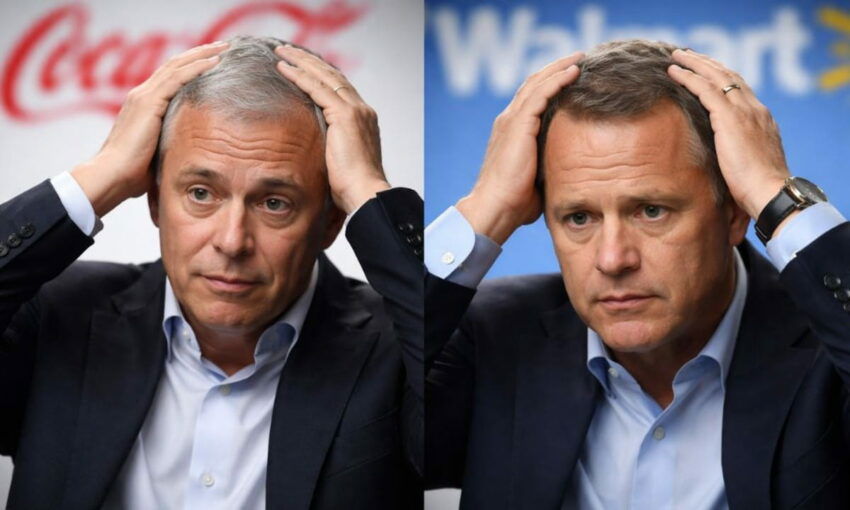
Artificial intelligence is no longer just disrupting products. The AI risk of falling behind is now disrupting the corner office itself.
Two of the most recognized names in global business — James Quincey of Coca-Cola and Doug McMillon of Walmart — have each cited AI as a driving force behind their decisions to step down. Their candor is striking. And their reasoning reveals something important about where corporate leadership is heading in an era defined by AI risk management.
AI risk forces a leadership reset at the top
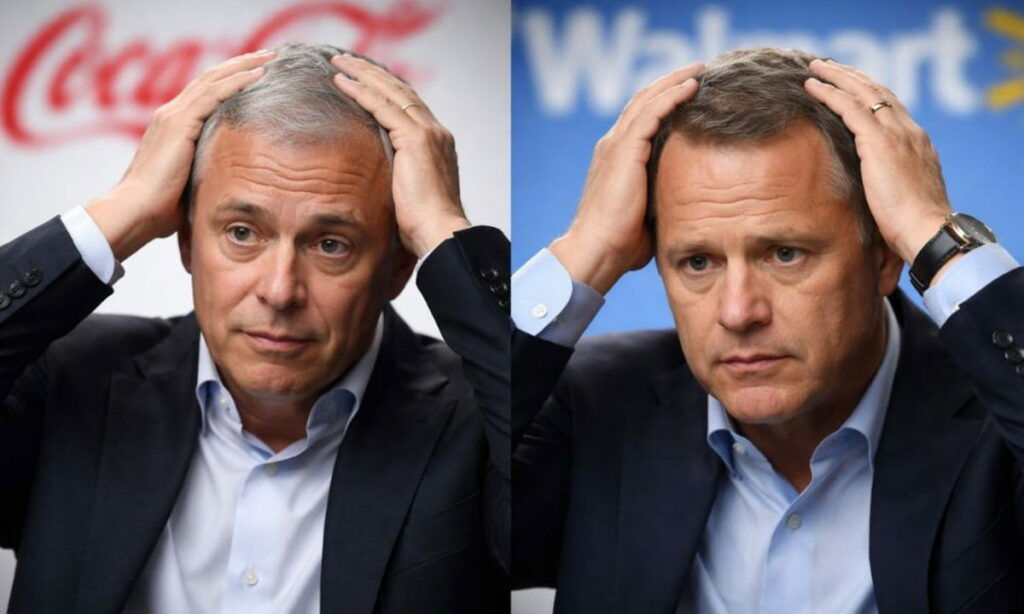
Quincey took the helm at Coca-Cola in 2017. Under his watch, the company modernized its operations and expanded globally. Yet he concluded that the next chapter would demand a different kind of leader — one built for the AI risk landscape ahead.
He put it plainly. His job, he said, was to figure out who belongs on the field for the next wave of growth. And he decided that person was not him.
“I concluded that, actually, it was time to put someone else on the field for the next wave of growth,” Quincey said.
That next wave runs on artificial intelligence. Quincey acknowledged that Coca-Cola made meaningful progress before generative AI entered the mainstream. But the risk environment has fundamentally shifted. The pace of change is faster. The stakes are higher. The technology is no longer emerging — it is arriving, and the cost of mismanaging that risk is steep.
Henrique Braun will succeed Quincey at the top. The transition, by Quincey’s own framing, is about positioning Coca-Cola for a deeper, AI-driven transformation. Fresh energy and a new strategic mindset will lead the charge — and navigate the AI risk that comes with it.
Walmart signals the same AI risk reckoning

McMillon told a nearly identical story from a different boardroom.
He served as Walmart’s CEO since 2014 and guided the retail giant through the rise of e-commerce and supply chain modernization. Still, when he looked ahead at what AI-driven transformation would actually require, he faced a stark AI risk he could not ignore.
The risk was simple but sobering — committing to a transformation he would not live long enough in the role to complete.
He could start the work. He could not finish it.
“With what’s happening with AI, I could start this next big set of transformations with AI, but I couldn’t finish,” McMillon said.
That honest self-assessment pushed him to step aside sooner than originally planned. He recognized that staying too long posed its own AI risk — leaving Walmart mid-transformation without the right leader to see it through. John Furner now leads Walmart into its next phase. McMillon, to his credit, chose succession over ego.
He also pointed to the rise of agentic commerce — AI-powered systems that will fundamentally change how consumers shop. Think personalized recommendations driven by behavioral data. Think automated purchasing.
Think digital assistants managing entire shopping experiences on a customer’s behalf. These innovations bring enormous opportunity, but they also bring serious AI risk. Mishandling customer data, algorithmic bias, and over-reliance on automation are all AI risk factors that future leadership must manage with precision.
Walmart has already embedded AI across its operations. Supply chain logistics, predictive inventory management, and digital customer tools are all being transformed. McMillon made clear the team will keep scaling what exists, build new capabilities on top, and use AI to transform everything underneath — while carefully managing the AI risk at every stage.
AI risk is redefining what leadership looks like
The back-to-back exits of two Fortune 500 legends signal a broader pattern taking hold across corporate America.
Artificial intelligence is now functioning as a leadership filter. Boards are no longer simply rewarding tenure or track record. They are asking harder questions. Can this executive understand AI infrastructure or drive large-scale digital transformation? Can they assess and mitigate AI risk while building entirely new AI-native business models?
Traditional leadership experience still carries weight. But technological fluency and AI risk awareness are now equally critical. Executives who cannot adapt to AI-driven change are increasingly being passed over, regardless of their track record.
Companies are increasingly seeking leaders who can commit to the full arc of an AI strategy — not just launch it, but manage the AI risk embedded in every phase of execution.
A generational transition shaped by AI risk
Zoom out, and the picture becomes even clearer. Corporate America is undergoing a generational shift at the leadership level — one driven by the unstoppable momentum of AI transformation.
Executives who built their careers and reputations in pre-AI environments are increasingly making way for those shaped by digital-first thinking and trained to navigate AI risk from day one. This is not a story of failure. It is a story of timing and risk awareness.
AI transformation will not happen overnight. It will unfold over the years. It will require constant iteration, bold experimentation, and a consistent tolerance for AI risk over the long haul. That demands leaders who will be there for the entire journey — not just the opening act.
McMillon understood this. He could see the destination clearly. He knew the timeline — and the AI risk involved — did not match his own runway.
What does AI risk mean for the future of business leadership?
The implications stretch well beyond Coca-Cola and Walmart. Across industries, companies are already reassessing their leadership pipelines through an AI risk lens. Investment in machine learning, automation, and data infrastructure is accelerating.
Digital transformation timelines are compressing. Long-term strategy is being rebuilt from the ground up around AI-first thinking — and AI risk mitigation.
Artificial intelligence has graduated from a support function to a core growth driver. That elevation is forcing hard conversations in boardrooms everywhere about who is equipped to handle the AI risk that comes with that responsibility.
Executives are no longer debating whether AI will matter. They are asking a more personal and pressing question: Are they the right person to manage the AI risk and lead through it?
The departures of two globally respected CEOs mark a genuine inflection point. AI is not just reshaping industries. It is reshaping who runs them.
Leadership transitions driven by risk awareness and technology fluency may become far more common in the years ahead. Companies will continue to seek executives who can manage uncertainty, scale intelligent systems, assess real-time AI risk, and deliver results in an AI-first economy.
That era is not coming. It is already here — and the risk of being unprepared has never been greater.
How do you think companies should manage AI risk at the leadership level? Please feel free to share your perspective in the comments below.