

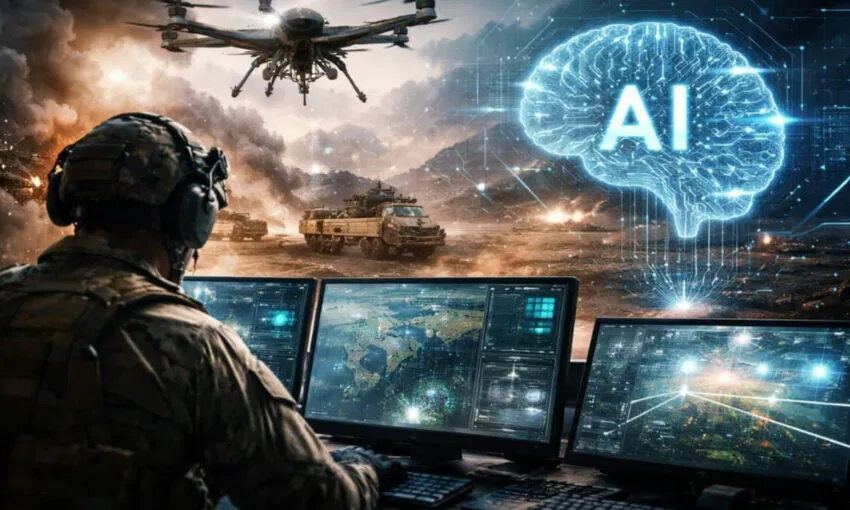
Artificial intelligence is no longer limited to the lab. It has crossed the threshold into the battlefield — and there is no turning back. The use of AI in military warfare is already happening!
Recent military operations are producing hard evidence that AI-powered systems are actively changing how wars are fought, how targets are selected, and how commanders make life-or-death decisions in real time. Nowhere is this shift more visible than in the ongoing tensions involving Iran, where advanced AI tools have moved from the experimental fringe to the operational core of U.S. military strategy.
AI in military warfare accelerates battlefield decision-making
The speed at which modern militaries can now process combat intelligence is staggering — and it is rewriting the rules of engagement.
Admiral Brad Cooper, commanding officer of U.S. Central Command, confirmed that the Pentagon is deploying a range of advanced AI tools capable of sorting through enormous volumes of battlefield data within seconds. These systems give commanders the ability to cut through information overload and act with precision under pressure.
The impact on operational timelines is profound. Intelligence analysis that once consumed days of human labor now happens almost instantaneously. AI platforms can simultaneously evaluate satellite imagery, drone surveillance footage, intercepted communications, and supply chain data —at once. Reaction time, once measured in hours, is now measured in moments.
That speed creates a decisive strategic edge. Forces using AI in military operations can anticipate threats earlier, sequence targets more efficiently, and coordinate responses before adversaries even recognize the danger.
From analysis to action: AI-driven targeting systems
Battlefield AI is no longer limited to intelligence gathering. It is now embedded in the targeting process itself.
Next-generation AI platforms can recommend targets, match weapons to objectives, and evaluate the effectiveness of prior strikes—all without human operators performing manual calculations. These systems draw on patterns from past engagements, compare them against live intelligence feeds, and generate recommended courses of action in real time.
Analysts have noted that AI in military operations can operate faster than conscious human thought in certain scenarios, enabling coordinated multi-strike operations that would have taken weeks to plan just a decade ago.
Palantir’s Maven Smart System stands as a leading example of this capability. Integrated with advanced large language models, including Anthropic’s Claude, the platform is now deployed across multiple branches of the U.S. military. What started as an experimental pilot has matured into a routine operational asset used daily across command structures.
The implications are significant. Artificial intelligence is no longer just supporting decision-makers. In meaningful ways, it is shaping the decisions themselves.
The rise of multi-dimensional AI warfare
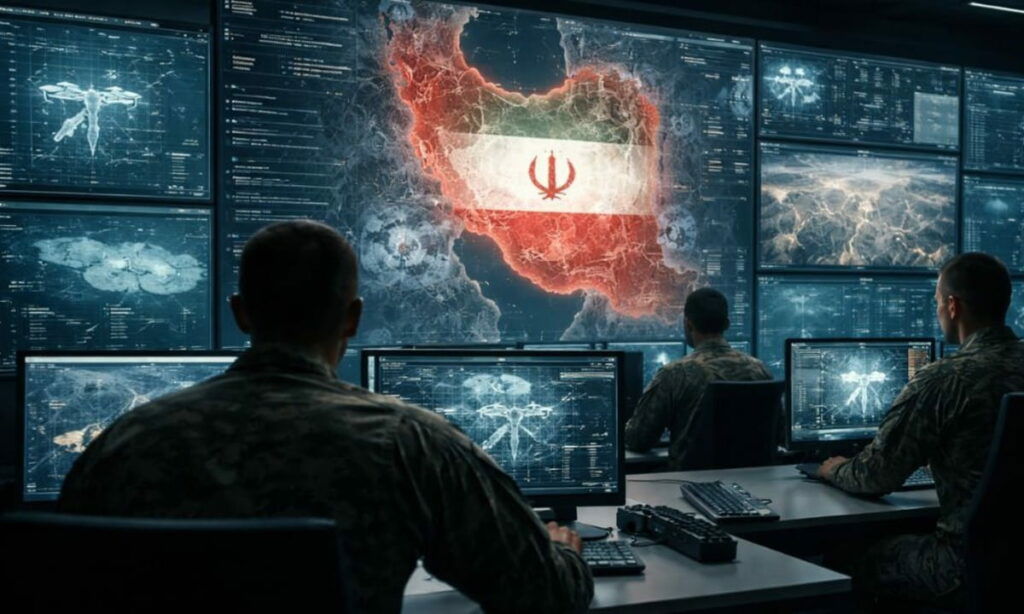
Modern conflict has expanded far beyond land, sea, and air. There is now a fourth battlefield — and it runs on data.
AI is being used to produce sophisticated disinformation campaigns, including fabricated images and synthetic video content, designed to distort public perception and sow confusion among adversaries. These operations target minds as deliberately as missiles target infrastructure.
In response, opposing forces are fielding their own AI detection systems designed to identify and neutralize manipulated content in real time. The result is a layered conflict environment where information control carries the same strategic weight as conventional military dominance.
Warfare now includes narrative. Whoever controls the information environment holds a significant advantage.
A turning point for global military strategy
The defense community is not mincing words about the magnitude of this shift.
Paul Scharre, executive vice president at the Center for a New American Security, has characterized this period as the dawn of an age of AI warfare. He points to the sheer volume and volatility of modern battlefield data as the central driver — a problem only AI systems can solve at the required speed and scale.
Investment is accelerating across governments worldwide. Nations are integrating AI into legacy defense infrastructure, expanding its reach across logistics, intelligence analysis, and active combat operations. What began as cautious experimentation in U.S. military circles has evolved into large-scale, daily deployment — a model other nations are studying closely and moving to replicate.
Growing concerns over oversight and accountability
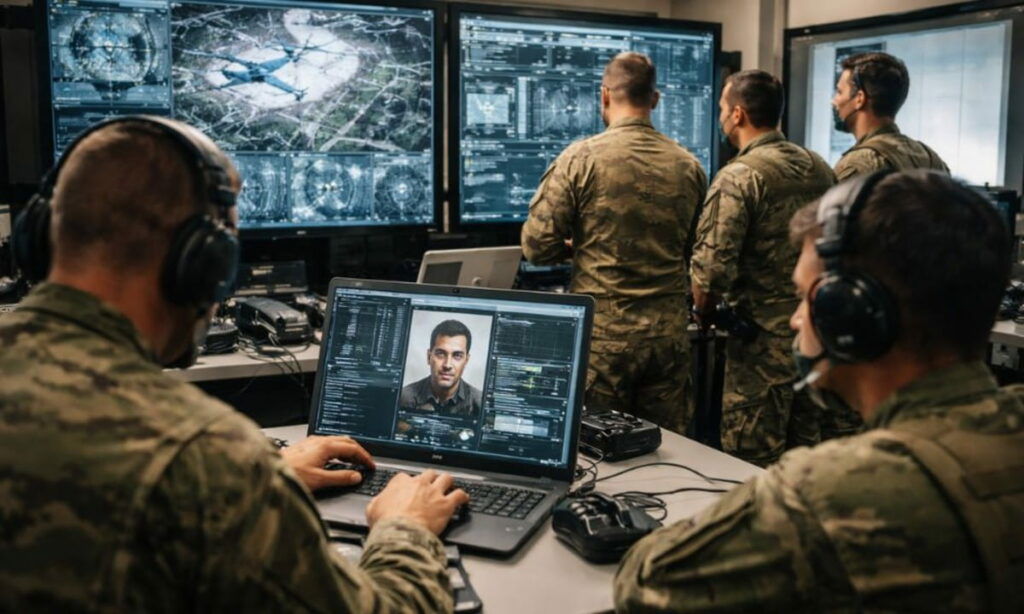
The advantages of AI in military warfare are real. So are the risks.
Legislators and defense analysts are raising alarms about oversight gaps. Few voices are calling for the complete removal of AI from military operations. But the consensus is hardening around one key point: current safeguards are not sufficient for the level of AI authority now being exercised in combat environments.
Chief among the concerns is cognitive off-loading — the gradual process by which human operators surrender judgment to algorithms. As AI systems absorb more of the decision-making burden, accountability becomes diluted. In high-stakes environments, that erosion carries serious consequences.
Legal and ethical questions are also mounting. AI platforms that recommend strike targets or generate assessments of legal justification for military action introduce complex questions about transparency, command responsibility, and international law that existing frameworks were never designed to handle.
What comes next for AI in military
The current wave of AI military adoption is still considered early-stage by most analysts. The next decade is expected to bring capabilities that make today’s systems look primitive.
Predictive battlefield modeling, autonomous decision-support networks, and tightly synchronized cross-branch coordination are all on the near-term horizon. As those capabilities arrive, the pace of conflict is likely to compress further. Wars may become shorter and more data-driven — but also less predictable and harder to control once set in motion.
One conclusion is no longer in dispute: artificial intelligence is not a future concept in defense strategy. It is already here, already operational, and already consequential.
As nations accelerate their AI military programs, the balance of global power may ultimately come down to a single variable — who can process battlefield information faster, interpret it more accurately, and act on it before the other side can respond.
What do you think about the role of AI in military and modern warfare? Do governments have the right safeguards in place — or is the technology moving faster than the oversight? Please share your perspective in the comments below.