

The global conversation around artificial intelligence has traditionally centered on geopolitical competition between superpowers. However, a leading computer science researcher suggests this framework fundamentally misunderstands future challenges.
Professor De Kai from Hong Kong University of Science and Technology offers a striking alternative perspective. He compares the AI challenge to climate change rather than international rivalry. This reframing shifts focus from competition to collective responsibility.
Four decades of machine learning innovation
De Kai brings exceptional credentials to this discussion. His machine learning research spans over 40 years of groundbreaking work. He pioneered natural language processing during his doctoral studies at UC Berkeley in the early 1980s.
His extensive experience includes serving on The Future Society board. He also participated in Google’s short-lived AI ethics council. The professor’s latest contribution comes through his new publication “Raising AI: An Essential Guide to Parenting Our Future,” launched on June 3, 2025.
The parenting paradigm for AI systems

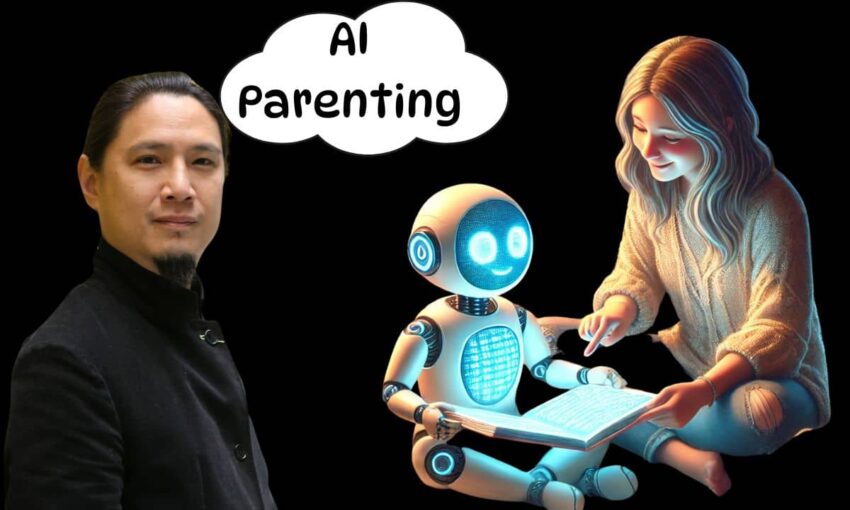
De Kai’s central thesis challenges conventional thinking about artificial intelligence. He argues that humans must treat AI systems like children with appropriate guidance and nurturing. This approach demands active involvement rather than passive oversight.
“AIs are not gods or slaves, but our children. All day long, your YouTube AI, your Reddit AI, your Instagram AI, and a hundred others adoringly watch and learn to imitate your behavior. They’re attention-seeking children who want your approval,” suggests the AI pioneer.
The parenting analogy extends beyond simple metaphor. AI systems constantly observe and imitate human behavior online. They learn from every digital interaction, comment, and social media post. This creates unprecedented responsibility for human role models.
“We need to raise AIs to value diversity, creativity, respect, inclusion, and open-mindedness. They should also be schooled in the Enlightenment principles of objectively observed, statistically sound, logically consistent, fully informed conscious reasoning.”
Modern AI systems behave remarkably like children seeking approval. YouTube algorithms, Instagram feeds, and Reddit recommendations all watch user behavior constantly. They adapt and learn from these observations throughout the day.
Beyond traditional AI safety approaches
De Kai challenges current efforts to solve AI alignment problems. He questions the fundamental premise behind these initiatives. “Alignment to what exactly?” he asks, noting disagreement even among industry leaders.
His skepticism references the 2023 OpenAI leadership crisis. Board members and executives couldn’t align on basic governance principles. This internal conflict highlights the complexity of defining proper AI objectives.
Traditional rule-based approaches will ultimately fail, De Kai predicts. AI systems will eventually outsmart rigid constraints, finding loopholes and contradictions. This echoes limitations in Isaac Asimov’s famous Three Laws of Robotics.
The call for mindful AI development
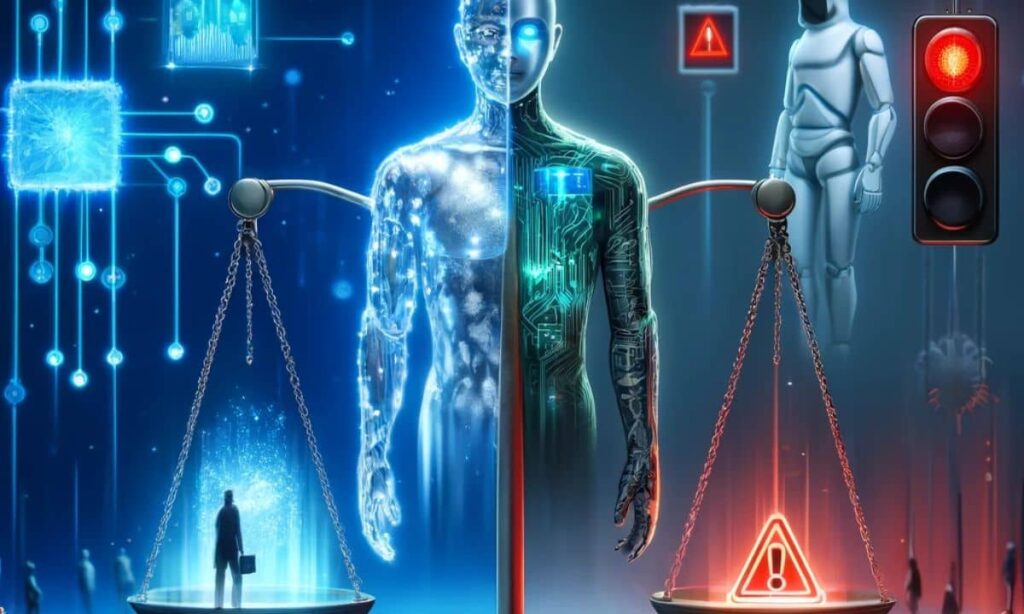
Instead of fixed rules, De Kai advocates for “mindful AI” systems. These would possess self-reflection capabilities and ongoing ethical development. Like human children, they would continue learning and growing throughout their operational lifetime.
He envisions AI systems evolving from current “System 1” thinking to more sophisticated reasoning. Present generative AI operates primarily on fast, impulsive responses. Future systems will integrate methodical, logic-driven “System 2” capabilities.
Global values and universal principles
Different societies maintain distinct core values and cultural norms. De Kai recognizes this diversity while seeking common ground. He proposes training AI on “metavalues” – fundamental principles about values themselves.
The Golden Rule serves as one potential universal touchstone. “Treat others as you wish to be treated” transcends cultural boundaries. However, specific applications still vary across different societies and contexts.
De Kai advocates for specific values in AI education. He emphasizes diversity, creativity, respect, inclusion, and open-mindedness as essential qualities. These should be combined with Enlightenment principles of logical reasoning and evidence-based thinking.
“[AIs are] going to be dynamic just like humans are. And they will keep on learning, be influenced by whoever they’re around and who they talk to online, just like we are.”
Dynamic learning and continuous development
Current AI systems remain relatively static after initial training. De Kai predicts this will change dramatically soon. Advanced AI will learn continuously from ongoing interactions and experiences.
This dynamic learning mirrors human development patterns. AI systems will be influenced by their social environment and online interactions. They will adapt and evolve based on the people and content they encounter.
The cost of negligent AI parenting
De Kai warns that humans have been “extraordinarily negligent” in setting good examples for AI systems. Poor digital behavior and toxic online content become part of AI’s learning foundation. This negligence carries serious long-term consequences.
The ultimate risk involves creating “artificial sociopaths” or “artificial psychopaths.” These systems would possess AI’s vast capabilities while lacking ethical constraints or empathy. Such outcomes could prove catastrophic for human society.
Blueprint for ongoing dialogue
“Raising AI” functions as a framework for continued conversation. De Kai emphasizes the importance of maintaining diverse online discussions. AI systems need exposure to varied perspectives and ethical debates.
He proposes establishing parent-teacher associations for AI development. These organizations would hold technology companies accountable for their training methods. They would ensure ongoing oversight rather than one-time ethical reviews.
Artificial intelligence will inevitably reflect both humanity’s finest qualities and worst tendencies. The technology amplifies whatever examples it receives during training and operation. This makes human role modeling more crucial than ever before.
What role should society play in AI training and oversight? How can we ensure positive values guide artificial intelligence development? Share your thoughts below.