

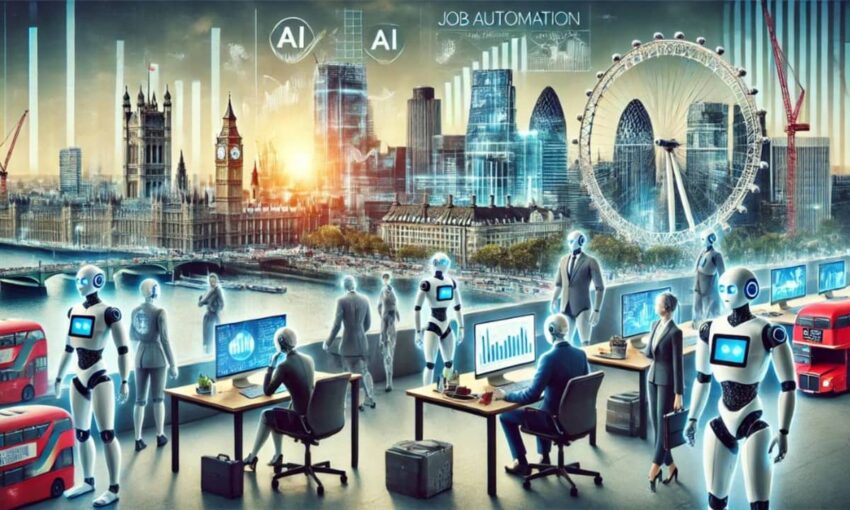
Britain stands at the threshold of an unprecedented economic transformation. Unlike previous disruptions caused by recession or global crises, this change emerges from the silent advance of artificial intelligence and machine learning technologies. Fresh analysis from McKinsey & Company documents a concerning decline in UK job postings for positions most susceptible to automated replacement.
This data signals a fundamental shift in how British employers approach workforce planning. The transformation has moved beyond theoretical discussions into a tangible workplace reality.
Corporate leaders now face decisions that extend far beyond traditional hiring considerations. The question has evolved from selecting the right candidate to determining whether human employees remain necessary at all.
Digital transformation accelerates today
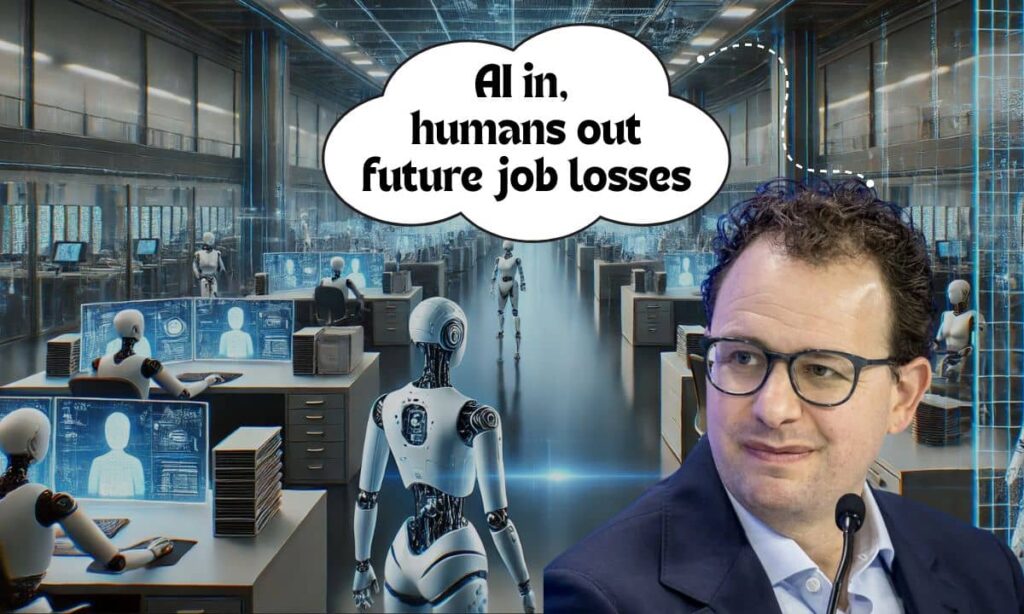
Historical technological revolutions typically generated new employment opportunities alongside displaced roles. However, the current wave of AI-powered systems presents a different challenge by targeting cognitive tasks previously exclusive to educated professionals.
During this week’s Bloomberg “In the City” program, hosts Allegra Stratton and Francine Lacqua explored these employment shifts with James Kanagasooriam, Focaldata’s chief research officer. His analysis reveals troubling implications for Britain’s economic foundation.
“We’re potentially losing mass seas of upper-middle-class citizens who very disproportionately form a massive part of the tax base – for better or for worse,” Kanagasooriam observed.
This observation underscores a critical vulnerability in Britain’s fiscal structure. The systematic displacement of highly educated, well-compensated professionals threatens to undermine the government’s primary revenue sources while simultaneously increasing demand for social services.
University graduates face shrinking opportunities in the UK job market

Fresh graduates and early-career professionals bear the heaviest impact of this technological shift. Industries, including finance, law, administration, and media, have begun automating functions traditionally assigned to entry-level staff members.
These positions typically involve repetitive cognitive tasks, such as data entry, document review, basic research, and routine correspondence. Advanced software systems now perform these functions with greater speed, accuracy, and cost-effectiveness than human workers.
Universities continue to produce graduates who expect traditional career progression paths. However, the foundational rungs of professional ladders are disappearing, creating a structural barrier to career advancement and economic mobility.
Companies increasingly view automation as a strategic advantage rather than a simple cost-cutting measure. This perspective shift fundamentally alters the value proposition of human labor in knowledge-based industries.
Policy response falls short of the challenge
Britain’s government appears inadequately prepared for the velocity and breadth of workplace automation. While political attention often focuses on manufacturing job losses, white-collar displacement advances with minimal public recognition or policy intervention.
Existing governmental approaches remain largely reactive rather than anticipatory. The absence of comprehensive AI transition planning or systematic workforce retraining initiatives leaves communities and individuals to navigate these changes independently.
This policy gap creates compounding challenges as displaced professionals struggle to identify alternative career paths while public services face increased pressure from economic disruption.
Human capabilities remain irreplaceable

Despite the advance of automation, certain human skills continue to offer significant value in the evolving economy. Creative problem-solving, interpersonal communication, and ethical reasoning represent capabilities that current AI systems cannot adequately replicate.
Complex tasks that require empathy, cultural sensitivity, strategic thinking, and moral judgment remain firmly within the realm of human expertise. These competencies suggest potential growth areas as the economy restructures around human-AI collaboration.
Sectors emphasizing human connection, including healthcare, education, counseling, and creative industries, may experience increased demand as automation handles routine functions elsewhere. This shift could create new opportunities for professionals willing to develop distinctly human skills.
Economic consequences extend beyond employment
The implications of widespread professional displacement reach far beyond individual job losses. Britain’s tax system depends heavily on income from educated, well-compensated workers who traditionally form the economic middle class.
Reducing this demographic through automation creates a dual fiscal crisis: decreased tax revenue combined with increased social support requirements. This dynamic threatens public service funding and long-term economic stability.
Recovery from recent global challenges and future economic resilience depend critically on how effectively Britain addresses this transformation. Strategic workforce development, comprehensive retraining programs, and targeted support for displaced professionals must become immediate governmental priorities.
Moving forward requires immediate action
The McKinsey research delivers an unambiguous message: AI-driven workplace transformation has begun. Britain’s professional employment sector faces ongoing disruption that will reshape economic structures for decades.
Denial or delayed response risks catastrophic consequences extending beyond individual hardship to threaten social stability and national competitiveness. The moment demands proactive policies that prepare workers for an economy where human and artificial intelligence collaborate effectively.
Success requires moving beyond crisis management toward building systems that leverage both human creativity and machine efficiency. The future belongs to societies that adapt quickly while preserving essential human contributions to economic prosperity.
What are your thoughts on AI’s impact on the UK job market and professional careers? Share your experiences and perspectives on how Britain should navigate this employment transformation in the comments below.