


The technology industry is cutting jobs at a rapid pace in 2026. The reason is, of course, money as well as where it is going.
Companies across the globe are pouring record sums into artificial intelligence infrastructure. And as those budgets grow, payrolls are shrinking.
There are more than 45,000 technology layoffs in the first three months of 2026, according to research by UK-based firm RationalFX. The cuts span companies large and small, from Silicon Valley giants to enterprise software firms.
AI spending hits historic levels

Corporate investment in AI systems is climbing sharply. Industry analysts project that major technology companies will collectively spend more than $600 billion on artificial intelligence this year. That figure is up from roughly $410 billion in 2025.
The money is going into data centers, high-performance computing chips, and expanded AI research teams. It is a massive capital shift. And it is forcing companies to make hard decisions about where their workers fit in.
Alan Cohen, an analyst at RationalFX, put it plainly in the firm’s latest report.
“In 2025, automation, artificial intelligence, and sustained cost-discipline measures drove much of the downsizing, with entire departments restructured or eliminated in favor of leaner, AI-assisted workflows,” Cohen wrote. “This trend has continued full steam into 2026.”
Amazon leads the first wave
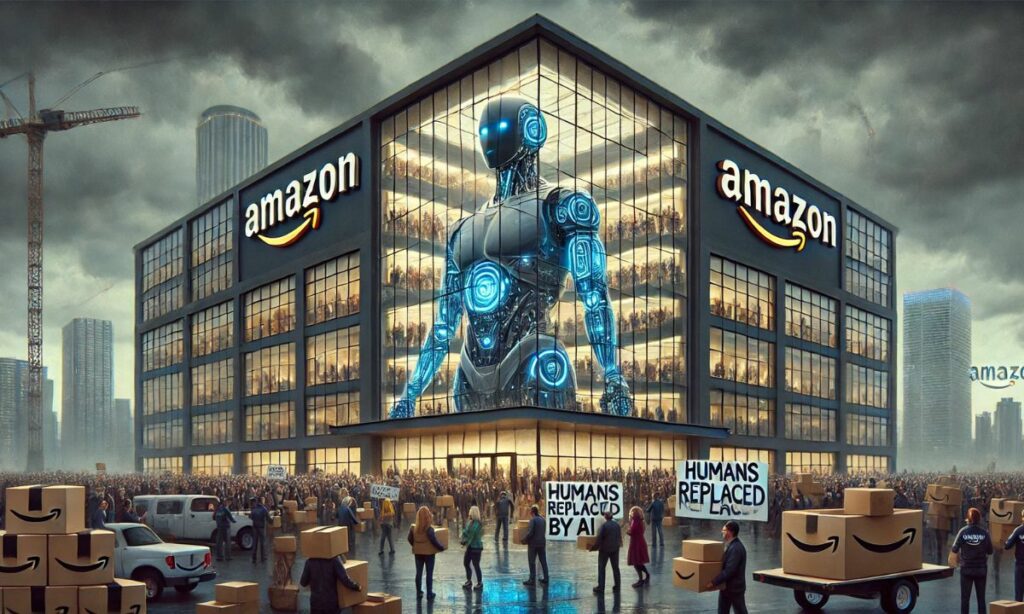
Amazon kicked off the year with one of its largest corporate restructurings in recent history. The company eliminated around 16,000 positions in January alone, primarily in corporate and administrative roles.
The e-commerce and cloud computing giant has invested aggressively in machine learning platforms and generative AI products through its Amazon Web Services division. The company leadership has consistently framed its AI investments as long-term growth drivers. But the short-term impact on headcount has been significant, which is explicit in the layoff statistics.
Oracle is taking similar steps. The enterprise software and cloud provider is reducing staff across several divisions, citing the high cost of building out AI infrastructure for its growing cloud computing platform.
Software companies restructure around machine intelligence

The shift is not limited to platform giants. Collaboration software company Atlassian announced plans to cut 1,600 jobs, or about 10% of its total workforce.
Chief Executive Mike Cannon-Brookes addressed the connection between AI tools and the workforce reductions directly.
“It would be disingenuous to pretend AI doesn’t change the mix of skills we need or the number of roles required in certain areas,” Cannon-Brookes said. “It does.”
Financial technology firm Block, led by Twitter co-founder Jack Dorsey, went further. The company announced it would cut roughly 4,000 positions, a reduction of nearly 40% of its total staff.
Dorsey explained the rationale in a letter to shareholders.
“The core thesis is simple. Intelligence tools have changed what it means to build and run a company,” he wrote.
Meta weighs its largest restructuring in years
The restructuring story drawing the most attention involves Meta, the parent company of Facebook and Instagram.
Reports indicate Meta is weighing workforce cuts that could affect roughly 20% of its employees. The company ended 2025 with close to 79,000 workers on its payroll. A reduction of that scale would rank among the largest the company has ever carried out.
Meta has ramped up recruiting for AI researchers and poured capital into large-scale computing clusters. CEO Mark Zuckerberg has repeatedly pointed to the productivity gains AI enables.
Zuckerberg has suggested that projects once requiring large development teams can increasingly be handled by a single highly skilled individual using AI-powered tools.
If the reported layoffs go forward, they will follow earlier rounds of deep cuts. Meta shed 11,000 jobs in 2022 and another 10,000 in 2023 as part of what the company called its Year of Efficiency.
Industries beyond tech feel the impact

The pattern is spreading well beyond Silicon Valley.
Sportswear company Nike eliminated 775 jobs in January. Telecommunications equipment maker Ericsson announced 1,900 layoffs. Enterprise software firms Autodesk and Salesforce each reduced staff by roughly 1,000 positions.
These are not pure technology companies. Yet all cited operational restructuring tied to automation and digital transformation as drivers of the cuts.
Machine intelligence tools are now being integrated into logistics networks, customer service operations, financial systems, and manufacturing workflows.
A deeper shift in how companies are built
Supporters of the AI transformation argue that new technologies always create new work opportunities. They point to historical examples from the Industrial Revolution to the rise of the Internet.
Critics counter that this time may be different. They warn that AI-driven automation could eliminate jobs faster, resulting in a flood of layoffs across the globe.
For now, the data support a clear near-term trend. Companies are operating with smaller headcounts, supported by machine intelligence systems that handle tasks once assigned to human teams.
The first quarter of 2026 will not be the last chapter of this story. As spending on artificial intelligence continues to climb, the pressure on corporate workforces is unlikely to ease.
The months ahead will show whether this wave of cuts marks a temporary adjustment, or the beginning of something far larger.
What are your views on the latest layoff trend? Please share your views below.