

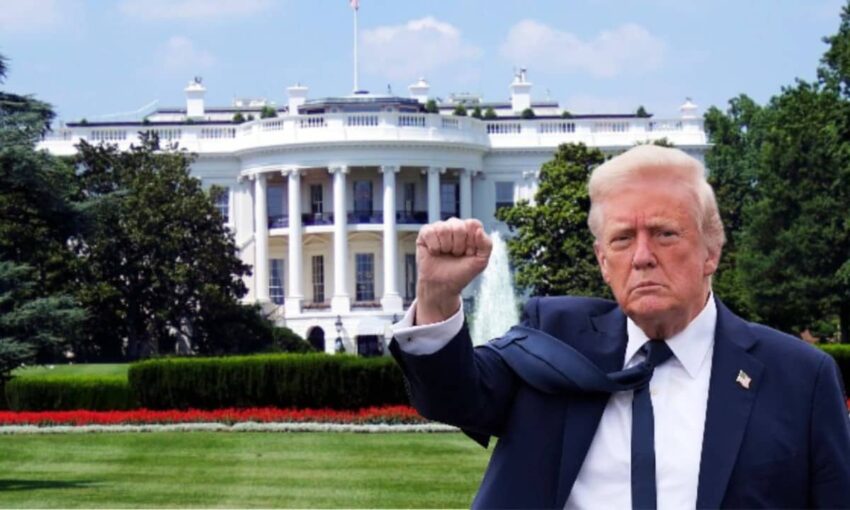
President Donald Trump has discovered a convenient new defense strategy in our deepfake-dominated world: when confronted with uncomfortable evidence, blame AI.
The president sparked controversy Tuesday by rejecting verified video footage that captured black garbage bags being hurled from a White House window. His response ignored official confirmation from his own administration just 24 hours earlier.
AI becomes a political shield
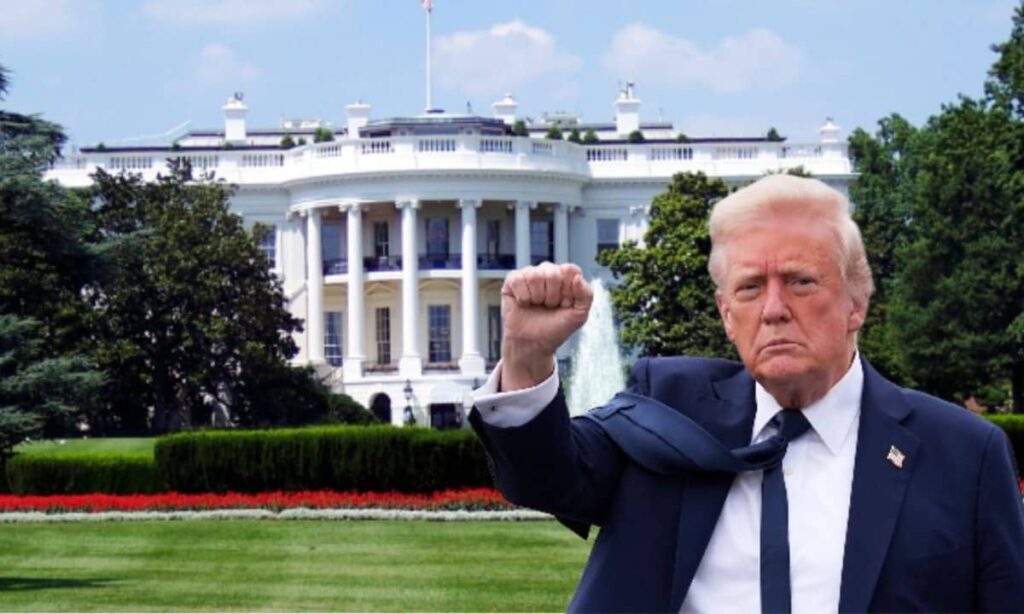
During an impromptu Oval Office session, Fox News correspondent Peter Doocy confronted Trump about the controversial footage that dominated social media over Labor Day weekend. When Doocy displayed the clip on his mobile device, the president immediately questioned its authenticity.
“That’s probably AI-generated,” Trump declared without hesitation. He quickly shifted focus to White House security measures. “You can’t open those windows. They’re all heavily armored and bulletproof,” he explained, mentioning that First Lady Melania Trump recently complained about poor ventilation.
“She said, ‘I’d love to have a little fresh air come in.’ But you can’t. They’re sealed. And number two, each window weighs about 600 pounds,” Trump stated emphatically.
Truth versus presidential spin
The commander-in-chief’s skepticism contradicted his own administration’s previous statements. White House officials had already verified the video’s legitimacy on Monday. A spokesperson identified the person discarding the bags as a maintenance contractor performing standard duties while the president traveled.
The press secretary emphasized that the incident involved routine building upkeep rather than anything suspicious or concerning.
Trump ignored these explanations entirely. Instead, he embraced the narrative that advanced technology makes visual evidence unreliable.
“One of the problems we have with AI, it’s both good and bad,” he observed. “If something happens, really bad, just blame AI. But also they create things. You know, it works both ways. If something happens that’s really bad, maybe I’ll have to just blame AI.”
Political deflection gets digital upgrade
The president’s remarks signal a concerning evolution in political damage control. Rather than utilizing artificial intelligence directly, Trump weaponizes public anxiety about deepfakes to dismiss inconvenient realities.
Modern synthetic media technology has indeed complicated the verification of information. Sophisticated deepfakes and AI-generated content increasingly challenge viewers’ ability to distinguish authentic footage from fabrications. Trump appears to exploit this confusion as a new form of plausible deniability.
Throughout Tuesday’s exchange, the president maintained his position despite contrary evidence. “Yeah, those windows are sealed. Those windows are all — they’re all sealed. You can’t open them,” he repeated, dismissing the contractor’s explanation completely.
The viral footage, apparently recorded from a nearby rooftop — possibly the Hotel Washington — continues generating online speculation. Officials haven’t disclosed the contractor’s identity or revealed the bags’ contents.
Presidential history with manipulated content
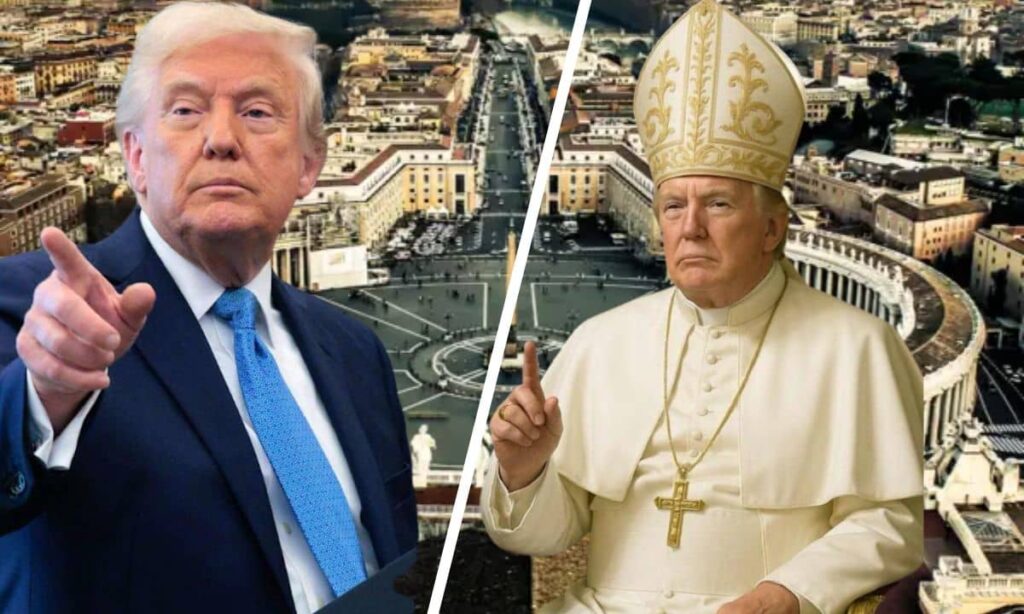
This episode isn’t Trump’s first encounter with artificial intelligence controversies. Last July, he shared a fabricated video showing former President Barack Obama in handcuffs within the Oval Office. Despite widespread debunking, the post accumulated millions of views before social platforms marked it as misinformation.
Trump also described another unsettling experience with AI-generated content that portrayed his entire life progression from infancy to the present day — completely artificial yet remarkably convincing.
“I saw something, as I was growing up from the time I was a baby till now. I said, ‘Who did that?’ It was AI generated. So it’s a little bit scary to be honest with you,” he told reporters.
Erosion of digital trust accelerates
The president’s comments emerge during unprecedented challenges to institutional credibility. Media outlets, government agencies, and technology platforms face mounting skepticism from American citizens. Trump’s suggestion that damaging footage can be dismissed as AI manipulation introduces dangerous new possibilities for avoiding accountability.
Digital ethics specialists warn about societal consequences when public figures routinely label authentic events as artificial. Such tactics could accelerate misinformation cycles while weakening democratic accountability mechanisms.
Construction projects and conspiracy theories
During Tuesday’s briefing, Trump confirmed ongoing renovations to the Lincoln Bedroom’s Art Deco bathroom, describing the original design as “terrible” while promising improvements. This detail supports earlier speculation from administration sources that construction work might explain the open window.
However, Trump rejected the renovation explanation in favor of more conspiratorial interpretations.
The president also promoted his ambitious $200 million White House State Ballroom project planned for the East Wing. The privately funded, 90,000-square-foot venue will accommodate 650 guests and should be finished before his second term concludes in 2029.
Democracy in the deepfake era

While this video controversy might appear insignificant, it raises profound questions about political leadership during the artificial intelligence revolution. As synthetic media technology advances, the temptation to exploit public confusion about digital authenticity may prove irresistible for politicians worldwide.
Trump’s seemingly casual remark — “If something happens that’s really bad, maybe I’ll have to just blame AI” — could foreshadow a troubling new chapter in crisis communication strategies.
The implications extend beyond partisan politics. When leaders can dismiss any uncomfortable evidence as potentially artificial, the foundations of democratic accountability face unprecedented threats.
As artificial intelligence capabilities expand rapidly, society must grapple with fundamental questions about truth, evidence, and leadership responsibility in our increasingly digital world.
What’s your take on politicians using AI as an excuse for controversial situations? Please share your thoughts in the comments below.