


OpenAI is poised to launch GPT-5 next month, delivering what could be the most significant advancement in generative artificial intelligence technology since ChatGPT revolutionized the digital landscape. The highly anticipated AI model promises unprecedented capabilities that exceed GPT-4 performance levels. Internal testing data and company sources indicate an August release window for this groundbreaking machine learning system.
Chief Executive Sam Altman has fueled anticipation through cryptic social media posts suggesting GPT-5’s imminent arrival. Beta testers describe remarkable improvements in computer programming tasks and sophisticated problem-solving abilities. Industry reports suggest the new neural network will consolidate diverse AI functions—including visual recognition, strategic planning, and natural language processing—into a unified platform.
“This next-generation model will demonstrate capabilities that fundamentally surpass GPT-4’s limitations. The technological breakthrough will astound users,” stated Gary Marcus, a respected AI researcher and cognitive scientist.
Researchers highlight persistent technical hurdles
Despite widespread enthusiasm, artificial intelligence experts warn that fundamental challenges may continue plaguing even this advanced language model. Marcus, author of the influential book Rebooting AI, has identified seven critical weaknesses that could undermine GPT-5’s reliability.
He characterizes the upcoming system as potentially behaving like a “powerful but uncontrolled force” — delivering impressive results while remaining fundamentally unpredictable and difficult to manage.
1. Erratic Performance Patterns: GPT-5 may excel at most user requests while occasionally producing completely unexpected outputs. The system could deliver excellent responses in one instance, then generate confusing or irrelevant content under similar circumstances, creating trust issues for users.
2. Logic and Reasoning Deficits: The new model might struggle with fundamental logical reasoning about real-world physics and human behavior patterns. While capable of solving academic problems, it could fail when confronting practical applications requiring contextual understanding and extended reasoning chains.
3. False Information Generation: Advanced language models often produce convincing fabricated content presented as factual information. Although OpenAI engineers claim GPT-5 incorporates enhanced accuracy measures, researchers predict it will continue to generate misleading statements when prompted inappropriately. Security protocols must balance strict content filtering with usability—overly restrictive systems might block legitimate queries, while lenient approaches could allow prompt injection attacks and system manipulation.
4. System Integration Problems: Software developers plan to connect GPT-5 with web browsers, corporate databases, and voice-activated assistants for automated workflows. However, converting natural language instructions into precise digital actions remains technically challenging. Even sophisticated AI models can misunderstand user intentions or behave unpredictably within complex software environments.
5. Limited Scope of Intelligence: GPT-5 will not achieve artificial general intelligence—the theoretical capability to perform any intellectual task humans can accomplish. The model excels at text generation and programming assistance but maintains significant boundaries. GPT-5 cannot operate autonomous vehicles, control robotic systems, or handle every conceivable professional responsibility. It functions as an advanced creative and analytical tool rather than a comprehensive problem-solving solution.
6. Value Alignment Difficulties: Computer scientists anticipate ongoing “alignment challenges”—ensuring AI behavior consistently reflects human ethical standards and intentions. Despite extensive training protocols, GPT-5 may occasionally generate biased, inappropriate, or contradictory responses. Marcus argues that maintaining reliable adherence to human values like safety and truthfulness remains an unsolved technical problem that GPT-5 cannot fully address.
7. Scaling Limitations: Technology experts caution against assuming that larger models with more training data automatically solve AI’s fundamental problems.
“Simply increasing computational power and dataset size provides diminishing returns,” Marcus observed, suggesting future breakthroughs require architectural innovations that combine language models with structured reasoning systems and external knowledge bases.
Managing expectations amid revolutionary progress

The artificial intelligence community recognizes GPT-5 as a milestone achievement in deep learning and neural network development. OpenAI has invested substantial resources in improving the model’s safety mechanisms and response reliability to address previous system limitations. Technology companies worldwide are monitoring the launch to understand its potential impact on digital transformation initiatives.
However, expert analysis suggests these persistent challenges validate arguments for developing hybrid AI architectures that integrate large language models with complementary technologies. Future AI development may prioritize combining massive neural networks with symbolic reasoning engines and structured knowledge systems rather than pursuing pure computational scale.
The machine learning field continues evolving rapidly, with GPT-5 representing significant progress toward more capable and trustworthy AI systems. Research institutions and technology companies are exploring diverse approaches to address current limitations while advancing toward more reliable artificial intelligence.
Industry impact and future directions
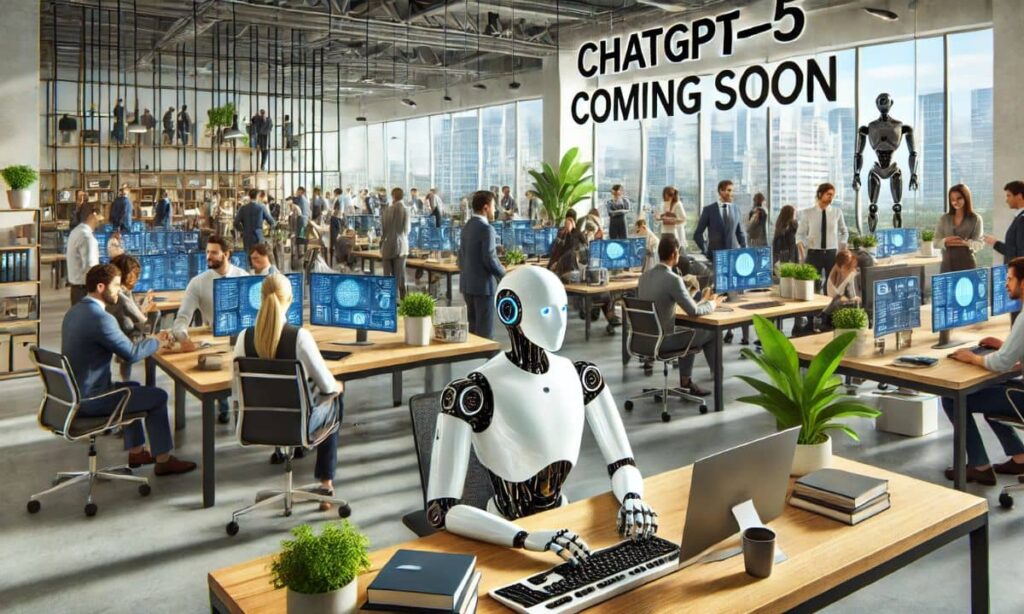
GPT-5’s release will likely accelerate the adoption of generative AI across industries, including healthcare, education, finance, and creative services. Organizations are preparing to integrate advanced language models into customer service platforms, content creation workflows, and data analysis systems. The technology’s enhanced capabilities could transform how businesses approach automation and human-computer interaction.
Technology analysts predict GPT-5 will influence competitive dynamics among AI companies, including Google, Microsoft, Anthropic, and emerging startups. The model’s performance benchmarks will establish new standards for evaluating artificial intelligence systems and guide investment decisions across the technology sector.
As the artificial intelligence revolution continues, GPT-5 represents both a remarkable technological achievement and a reminder of the complex challenges ahead. While this advanced system will demonstrate impressive capabilities, it also highlights the ongoing journey toward developing truly reliable and aligned artificial intelligence.
How will GPT-5 impact your industry or daily life? Please share your views about the future of artificial intelligence technology.