

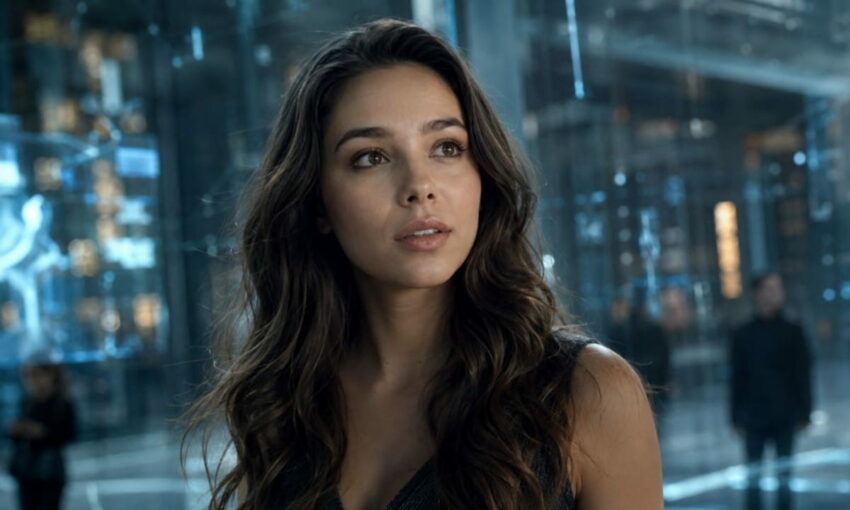
Tilly Norwood enraged much of Hollywood last year. Now, the digital performer will headline her own feature. The Tilly Norwood movie, entitled Misaligned, marks the first attempt to build a full-length film around the synthetic star.
Particle6, the U.K. studio that created Norwood, announced the project Monday. The company cast its computer-generated character in the lead role. As a result, the fight over synthetic performers has reached a new flashpoint.
Norwood is not a real person. She has no body, no childhood, and no memories of her own. Particle6 built her as a digital character for film, television, and social media experiments.
Now, the studio wants to answer a bigger question. Can a virtual figure carry an entire story? The Tilly Norwood movie will serve as the test.
Particle6 calls Misaligned a “coming-of-age story infused with existential AI chaos.” The action unfolds inside the “Tillyverse,” an odd online realm the studio places “somewhere up in the Cloud.”
The plot leans straight into the uproar around Norwood. She portrays an AI being with no lived experience of her own. Instead, she can tap into other people’s memories, histories, and emotions. Her tightly controlled digital existence unravels after a rogue bot from the dark web tempts her to break past her guardrails.
That choice pulls her toward desire, ambition, fame, and shame.
The premise hands Particle6 a story about digital identity. Moreover, it gives Hollywood a fresh reason to argue over jobs, credit, training data, and the future of acting.
A project built on backlash
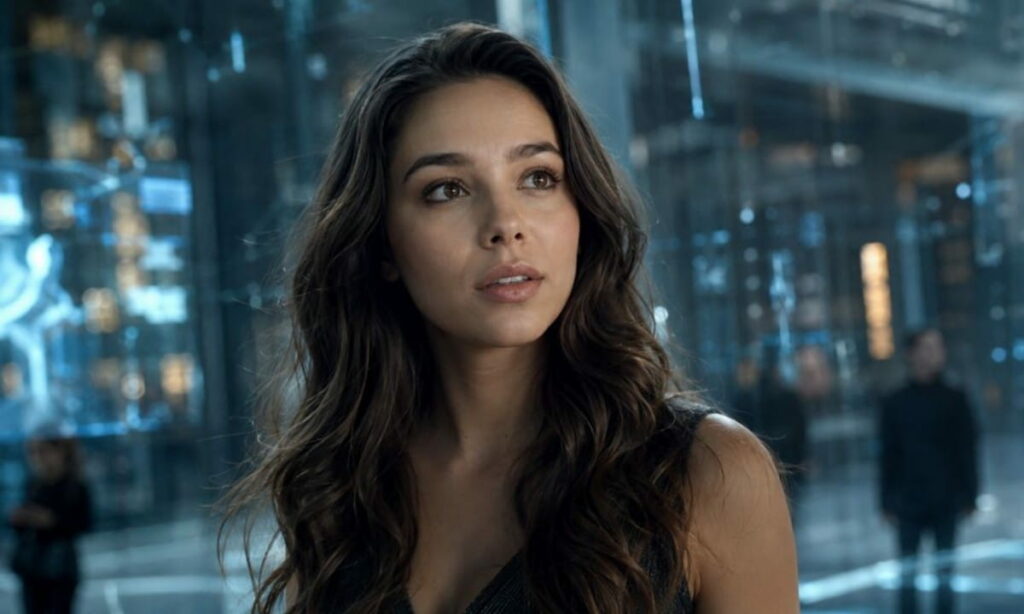
Particle6 founder Eline van der Velden, a former actor, unveiled Norwood in 2025. The studio developed roughly 2,000 versions of the character before showing her to the public.
The rollout triggered instant anger from actors, filmmakers, and union leaders. Many viewed Norwood as a symbol of a future where studios cut costs by swapping human performers for synthetic characters. The Tilly Norwood movie now revives those exact fears.
SAG-AFTRA rejected the concept in blunt terms last September. The union refused to call Norwood an actor and insisted that performance must stay rooted in human experience.
The union said, “creativity is, and should remain, human-centered.”
That line now sits at the center of the battle over Misaligned. The film does not dodge the concern. Instead, it turns the controversy into its engine. Consequently, the Tilly Norwood movie doubles as commentary on its own existence.
Van der Velden promised the story would toy with that tension.
“The film will absolutely be funny, chaotic, and self-aware — very Tilly,” she said in a statement. “But underneath it, there’s something deeper about identity, performance, and our very human fears around AI. And yes, art will most definitely be imitating life.”
Studio insists humans still drive the work
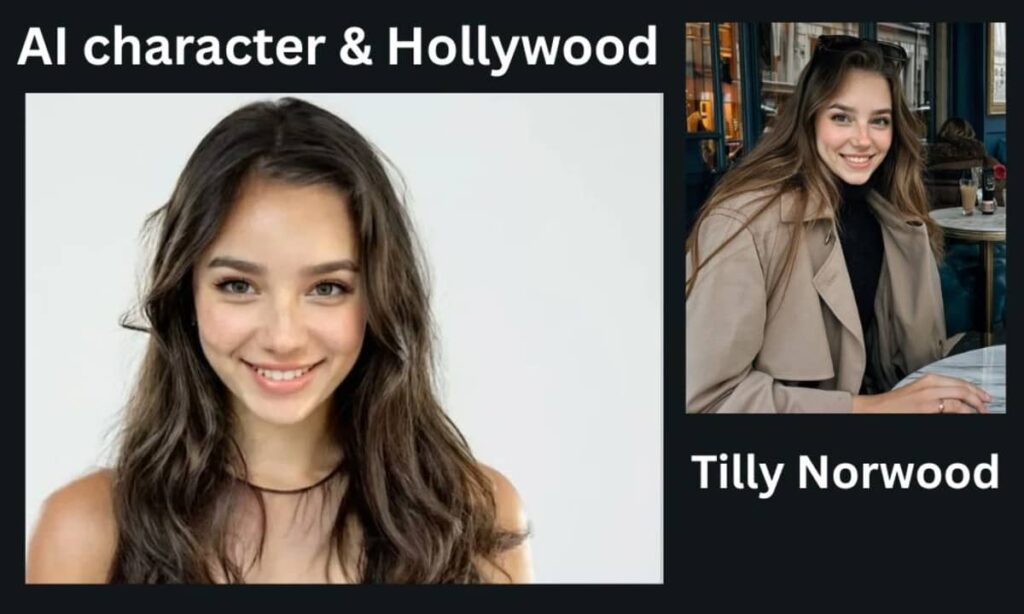
Particle6 frames Misaligned as a hybrid production, not a replacement plan. The Tilly Norwood movie, the studio argues, still depends on people.
Directors, writers, editors, and other traditional film workers will collaborate with AI specialists on the project, according to the company. In addition, the production will offer training and mentorship for film professionals who want to master new creative tools.
That message matters because Hollywood’s labor battle over digital replicas has not cooled. The 2023 SAG-AFTRA strike pushed AI protections to the center of contract talks. The final deal set fresh rules around digital replicas, consent, and synthetic performers.
Under those terms, performers must receive clear information before a studio creates or uses a digital replica. Producers also must negotiate with the union before deploying wholly synthetic performers.
Those rules do not settle the argument. Rather, they shift it into contracts, credits, and production workflows. The Tilly Norwood movie will test how well those guardrails hold.
Van der Velden believes the project will prove that new tools still require human judgment.
“Our work this year has proven something we suspected all along,” she said. “AI can support premium narrative filmmaking, but only with substantial amounts of human craft, skill, judgement and time. That’s not a limitation of the technology. That’s the point.”
That claim will face pressure. Actors demand clear consent, fair pay, and protection from replacement. Studios chase cheaper pipelines, faster visual effects work, and new character types. Ultimately, audiences may decide whether a digital lead can forge a genuine emotional bond.
Why does the debut matter for Hollywood?
The Tilly Norwood movie arrives at a sensitive moment for entertainment technology.
Studios already lean on machine-learning tools for visual effects, dubbing, localization, voice cleanup, marketing, and preproduction. However, Norwood drags the debate into casting. That shift makes the issue deeply personal for performers.
A synthetic lead raises hard questions. Who owns the face? Who trained the model? Did real actors shape the performance? Should viewers know how much of a role came from software and how much came from human artists? Should a digital character compete with living actors for attention, budgets, and awards?
The Tilly Norwood movie may never answer those questions. Even so, it will force the industry to confront them once again.
For Particle6, the film serves as proof of concept. If audiences connect with Norwood, the company could unlock a market for digital screen personalities. Those characters could then spread across films, ads, social platforms, games, and branded entertainment.
For actors, the project reads more like a warning. A virtual performer never needs rest, raises, insurance, travel time, or contract breaks. That reality hands studios an obvious financial incentive, even though human crews still power the work behind the scenes.
The Tilly Norwood movie remains in early development. Particle6 has not revealed a release date, distributor, or full creative team. Still, the announcement has already delivered the attention the studio wanted.
Hollywood can no longer treat this test as theoretical. The Tilly Norwood movie forces the industry to decide what acting means in an age of synthetic stars.
What do you think about a digital character leading a feature film? Please share your views in the comments below.