

China just drew a hard line in the global artificial intelligence race. It has blocked the Meta-Manus AI deal.
Beijing’s top economic planner, the National Development and Reform Commission, ordered Meta and Manus to unwind their deal entirely on Monday, delivering what could be a serious blow to Mark Zuckerberg’s ambitions in the fast-moving AI agents space.
The NDRC issued a one-line notice, saying it has decided to prohibit foreign investment in the startup in accordance with laws and regulations. It did not elaborate further.
Just a directive that threatens to undo months of work.
What was the AI deal?
Meta announced its acquisition of Manus in December 2025 for roughly $2 billion to $3 billion, with plans to fold the startup’s agent technology directly into Meta AI.
The AI deal made sense on paper. Manus had become one of the most talked-about names in AI. The Singapore-registered startup, founded by Chinese engineers, built autonomous systems capable of handling complex tasks without human input — from coding and research to data analysis.
Within months of launching, it reportedly crossed $100 million in annual recurring revenue. Venture capital firms backed it to the tune of $75 million. The numbers drew comparisons to some of the biggest AI breakthroughs in recent memory.
For Meta, buying Manus meant a fast lane into an AI agentic market that rivals like Google and OpenAI have been building toward aggressively.
Why did China say no?
Beijing’s decision reflects concern that China could lose key technology to the United States amid an intensifying tech war.
The move highlights Beijing’s increased concern over U.S. acquisitions of Chinese AI talent and intellectual property, as Washington tries to limit Chinese tech firms’ access to advanced chips.
China’s Ministry of Commerce said in January it would conduct an assessment and investigation into how the acquisition complied with laws and regulations concerning export controls, technology import and export, and overseas investment.
That probe took four months. The verdict arrived on Monday.
The Singapore workaround — and its limits
Manus followed a path that dozens of Chinese AI startups have considered. It launched in China, then shifted its headquarters to Singapore. The goal was practical: reach global capital markets while sidestepping regulatory friction.
That strategy now looks risky.
Regulators in Beijing have reportedly advised domestic AI firms to avoid accepting foreign funding without explicit government approval. The message is clear. Relocating to Singapore does not automatically remove a company from China’s regulatory reach if its roots, talent, or technology trace back to the mainland.
Unwinding the AI deal that already moved forward
Here is where things get complicated.
Soon after Meta announced the acquisition in late December, the company had already integrated Manus into its internal systems. Employees had joined Meta’s AI division. Capital had changed hands. Senior executives had relocated to Singapore to lead the integration.
Reversing all of that will not happen overnight.
Meta maintained that the transaction complied with applicable laws and expressed confidence in resolving the issue.
But the NDRC ordered both sides to withdraw the transaction, and Beijing has shown no signs of softening its position.
What does this mean for the AI industry?
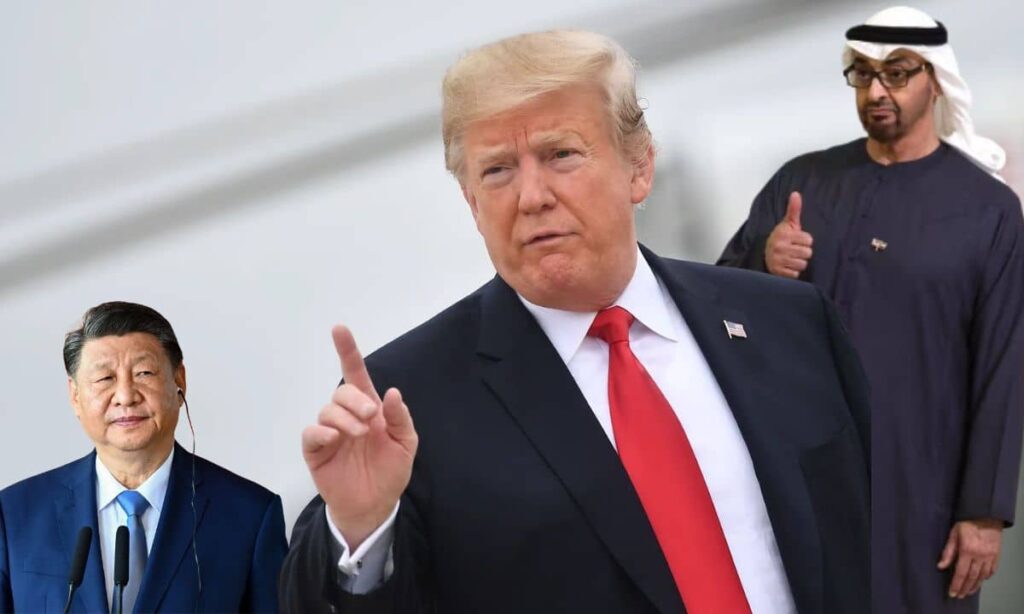
The move carries an expected chilling effect on China’s AI startup scene and came just weeks before U.S. President Donald Trump’s anticipated summit with Chinese leader Xi Jinping in Beijing.
Timing matters in geopolitics. A blocked AI deal landing weeks before a high-stakes diplomatic summit sends a message about where China draws the line on technology sovereignty.
For startups, the implications run deep. Investors may pull back from deals involving Chinese-origin companies, even those with foreign registrations. Founders who built their expansion strategies around cross-border structures now face a new set of questions.
Beijing’s decision reinforces the bifurcation of global technology development as U.S.-China tensions heat up and underscores the increasingly challenging environment for cross-border investments in critical sectors like AI and semiconductors.
That fragmentation could slow down the collaborative research that powered much of the last decade’s AI progress. It also accelerates a parallel race — two separate innovation ecosystems, each trying to outpace the other.
For Meta, the setback creates a gap it will need to fill through other means. Whether through internal development or alternative acquisitions, the company’s AI agents’ push just got harder.
The bigger picture
This is not just a story about one AI deal falling through. Governments on both sides of the Pacific now treat artificial intelligence as a strategic national asset — not simply a commercial product. That framing changes everything about how companies operate across borders.
The global AI race has entered a new phase. Rules are tightening. Deals are falling apart. And the companies caught in the middle are scrambling to figure out what comes next.
What do you think? Should governments have the power to block cross-border AI deals, or does that kind of intervention ultimately slow down innovation for everyone? Please drop your thoughts in the comments below and share this story with anyone following the AI race.