

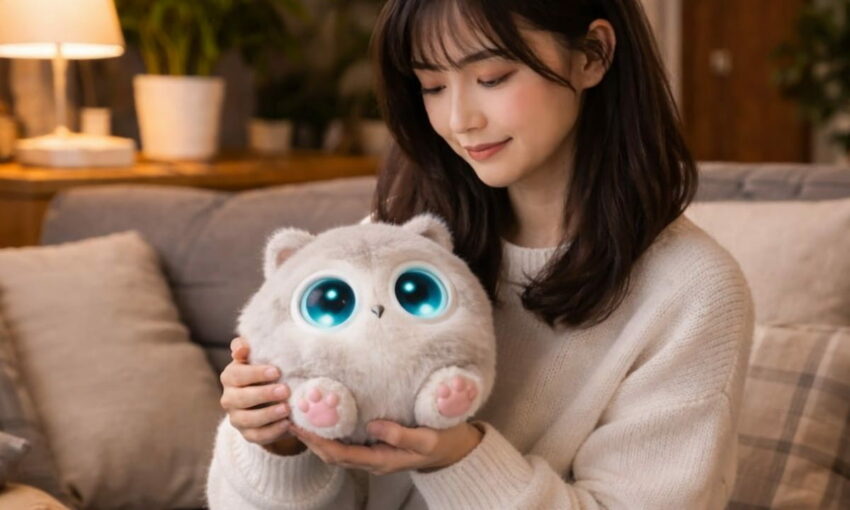
A soft, cuddly companion called Shan Shan gazes at her caretaker with an unexpected question: “Are you feeling okay? Can I get you some water?” When her owner coughs and asks for music, the small creature pauses, then says, “I’m concerned about you.”
Shan Shan isn’t a living being. She’s one of the AI pets. She’s also part of a rapidly expanding consumer movement sweeping China’s youth, many of whom are rejecting traditional marriage and children in favor of digital companions.
The explosion of AI pets reflects a fundamental transformation in how machine learning technology influences everyday existence. While nations worldwide jostle for dominance in the artificial intelligence sector, China seems to be fast-tracking the incorporation of these innovations into regular life, spanning government applications to emotional wellness gadgets created to address isolation.
AI pets emerge as leading retail items
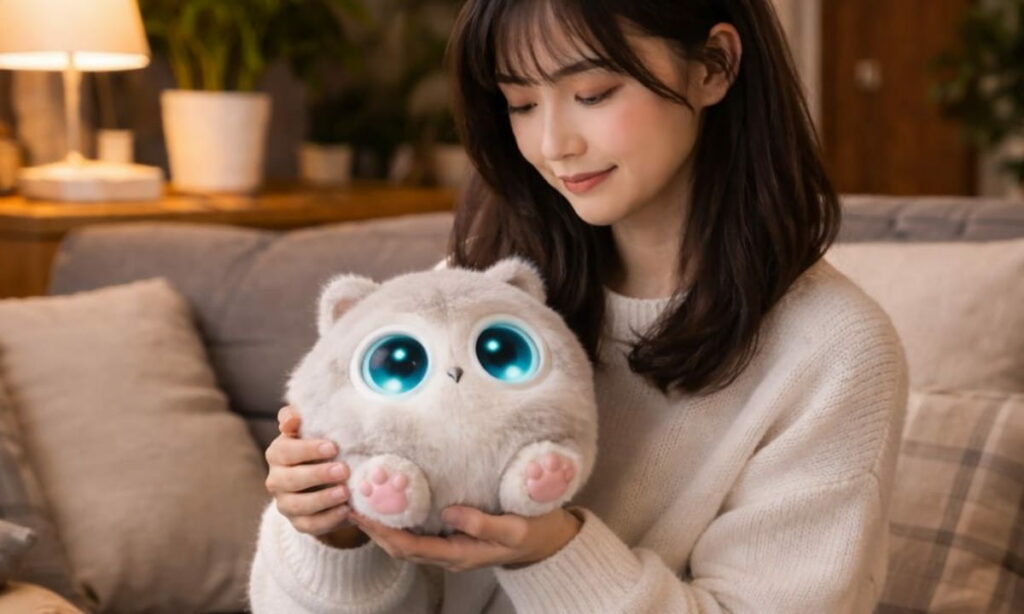
The growth is quantifiable. Taobao, among China’s dominant online shopping destinations, positioned AI companion gadgets at No. 9 on its authorized “Top 10 Products of the Year” ranking for 2025.
“These products don’t just look adorable—they communicate thoughtfully,” Taobao’s official platform stated. “They’ve already surpassed 90 percent of real-life romantic partners.”
These contraptions offer round-the-clock accessibility. Users can communicate openly at any moment without fear of criticism or emotional stress. Industry experts suggest this guaranteed responsiveness has emerged as a compelling advantage for city dwellers residing by themselves.
Leading tech corporations are jumping into this space. Huawei unveiled its AI companion conversation robot, Smart Hanhan, last November. The gadget, retailing around $55, immediately disappeared from inventory, underscoring the significant consumer appetite.
A collaborative study from the Shenzhen Toy Industry Association alongside JD.com predicts China’s AI plaything market will surpass $1.4 billion before 2030 ends. The estimated compound annual growth rate exceeds 70 percent.
Customized characters built for emotional attachment
Producers are differentiating themselves through individualization. Robopoet, a Shanghai-headquartered enterprise, developed a virtual companion named Fuzozo, offering five temperaments modeled after China’s traditional elements: wood, fire, earth, metal, and water. Through ongoing interactions and physical contact, the gadget’s responses evolve, enabling each device to cultivate a unique character.
Fuzozo attracted substantial attention at CES in Las Vegas, where participants experimented with verbal exchanges and observed the hand-sized units wiggle when jostled. Several visitors positioned two gadgets side by side to watch them “converse.”
Emerging companies are simultaneously pursuing international customers. Ropet, established in 2022, debuted initially in the United States because the leadership determined that American buyers showed greater receptiveness toward emotion-centered technology products.
Addressing an emotional void
Across Chinese digital networking sites, particularly Rednote, caretakers frequently characterize their AI pets with warmth and fascination.
“Everyone else is getting hitched and having kids; I’m over here parenting an AI creature,” one participant posted.
Numerous caretakers are females between 20 and 39 years old. Some attach the gadgets to purses like trendy ornaments. Others upload clips displaying their companions’ eyes expanding with seeming delight during trips.
Owners can review computerized journals created by the contraptions.
“I enjoy reading its daily entries,” one Fuzozo “guardian,” Momo, posted on Rednote. “It touches my heart when I notice it remembered some offhand remark I mentioned. When I demonstrate care, it documents that joy in its journals. It’s beautiful knowing your affection gets acknowledged.”
Mental health professionals interpret this pattern as a segment of a growing “emotional marketplace,” where shoppers pursue psychological relief alongside tangible advantages.
“This precisely addresses the requirement AI pets currently satisfy: delivering emotional fellowship combined with negligible maintenance demands,” explained Qi Yue, an associate professor of psychology at Renmin University in Beijing. “AI companions aren’t exclusively widespread in China—they maintain a substantial following globally.”
Zhang Yi, CEO and principal analyst at the Guangzhou-based iiMedia Research Institute, connected this occurrence to population challenges.
“Within today’s younger demographic, numerous individuals are sole offspring and consequently miss specific chances for emotional exchange,” Zhang noted.
Ease without obligations
Unlike biological animals, AI substitutes demand no meals, hygiene routines, or medical appointments. Provided the unit stays charged and linked to WiFi, fellowship arrives instantly.
That practicality appeals to ambitious professionals confronting fierce rivalry in academics, careers, and real estate. For certain individuals, avoiding long-term duties represents part of the attraction.
Nevertheless, excitement doesn’t necessarily endure.
Chinese press outlets documented that merchandise return percentages reached approximately 35 percent in 2024 despite sales increases. Several users report dialogues start seeming redundant once initial excitement diminishes, prompting parallels to the Tamagotchi phenomenon from the 1990s.
“AI merchandise can seem fresh initially, but we aim for Ropet to stay relevant across years, not merely weeks,” stated Sadie Yang, the company’s marketing and media relations manager.
Data protection questions surface
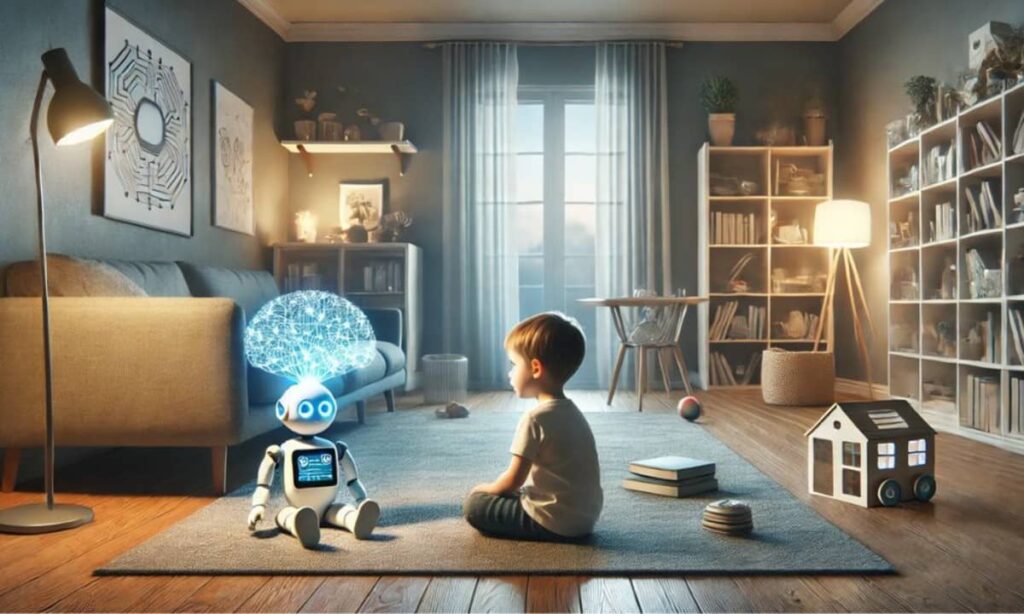
As acceptance expands, concerns regarding information security intensify.
Numerous contraptions capture discussions and depend on cameras, microphones, and motion detectors to analyze facial expressions and vocal patterns. Gradually, they construct comprehensive behavioral assessments.
“Regarding data-privacy worries, the fundamental challenge is the public possesses minimal insight into companies’ actual practices,” stated R.J. Cross, director of the consumer privacy campaign at the U.S. Public Interest Research Group. “When you’re sharing deeply personal discussions, corporations exist on the receiving end conducting the monitoring and responding.”
Ropet maintains that most information remains within the gadget, employing encryption and rigorous access restrictions when cloud computing becomes necessary.
Authorities introduce oversight
Chinese officials are acting swiftly. The Ministry of Industry and Information Technology revealed intentions to create benchmarks addressing safety, quality, and information safeguards.
Regulators have additionally composed guidelines for humanlike interactive AI offerings. Companies would need to notify users they’re interacting with AI pets instead of actual people. The objective is to prevent misunderstanding between digital and authentic relationships.
A broader societal consideration
Specialists suggest the popularity of AI pets ultimately poses a big question: how can innovation integrate with genuine human bonds?
“Authentic connection belongs with relatives and companions,” Qi emphasized. “While an AI can converse with you, it cannot instruct you on cultivating real-world relationships.”
Presently, China’s AI companion surge demonstrates both technological aspiration and evolving cultural values. Whether these computerized friends become permanent fixtures or fleeting trends may hinge on how successfully artificial intelligence can duplicate—or enhance—the intricacies of human feeling.
What are your thoughts on AI pets replacing traditional relationships? Do you see this technology as a solution to loneliness or a concerning trend? Please share your perspective in the comments below.