

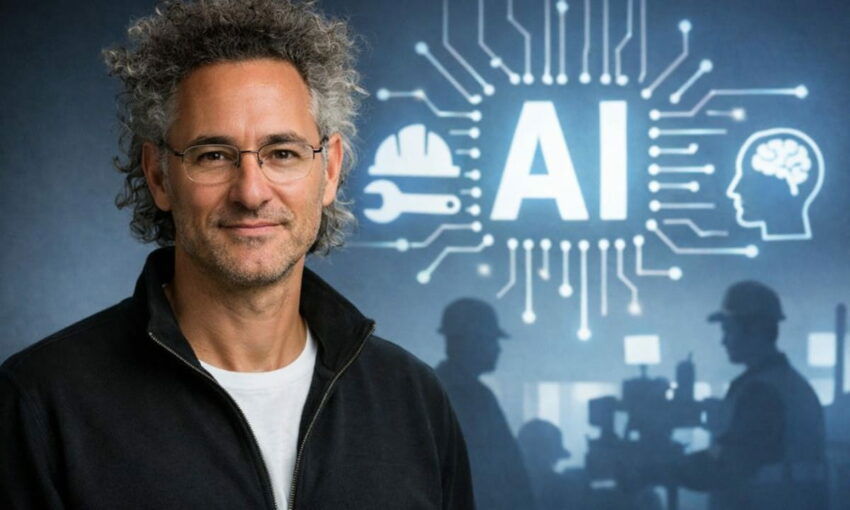
Artificial intelligence continues to transform workplaces worldwide, yet Alex Karp delivered a measured perspective on employment futures that defies simplistic narratives. During this week’s World Economic Forum appearance, the Palantir chief executive acknowledged AI will displace certain positions. However, he emphasized that the technology simultaneously strengthens demand for workers possessing practical expertise, sound judgment, and flexible capabilities.
“There will be more than enough jobs for the citizens of your nation, especially those with vocational training,” Karp told attendees during his conversation with Larry Fink.
His message resonated not for predicting job displacement, but for distinguishing which work categories face vulnerability versus those maintaining resilience as artificial intelligence permeates industries.
Theoretical knowledge faces automation pressure
When questioned about AI’s employment impact, the Palantir chief stated it “will destroy humanity’s jobs.” He referenced positions relying predominantly on conceptual thinking without a technical foundation or operational experience.
Karp illustrated this point through personal history. His academic background includes Haverford College, a Stanford law degree, and a philosophy doctorate from Germany’s Goethe University.
Yet, prestigious credentials created professional ambiguity initially. “I’m not sure who’s going to give me my first job,” the Palantir chief recalled.
His story highlighted disconnects between academic achievement and immediate marketplace demands.
This disconnect expands steadily, he argued. Tasks previously assigned to entry-level analysts, researchers, or general knowledge workers increasingly face automation or AI acceleration. Workers lacking specific, provable abilities encounter fewer opportunities.
Despite these challenges, the Palantir chief dismissed predictions of mass unemployment. He characterized the labor market as experiencing restructuring rather than collapse. Positions involving building, maintaining, operating, and modifying systems continue to require human talent. Many such roles exist outside elite universities or conventional degree programs.
Alternative pathways challenge traditional hiring

Karp champions non-traditional routes into valuable careers. Last year, Palantir Technologies introduced its Meritocracy Fellowship, providing paid internships for high school students. The program offers potential full-time employment after four months, challenging standard hiring practices.
Announcing this fellowship, Palantir criticized American universities for admission processes the company described as lacking transparency while undermining merit. Karp reinforced this stance during an earnings discussion.
“If you did not go to school, or you went to a school that’s not that great, or you went to Harvard or Princeton or Yale, once you come to Palantir, you’re a Palantirian—no one cares about the other stuff,” he explained.
His Davos remarks clarified this philosophy. Standard credentials frequently miss identifying exceptional yet unconventional talent, the Palantir chief suggested. He described a former law enforcement officer who attended community college and currently oversees the U.S. Army’s Maven system—a Palantir-built AI platform processing drone footage.
“In the past, the way we tested for aptitude would not have fully exposed how irreplaceable that person’s talents are,” Karp observed.
Hands-on skills prove more adaptable
The Palantair chief referenced battery company technicians as another example. These workers hold exceptional value because companies can rapidly retrain them as technology evolves. Their advantage stems from practical application rather than abstract concepts—specifically, their capacity to learn, adjust, and perform.
“What I do all day is figuring out what is someone’s outlier aptitude,” Karp said. “Then I’m putting them on that thing and trying to get them to stay on that thing.”
Other business leaders acknowledge shifting hiring priorities, though perspectives vary on which backgrounds prove most beneficial. BlackRock’s chief operating officer, Robert Goldstein, revealed in 2024 that his firm actively pursues graduates whose education bears minimal connection to finance or technology.
At McKinsey & Company, global managing partner Bob Sternfels stated that liberal arts graduates gain renewed appreciation for creativity and discernment that machines cannot duplicate.
Labor market data reveals growing challenges

Employment statistics indicate widespread pressure. Youth unemployment for workers aged 16 to 24 reached 10.4% in December. Joblessness increased among college degree holders. Employers report mounting gaps between candidate qualifications and actual workplace requirements in an artificial intelligence-driven economy.
Deloitte research provides additional insight. High-performing teams utilize AI more frequently than average groups. Yet their success depends more heavily on trust, communication, and flexibility than on technological tools alone. Top-performing team members were over twice as likely to feel respected by colleagues and leadership. They reported significantly greater ability to pivot rapidly during transitions.
Similar patterns emerge in technical recruitment. Former Google and Amazon engineer Akaash Vishal Hazarika recently wrote that interview standards have transformed. Foundational knowledge remains critical, but candidates now face evaluation on how effectively they integrate AI tools, troubleshoot issues, and exercise judgment. Some interviewers now permit AI usage to observe how candidates merge human reasoning with machine capabilities.
Redefining value in the AI economy
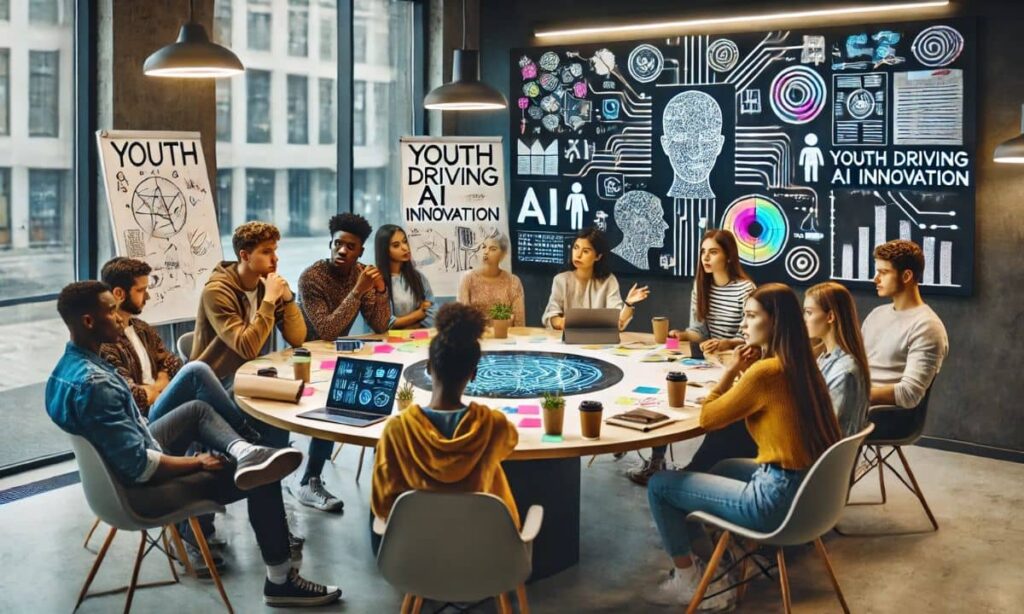
These indicators collectively suggest that artificial intelligence reshapes value rather than eliminating work. General knowledge by itself faces mounting pressure. Applied abilities, human judgment, and adaptation capacity remain scarce resources.
Karp’s Davos message avoided claiming that education had become obsolete. Instead, he stressed that pathways matter significantly. In labor markets shaped by artificial intelligence, positions connected to real-world execution, technical competency, and human decision-making prove increasingly difficult to replace.
The technology revolution continues to accelerate across sectors. Vocational training, practical skills, and hands-on experience emerge as durable assets. Meanwhile, theoretical education without application faces growing scrutiny.
Workers with demonstrable capabilities in building, repairing, operating, and improving systems maintain strong employment prospects. Educational credentials matter less than proven performance and adaptability.
As automation handles routine cognitive tasks, human judgment becomes more valuable in specific contexts. The ability to identify problems, exercise discretion, and respond to unexpected situations cannot easily be replicated by algorithms.
Karp’s perspective suggests that the future belongs to those who can combine technical knowledge with practical execution. Abstract thinking alone no longer guarantees career security. But applied intelligence paired with hands-on expertise creates opportunities that artificial intelligence cannot easily eliminate.
The workplace transformation demands new approaches to training, hiring, and career development. Organizations increasingly prioritize skills over pedigree, results over credentials, and adaptability over specialization.
How is AI reshaping career opportunities in your industry? Please share your experiences and insights about the Palantir chief’s remarks in the comments below.