

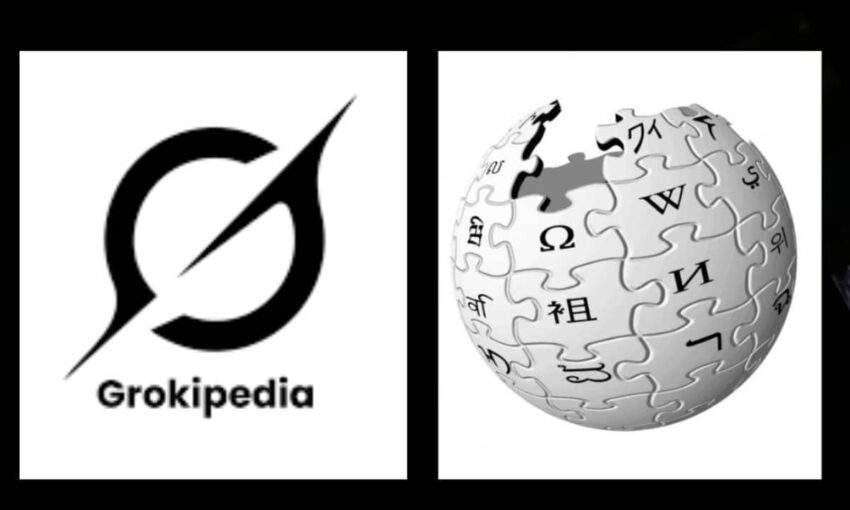
Tech magnate Elon Musk has unveiled a bold new venture in the realm of digital knowledge: Grokipedia. This high-profile online encyclopedia, powered by his company xAI’s cutting-edge artificial intelligence, aims to challenge the long-standing dominance of the Wikimedia Foundation’s Wikipedia. However, the launch has ignited a firestorm of debate surrounding the reliability, objectivity, and future trajectory of AI-generated knowledge platforms.
Grokipedia debuts with ambitious goals, early stumbles
According to multiple sources, Grokipedia went live on October 27, 2025, in its initial version 0.1. The platform boasted approximately 885,000 entries at launch, a modest starting point compared to Wikipedia’s extensive collection of over 7 million English-language articles.
Musk took to his social media platform X to trumpet Grokipedia as a “massive improvement over Wikipedia,” setting the stage for a high-stakes battle in the world of online encyclopedias.
“We are building Grokipedia @xAI. Will be a massive improvement over Wikipedia. Frankly, it is a necessary step towards the xAI goal of understanding the Universe,” wrote Musk.
However, the launch was not without its hiccups. Some entries appeared to be near-verbatim copies of Wikipedia content, raising red flags about originality and potential copyright infringement. Access issues also plagued the site shortly after its debut, with reports of crashes under the strain of heavy traffic, underscoring both the intense interest and the technical challenges facing the fledgling platform.
AI takes center stage, but bias concerns loom large

At the heart of Grokipedia lies the AI language model developed by xAI. This powerful system is tasked with generating and refining entries on a massive scale, aiming to streamline the research and knowledge aggregation process. Yet, critics were quick to point out instances of apparent bias and controversial framing in some of the AI-generated content.
Musk has publicly touted Grokipedia as a means to counter what he perceives as Wikipedia’s “editorial bias” and ideological leanings. He has previously described Wikipedia as “broken” and vowed that xAI would create a more impartial, “truth-seeking” alternative. However, researchers have already identified entries that seem to favor certain political viewpoints, challenge well-established historical facts, and present sensitive topics in a contentious manner.
The AI knowledge wars: Reshaping the encyclopedia landscape

The launch of Grokipedia underscores a seismic shift in the way we access and consume information in the age of artificial intelligence. From image generation to voice synthesis, AI is pushing the boundaries of content creation, and the encyclopedia model is no exception. The traditional approach, relying on crowdsourced human editors, now faces a formidable challenge from machine-driven contributions.
xAI is wagering that the speed and scale afforded by AI will outweigh the benefits of incremental human edits. The company asserts that leveraging AI technology will enable rapid expansion of the knowledge base, continuous refinement of entries, and a reduction in what Musk characterizes as “propaganda.” However, critics argue that this approach may come at the cost of transparency, clear editorial oversight, and an increased risk of systematic bias embedded within the AI model itself.
Navigating the future of knowledge in an AI-driven world

For everyday users, Grokipedia presents both opportunities and cautionary tales. The prospect of thousands of new articles, rapid updates, and AI-powered streamlining could potentially make learning and research more accessible than ever before. However, the risks of superficial errors, ideological framing, and AI “hallucinations” cannot be ignored.
Enterprises, academic institutions, and media organizations now find themselves at a crossroads. Will they embrace platforms like Grokipedia as credible references, or will they adhere to established human-edited resources until AI systems mature and prove their reliability?
As Grokipedia embarks on its ambitious journey, the road ahead is filled with both promise and uncertainty. xAI has bold plans for future iterations, with Musk promising that version 1.0 will be “10× better.” However, the platform’s ability to deliver on these aspirations—increasing its entry count, strengthening fact-checking mechanisms, enhancing transparency, and achieving more balanced editorial governance—remains to be seen.
The launch of Grokipedia has sparked a vibrant discourse about the role of AI in shaping the future of knowledge. As readers, researchers, and knowledge seekers, your perspectives are invaluable in navigating this uncharted territory.
Please share your thoughts, experiences, and concerns about Grokipedia and the broader implications of AI-powered information platforms.