


Artificial intelligence has moved beyond flashy demonstrations into practical applications. A new generation of AI companies focuses on solving pressing societal challenges. These innovative startups address genuine needs in healthcare, emergency services, eldercare, and legal systems. Their solutions demonstrate AI’s potential to improve daily life rather than generate headlines.
Here are 10 AI companies leading this transformation through meaningful technology implementation.
Aurelian: Transforming emergency response systems

Seattle-based Aurelian revolutionizes how emergency services handle non-critical calls. Co-founders Max Keenan and James Liu created an intelligent voice system that manages routine 911 inquiries. The platform handles parking violations, noise complaints, and minor medical concerns automatically.
Current pilot programs show remarkable results. Nearly 75% of non-emergency calls receive resolution without human dispatcher intervention. This efficiency reduces operator fatigue while accelerating response times for genuine emergencies. NEA led Aurelian’s $14 million Series A funding round. The company positions itself as essential infrastructure for modern emergency response networks.
HappyRobot: Streamlining complex logistics operations
San Francisco’s HappyRobot targets the freight logistics industry through intelligent automation. Co-founders Luis Paarup and the Palafox brothers developed AI agents that handle routine shipping communications. Their system manages price quotations, shipment tracking, and delivery confirmations.
Major clients include DHL and Flexport, validating the platform’s commercial viability. HappyRobot’s September 2025 Series B funding round achieved a nearly $500 million valuation. The startup demonstrates how AI can optimize traditionally labor-intensive industries. Their success proves that practical applications often outperform flashier alternatives.
Qure.ai: Democratizing medical diagnostics worldwide
Mumbai-founded Qure.ai pioneered AI-powered radiology solutions in 2016. Leaders Prashant Warier and Pooja Rao built technology that rapidly analyzes medical imaging. Their systems detect tuberculosis, brain hemorrhages, and other critical conditions within minutes.
The company operates across 90+ countries with approximately $65 million in annual revenue. Qure.ai bridges diagnostic gaps in underserved medical markets globally. Recent recognition includes Top Innovator at ET Startup Awards 2025. Their work exemplifies how AI can create equitable healthcare access across economic divides.
EyeSight: Teen innovation for visual accessibility

Sixteen-year-old Ashwat Prasanna from Bengaluru launched EyeSight, developing assistive technology for visually impaired individuals. His smart glasses utilize computer vision to enhance daily navigation and interaction.
The wearable device identifies objects, reads text aloud, recognizes currency, and provides navigation assistance. Crucially, EyeSight costs significantly less than competing products. This pricing strategy makes assistive technology accessible in developing economies. International grants fund the project while global recognition highlights youth innovation in social impact technology.
Bluejay: Ensuring AI system reliability
Bluejay emerged from Y Combinator’s accelerator program focusing on AI quality assurance. Founders Rohan Vasishth and Faraz Siddiqi, both 23-year-old veterans of Amazon and Microsoft, created comprehensive testing platforms for conversational AI systems.
Their technology simulates challenging scenarios to identify potential system failures before deployment. Bluejay received $4 million in seed funding to build safety infrastructure for enterprise AI applications. The startup addresses growing concerns about AI reliability in business-critical environments. Their work becomes increasingly vital as AI adoption accelerates across industries.
Justpoint: AI-powered legal accountability
New York-based Justpoint applies artificial intelligence to legal advocacy against corporate negligence. Founder Victor Bornstein developed systems that analyze medical records for patterns indicating pharmaceutical harm or defective products.
When the platform identifies potential cases, it connects affected patients with appropriate legal representation for class-action litigation. Justpoint secured nearly $95 million in funding with valuations exceeding $100 million. As one of the leading AI companies, Justpoint creates new pathways for consumer justice through data-driven legal technology. Their model demonstrates AI’s potential in leveling legal playing fields.
Sully.ai: Reducing healthcare administrative burden
Mountain View startup Sully.ai introduces AI assistance into hospital workflows. Co-founders Ahmed Omar and Ahmed Nasser created tools that handle patient documentation, translation services, and triage support.
The platform reduces administrative workload on medical staff while improving patient care efficiency. Sully.ai secured $25 million in funding and partnerships with major healthcare systems. Their technology preserves human connection in medicine while eliminating routine paperwork. The company addresses physician burnout through intelligent workflow optimization.
CareYaya: Compassionate technology for aging populations
Raleigh-based CareYaya develops AI solutions for elderly care challenges. Their product suite includes QuikTok for senior social engagement and MedaCareLLM, specialized smart glasses for dementia patients.
These tools provide medication reminders, emotional support, and safety monitoring without intrusive surveillance. CareYaya addresses demographic shifts as global populations age rapidly. Their technology balances independence with necessary care support. The company represents humane AI applications in sensitive social contexts.
Tractable: Instant insurance damage assessment
United Kingdom’s Tractable transforms insurance claim processing through computer vision technology. Their AI platform evaluates vehicle and property damage using photographic analysis. Claims receive accurate repair estimates within minutes of submission.
Major insurance companies integrate Tractable’s technology into standard workflows. The system reduces fraudulent claims while ensuring consistent damage assessments. Tractable also supports disaster relief efforts by rapidly assessing large-scale damage after natural catastrophes. The company achieved unicorn status with $1+ billion valuation in 2021, maintaining leadership in insurance-focused AI applications.
Multiverse computing: Quantum-inspired business solutions
Spanish company Multiverse Computing brings quantum-inspired optimization to traditional industries. Their Singularity platform delivers advanced algorithms through familiar interfaces like Microsoft Excel.
One of the top-rated AI companies, Multiverse serves the energy, finance, and logistics sectors with quantum-powered optimization solutions. Multiverse secured €189 million in recent funding, achieving $1.7+ billion valuation in 2025. Energy companies use their technology for grid balancing while financial firms optimize portfolio risk management. The startup proves that cutting-edge quantum concepts can solve immediate business problems.
AI revolution
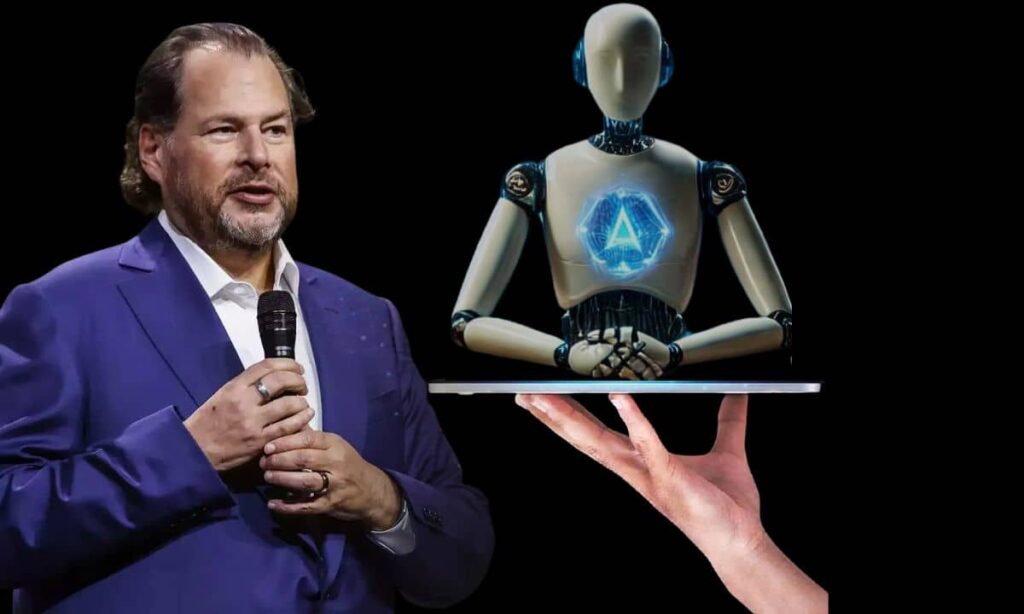
These ten AI companies avoid technological showmanship in favor of genuine problem-solving. They address real challenges in hospitals, courtrooms, emergency services, and family homes. As investment priorities shift toward measurable impact over marketing buzz, practical AI applications gain prominence.
Their success demonstrates that artificial intelligence’s true value lies not in replacing human capability but in augmenting it. These companies create tools that enhance human potential while solving persistent societal challenges. The future of AI innovation appears increasingly focused on meaningful applications rather than impressive demonstrations.
Which of the AI companies do you believe will create the most significant social impact over the next five years? Please share your thoughts on how AI can better serve society’s needs.